Simon Peter: Where to Begin Reading About the Apostle Peter
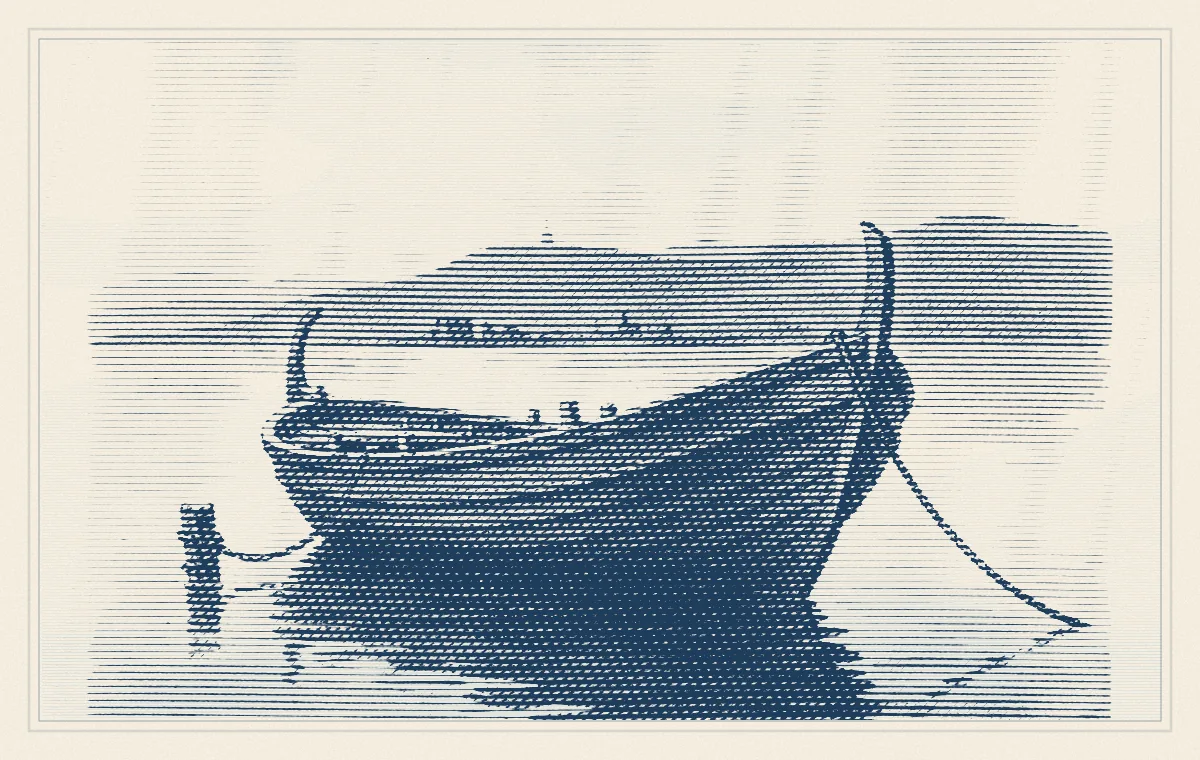
The nets were still wet when the stranger called his name. Simon bar Jonah had spent the night on the Sea of Galilee catching nothing, and by morning a carpenter's son from Nazareth was telling him where to cast again. Simon obeyed, and the catch was so heavy the boat nearly sank. He did not ask for a theology lesson. He fell at the stranger's knees and said, depart from me, for I am a sinful man, O Lord. That is the first true portrait of the man the world would come to call Peter, and it is exactly the right place to feel who he was before deciding where to read about him.
Where should I start reading about Peter the apostle?
Start with the Gospels' fishing boats and Caesarea Philippi, then move to Acts and the Church he helped found, and if you want that arc gathered into one telling, begin with the free Invitation volume of The Rock: A Life of Saint Peter, Prince of the Apostles. Reading the Bible cold, jumping between Matthew's boat and John's charcoal fire and Acts' Pentecost crowd, can leave Peter feeling like three different men. The Invitation volume exists to give the whole shape first: the calling, the confession, the failure, the fire, the keys. Once that shape is in hand, the three full volumes carry it forward in the depth it deserves. The Name He Did Not Choose opens with the fisherman before he was Peter at all; Feed My Sheep carries him through denial into restoration; Upon This Rock follows him to Rome and to the cross he asked to be turned upside down. Together they form the trilogy, but the free volume is where a reader who is only curious, or only beginning, should put a first foot down.
Peter also left his own words. Two short letters near the end of the New Testament bear his name, 1 Peter and 2 Peter, written to scattered and suffering Christians, urging them to hope, to holiness, and to patient endurance. They are brief enough to read in an afternoon and are worth reading after the Gospels, once the man behind them has a face.
Simon, Simon Peter, Cephas: what do the names mean?
Simon was his birth name, a common Jewish name meaning one who hears; Cephas is Aramaic for rock, and Peter is its Greek translation, petros. Jesus gave him the new name at Caesarea Philippi, after Simon said aloud what the other disciples had only wondered: you are the Christ, the Son of the living God. Jesus answered with a name change that has echoed for two thousand years. You are Peter, and on this rock I will build my church. Simon the fisherman did not choose that name any more than he chose the calling on the shore. The name was given, the way grace is given, before he had proven himself worthy of it. The Name He Did Not Choose takes its title from exactly this moment, tracing how a man who stumbled constantly through the Gospels came to bear a name that meant foundation.
Was Peter really the first pope?
Catholic tradition holds Peter as the first Bishop of Rome and the origin of the papal office; Orthodox, Anglican, and Lutheran readers honor his primacy among the apostles while understanding church authority differently, and all agree the office as it exists today developed gradually rather than arriving fully formed in Peter's lifetime. What is not in dispute across these traditions is the plain text: Jesus gave Peter the keys of the kingdom of heaven and called him the rock on which the church would be built. What is disputed is what that founding meant for every bishop who came after him. Strong and early testimony, reaching back to the first Christian centuries, places Peter in Rome and connects his death there to the church's memory of its own beginnings, even though the New Testament itself never narrates his arrival in the city. Upon This Rock takes up this exact question, following Peter's path from Jerusalem outward and into the Roman church's earliest memory, without asking a reader to leave any tradition at the door to understand it.
Why did Peter deny Jesus three times, and how was he restored?
Peter denied knowing Jesus three times in a high priest's courtyard, warming himself at a charcoal fire while his Lord was being questioned inside, and the same rooster's crow that Jesus had foretold sent him out weeping bitterly. It is the lowest point in his story and also the hinge on which everything else turns. After the resurrection, beside another charcoal fire on the shore of Galilee, Jesus asked him three times, do you love me, and three times gave him the same commission: feed my sheep. Three denials undone by three questions. The failure was not erased. It was answered, directly, question for question, until the fisherman who had lied to save his own skin became the shepherd entrusted with the whole flock. Feed My Sheep is built entirely around that reversal, and it is the volume to read for anyone who has ever wondered whether their worst moment disqualifies them from their calling.
Tradition holds that Peter's life ended in Rome by crucifixion, and that he asked to be crucified upside down, judging himself unworthy to die in the same manner as his Lord. It is a fitting close to a man whose whole story runs from sinking in the water crying Lord, save me, to standing steady enough to be called the rock. For a reader who wants every stage of that arc, name, confession, denial, restoration, martyrdom, laid out in full and in order, the trilogy is built for exactly that reading, and membership opens the rest of the library's lives alongside his.
Questions readers ask
Was Peter ever actually in Rome, and was he the first Bishop of Rome?
The New Testament does not narrate Peter's arrival in Rome, but very early and widespread Christian tradition, dating to the first centuries, places him there as bishop and martyr, and Catholic teaching traces the papacy to this foundation.
How did Saint Peter die?
Tradition holds that Peter was crucified in Rome and that he asked to be crucified upside down, considering himself unworthy to die in the same manner as Jesus.
What books did Peter write in the New Testament?
Two letters bear Peter's name, 1 Peter and 2 Peter, both addressed to Christian communities facing suffering and encouraging them toward hope, holiness, and endurance.
What is the best book to start with about Simon Peter?
The free Invitation volume of The Rock: A Life of Saint Peter gives the whole shape of his life first, and the three full volumes that follow carry the calling, the denial, and the martyrdom in fuller depth.
What are the 'keys of the kingdom of heaven' given to Peter?
In Matthew 16:19 Jesus tells Peter, I will give you the keys of the kingdom of heaven, and whatever you bind on earth shall be bound in heaven, language of entrusted authority to teach, govern, and forgive in Christ's name. The image draws on an Old Testament picture of a steward holding the keys of a royal household, acting on the king's behalf rather than his own. Catholic tradition reads this as the foundation of Peter's unique office, while other traditions honor it as Peter's personal commissioning without extending it the same institutional weight.
Who was Simon Peter before he met Jesus, and what was his life as a fisherman like?
Before his calling, Simon was a working fisherman on the Sea of Galilee, from Bethsaida and later settled in Capernaum, where the Gospels mention his house and his mother-in-law. He fished in partnership with his brother Andrew and alongside James and John, sons of Zebedee, hauling nets by night in the ordinary, unglamorous trade that shaped the whole region's economy. Nothing in the Gospels suggests he was a man of learning or standing before Jesus called him from that boat.
Was Peter married? Did he have a wife and children?
Peter was married: all three Synoptic Gospels record Jesus healing Peter's mother-in-law of a fever in Capernaum, which plainly implies a wife. The New Testament never names her or mentions children, and Paul's first letter to the Corinthians notes that Peter took his wife along on his missionary travels. Later Christian writers, including Clement of Alexandria, preserve a tradition that Peter's wife was martyred before him and that he encouraged her at her death, though this account comes from outside scripture.
What was Peter's relationship with his brother Andrew?
Andrew was Peter's brother and his fishing partner on the Sea of Galilee, and it was Andrew, already a follower of John the Baptist, who first met Jesus and brought Simon to him, saying we have found the Messiah. The two brothers were called together and appear together repeatedly in the Gospels, though Peter quickly emerges as the more prominent and vocal of the pair. Andrew's role as the one who introduces his brother to Christ is often remembered as his defining act in the Gospel narrative.
Did Peter and Paul ever clash or disagree?
Yes: in his letter to the Galatians, Paul recounts opposing Peter to his face in Antioch because Peter had been eating with Gentile believers but withdrew from doing so once certain men from James arrived, fearing the reaction of Jewish Christians. Paul calls this behavior hypocrisy and says it led even Barnabas astray. The two apostles are never recorded as permanently estranged, and tradition holds both ultimately gave their lives in Rome, but the Antioch dispute is a plainly recorded disagreement between them.
Who was Peter's father, and what does his patronymic mean?
The Gospels give two forms of Peter's patronymic: Matthew calls him Simon Bar-Jonah, son of Jonah, while John's Gospel calls him son of John, using the Greek form Ioannou. Scholars generally treat these as two renderings of the same father's name rather than a contradiction about two different men. Beyond the name itself, nothing is recorded in scripture about who this father was or what he did.
What miracles or notable moments involve Peter besides walking on water?
Peter's mother-in-law was healed of a fever in his own house, and after Pentecost the Book of Acts credits him with healing a man lame from birth at the Temple's Beautiful Gate and raising a disciple named Tabitha from death in Joppa. Acts also records that the sick were laid out in the streets hoping Peter's mere shadow might fall on them and heal them as he passed. He is additionally shown receiving a vision of a sheet lowered from heaven that opened the gospel to Gentiles, a turning point for the early church's mission.
What personality traits defined Peter in the Gospels?
The Gospels consistently show Peter as impulsive and quick to speak before he thinks, the one who jumps out of the boat, draws a sword in the garden, and blurts out answers before the other disciples have gathered their thoughts. He is also shown as deeply loyal and emotionally exposed, weeping bitterly after his denial rather than quietly slipping away. This mixture of boldness and fragility is part of why his failures and his recoveries both feel so immediate on the page.
Keep reading
Read the life entire
Simon Peter (Shimon bar Yonah), called Cephas / Peter is one of the lives on the house shelf, a three-volume life told from within the tradition, in ebook, audiobook, and print.
Begin reading, freeAbout this life
Between Two Fires: a complete book, free. It opens now, with no email and no card.