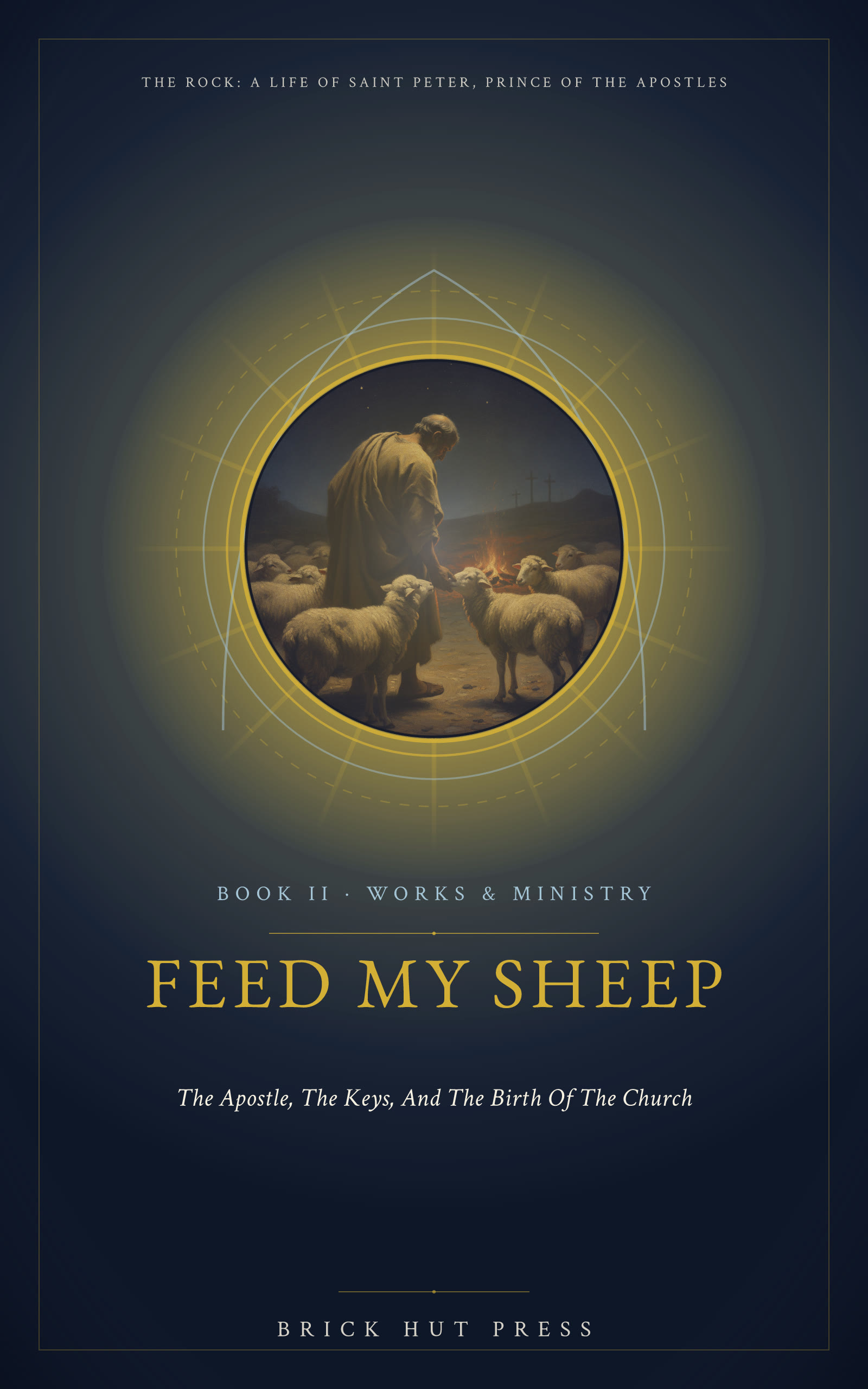
Feed My Sheep
What does it mean to be forgiven so completely that your greatest failure becomes your greatest calling?
He Denied Him Three Times. Then Christ Asked Him Three Times More. What does it mean to be forgiven so completely that your greatest failure becomes your greatest calling? On the shore of the Sea of Galilee, beside a charcoal fire that must have echoed painfully of another fire not so long before, the Risen Lord looked at a broken fisherman and asked: Do you love me? Three times the question came. Three times the commission followed. Feed my sheep.
Read the full description
From that moment, Simon Peter, the man who wept bitterly in the courtyard, became the rock upon which the Church was built. Feed My Sheep: The Apostle, the Keys, and the Birth of the Church is an immersive, reverently told account of the life of Saint Peter, written from inside the faith for readers who already love him and long to know him more fully. This is not detached scholarship or cold biography. It is a walk alongside the man himself, through the fire-lit streets of Jerusalem at Pentecost, through prison cells and angel-opened doors, through the thunderous debate at the Council of Jerusalem, and finally down the long, costly road to Rome. It is the story of a fisherman who became a shepherd, told with the warmth and vividness it has always deserved.
Not sure yet? Begin free.
Between Two Fires, a complete book about this life, free, kept in your own library here, read and heard.
Begin reading, freeAbout this volume
Volume Two of The Rock opens where the Gospels leave their most unfinished business: a man who denied his Lord three times, now standing on wet sand before a charcoal fire that smells exactly like the one in Caiaphas's courtyard. Feed My Sheep does not rush past that reckoning to get to the triumphs that follow. It begins there, deliberately, because everything Peter becomes in this volume, preacher, healer, pillar, letter-writer, martyr, grows out of a forgiveness he had to receive before he could extend it to anyone else. The book's first chapters trace that slow turning: the breakfast on the beach, the threefold restoration answering the threefold denial, and then the strange, charged waiting of the upper room, where the scattered friends of a crucified man became, without quite knowing how, the beginning of a Church.
What follows is the Peter of Acts, and this volume gives him room to be fully himself: impulsive, plainspoken, suddenly commanding. Chapter Three finds him at the Beautiful Gate with nothing silver or gold to offer a crippled beggar, and everything else instead. Chapter Four follows the astonishing report that his very shadow, falling across the sick laid out in the streets, was enough to draw people toward hope. These are not softened into metaphor here; the volume takes seriously what the earliest Christians took seriously, that the same hands which had once warmed themselves at a fire of fear were now instruments of a power not their own. The chapter on Cornelius, "A Sheet Full of Animals," sits at the hinge of the whole book: a vision on a rooftop in Joppa that cracks open everything Peter thought he understood about who belonged at the table, and sets the Church, however haltingly, on the road toward the whole world.
That road was not smooth, and this volume does not pretend otherwise. "The Angel at the Gate" gives the suspense and strangeness of Peter's escape from Herod's prison its full weight. "Brothers, Listen to Me" places him at the center of the Jerusalem council, wrestling aloud with the Gentile question before the gathered apostles and elders. And "The Confrontation at Antioch" does something rarer still: it lets Peter be corrected, publicly, by Paul, and treats that correction not as an embarrassment to be managed but as part of the honest record of a man still learning to live out the freedom he had helped proclaim. A life of Peter that smoothed over Antioch would not be telling the truth about him, and this one does not try.
The later chapters turn toward Peter's own voice, the fisherman who became, by tradition, a source behind a Gospel and the author of letters written to scattered, suffering communities who needed to hear that they were not forgotten. "The Gospel According to a Fisherman" considers Mark's testimony as bearing the shape of Peter's own preaching, vivid, immediate, unashamed of its subject's failures. "Strangers and Exiles, Writing Home" sits with the pastoral warmth of the epistles that bear his name, written to people who, like Peter himself once had, found themselves far from where they expected to be, needing someone to tell them that suffering was not the end of the story.
The volume closes, as it must, on the road out of Rome, with the old question that tradition says Peter asked a second time, this time of a vision rather than a servant girl: Quo vadis, where are you going? The book does not sensationalize the martyrdom that tradition holds awaited him; it lets the question stand as the natural end of a life spent, from the beach at Tiberias onward, learning to follow rather than to lead on his own terms. Readers who have walked with Peter through the Gospels will find here the second half of a single, continuous conversion, not a man made suddenly perfect, but a man made, slowly and specifically, into the rock he was named to be.
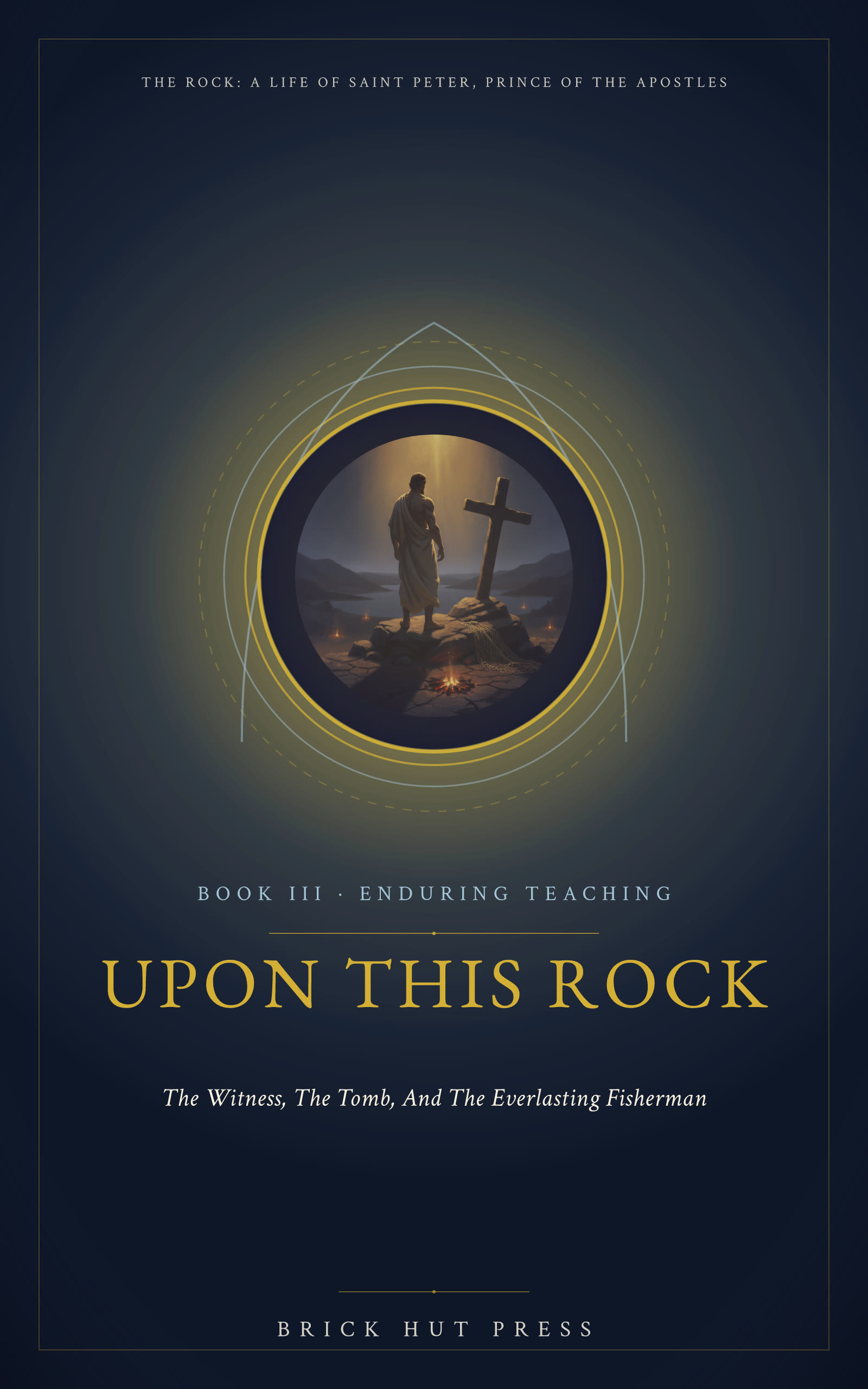
Lives that walk beside Simon Peter, chosen for their likeness, not their fame.