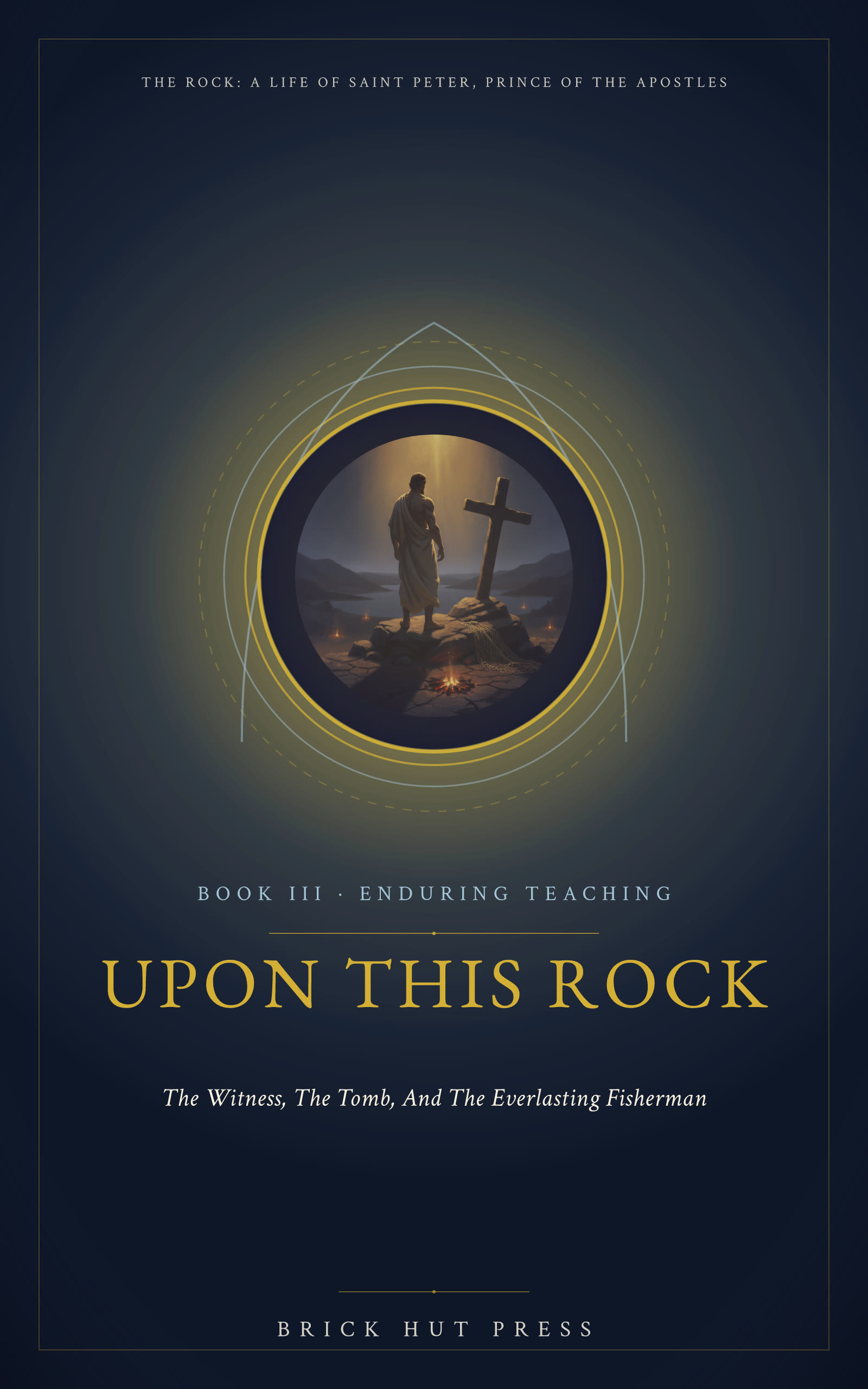
Upon This Rock
Christ Made Him the Rock Anyway.
He Denied the Lord Three Times. Christ Made Him the Rock Anyway. What do you do with a faith that has already failed? Peter knew. He warmed his hands at the courtyard fire while the Lord he had sworn to die for was being condemned, and then he lied, three times, to save himself. Yet this same broken fisherman became the foundation upon which the Church was built.
Read the full description
Upon This Rock: The Witness, the Tomb, and the Everlasting Fisherman traces that impossible, merciful reversal, and invites you to find your own place inside it. This is not simply a retelling of what Peter did. It is a devotional companion to who Peter became, and what his becoming means for every believer who has ever stood at their own courtyard fire, felt the warmth of self-preservation, and looked away. From the fishing nets of Galilee to the upturned cross on the Vatican hill, the life of Simon Peter is the story of how Christ works: not through our strength, but precisely through our surrender after failure. This is the book for anyone who carries the weight of their own denials and still dares to call themselves a follower.
Not sure yet? Begin free.
Between Two Fires, a complete book about this life, free, kept in your own library here, read and heard.
Begin reading, freeAbout this volume
This third and final volume of The Rock carries Simon Peter from the floor of Nero's burning circus back to the beginning, and then forward again to the stone altars and papal thrones that still bear his name. It opens where the first volume's Galilee and the second volume's Jerusalem and Rome left off: an old man, past sixty, walked out onto the Vatican Hill to die. But this book is not content to leave him there. It asks what that death meant, what it founded, and what it still asks of anyone who calls him father in the faith.
The chapters move in a deliberate arc rather than a straight chronology. "Upside Down on Vatican Hill" and "What Lies Beneath the Altar" anchor the volume in the archaeology and history of the martyrdom itself, the circus, the obelisk, the excavations under Saint Peter's that uncovered a modest grave marked and venerated since the earliest days of the Roman church. "The Boat, the Keys, the Cock" returns to the Gospel scenes that made Peter who he was before Rome ever claimed him: the call by the lake, the commission at Caesarea Philippi, the crowing bird in the high priest's courtyard. These are not detours. The book insists that the man who wept bitterly after his denial is the same man led, decades later, to a hill across the Tiber, and that the thread connecting them is mercy rather than merit.
Two chapters, "The Living Stone" and "The Eyewitness on the Holy Mountain," take up Peter's own letters and his testimony to the Transfiguration, reading them not as literary artifacts but as the voice of a man near the end of his life, writing to scattered, frightened communities about suffering that need not surprise them. "Beloved, Do Not Be Surprised by the Fire" sits beside these as a kind of pastoral center, the chapter where Peter's words to persecuted Christians in Asia Minor are set against his own approaching fire in Rome. The volume treats this correspondence as hard evidence of character: a fisherman who once begged the Lord to depart from him because he was a sinful man, now steadying others as their house burns.
From there the book turns to the questions that have divided and defined Christendom for two thousand years. "The Keys and What They Open" and "The First Pope and Every Pope" take up the binding and loosing given at Caesarea Philippi and trace, honestly and without polemic, how Catholic, Orthodox, Anglican, and Lutheran readers have understood that commission differently, while still recognizing in Peter something given to the whole Church, not hoarded by one see alone. "The Feast of the Fisherman" widens the lens further, showing how liturgical calendars across traditions, East and West, still keep a day for him, still call him by the name Christ gave him on the shore.
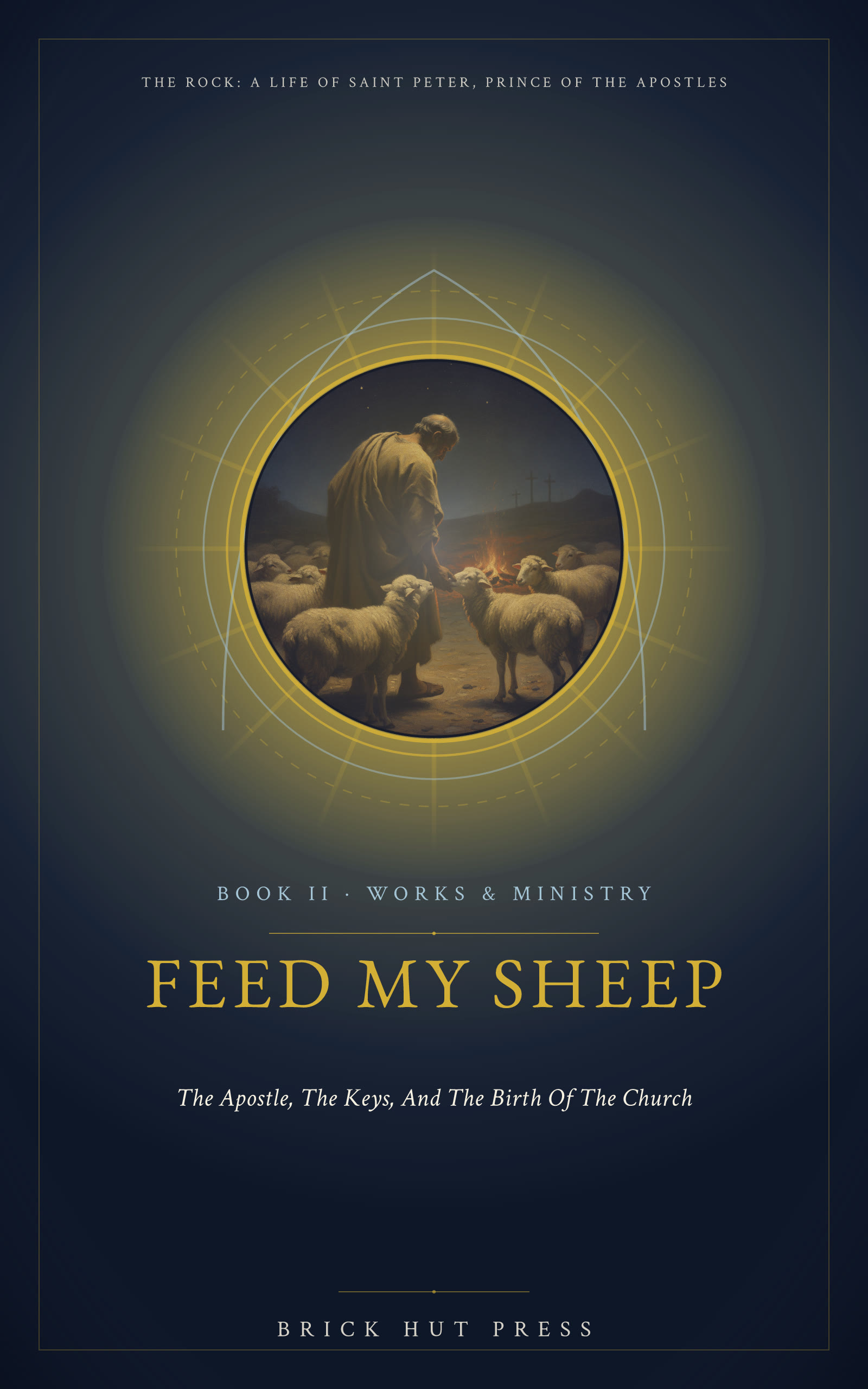
The volume's final turn is its most intimate. "The Man Who Failed and Founded" and "Do You Love Me?" return, deliberately, to the charcoal fire in the high priest's courtyard and the charcoal fire on the beach at Tiberias, the two fires that bracket Peter's failure and his restoration. The book reads the threefold question, "Do you love me," as the real foundation beneath the Roman stone, the real keys beneath the literal ones. It does not soften the betrayal to make the commission more flattering. It holds both together, as the Gospels do.
Read as the capstone of the three-volume Life, this book is less interested in settling Peter into monument than in keeping him human: stubborn, frightened, devoted, forgiven, sent. It is written for anyone, across the traditions that claim him, who wants to understand not only how Peter died but why that death still anchors a Church, a city, and a calendar nearly two thousand years later.
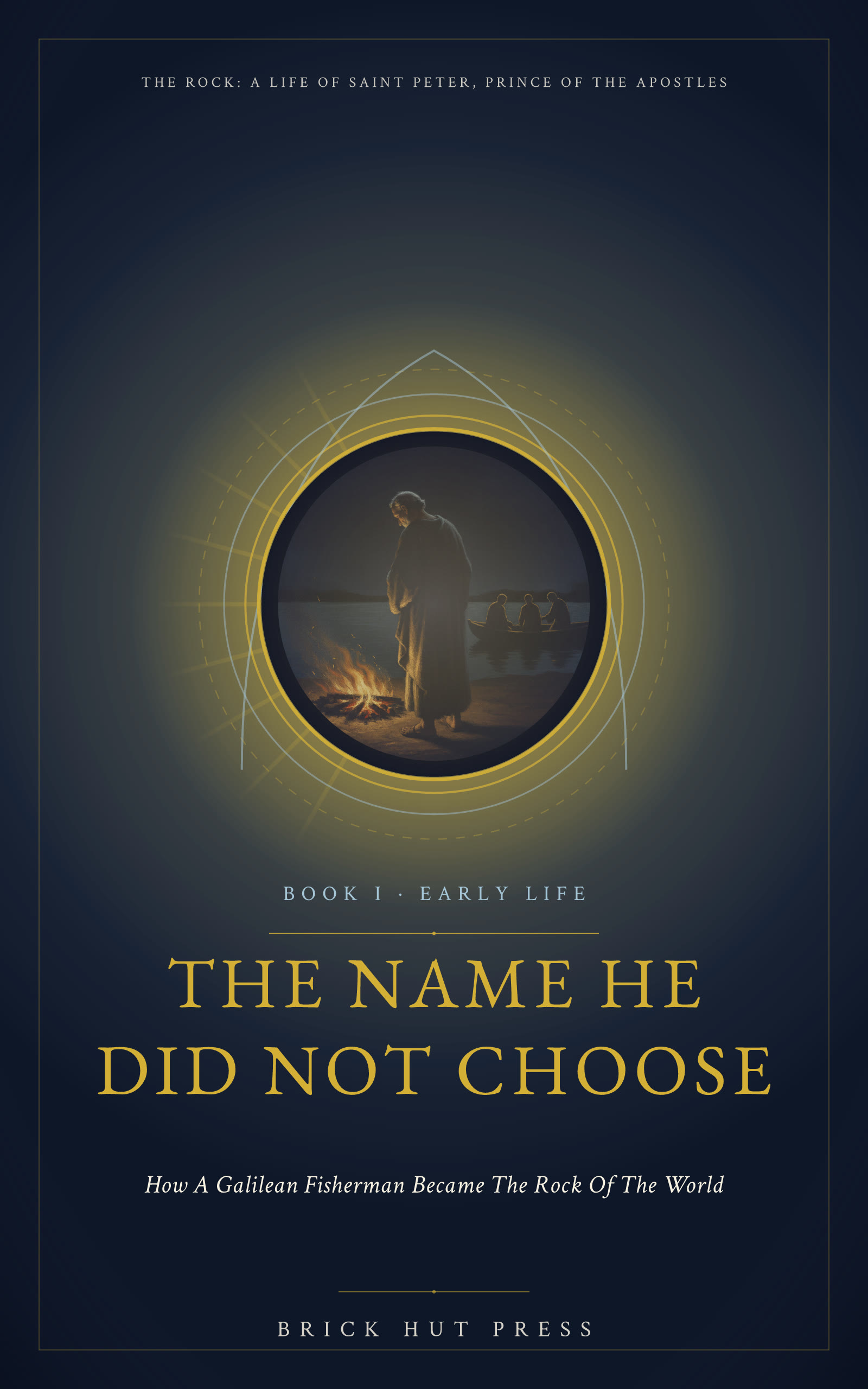
Lives that walk beside Simon Peter, chosen for their likeness, not their fame.