Gregory of Nazianzus: Where to Start Reading the Theologian
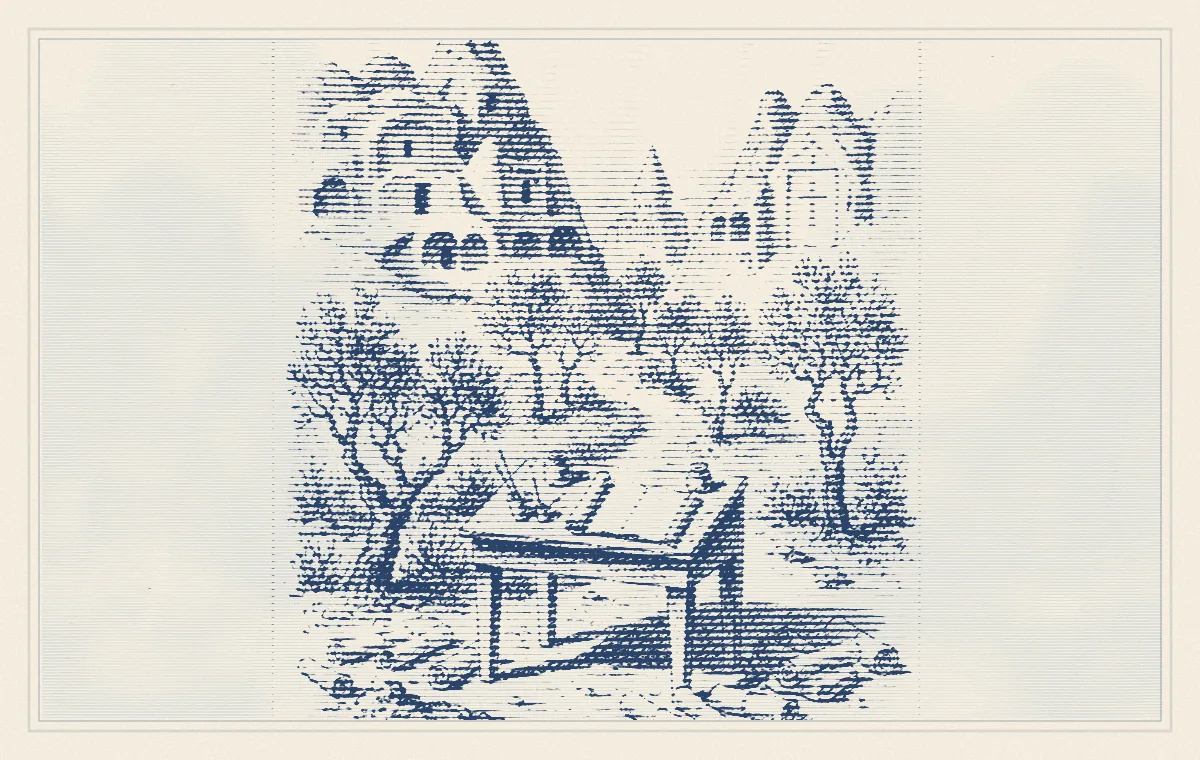
Late in his life, Gregory of Nazianzus sat in the garden at Arianzus with his own writings spread before him and began to revise. He cut lines, sharpened others, arranged his letters and poems into the shape he wanted the Church to keep. He had already resigned the throne of Constantinople. He had already preached the sermons that would settle the Trinitarian faith of the empire. What he was doing in that garden was curating his own legacy, deciding what a reader centuries later should encounter first. A reader today, wondering where to begin with Gregory of Nazianzus, is really asking the same question he was already answering for himself.
Where should I start reading Gregory of Nazianzus
Start with the story before the sermons. Gregory's theology makes far more sense once you have met the boy dedicated to God before his birth by a mother who would not stop praying, the student who found in Athens a friendship he later called one soul in two bodies, and the reluctant bishop who kept trying to retreat to silence and kept being pulled back into the fight for the Nicene faith. The free Invitation volume tells that story at no cost, and it is the natural door into the full three-volume life, Born for the Word, which carries him from his childhood in Cappadocia through the friendship with Basil of Caesarea that shaped them both. From there the second and third volumes, The Lamp in the Storm and Song at the End of the World, follow him into Constantinople and out again, into the garden, into the poems he left behind. The whole arc is gathered at the series page, and readers who want every life the house keeps, not only Gregory's, will find the full library through membership.
If your question is really about his own writing rather than his life, the answer converges on one small book: the Five Theological Orations, usually read in the Popular Patristics translation titled On God and Christ. That is the text scholars and bishops alike call the natural entry point into Gregory's actual words. The Invitation volume and the life it opens are the natural entry point into the man who wrote them.
Why is Gregory of Nazianzus called the Theologian
Gregory of Nazianzus is called the Theologian because the Church herself conferred the title, and across more than two thousand years of Christian history only three people have ever worn it. The first is John, the beloved disciple, whose Gospel opens with the Word who was with God and was God. The third, centuries later, is Symeon the New Theologian, the Byzantine mystic of uncreated light. Between them stands a fourth-century bishop who did not want the honor and would almost certainly have refused it if refusing had been permitted.
Gregory earned the title in a small house-chapel in Constantinople called the Anastasia, meaning Resurrection, preaching to a congregation that had been reduced to a remnant by decades of Arian control of the city's churches. There, in sermons later gathered as the Five Theological Orations, he gave the capital of the empire back its Trinitarian faith, defending not only the full divinity of the Son but, with particular force, the full divinity of the Holy Spirit. The Church did not grant the title Theologian for cleverness. It granted it because Gregory spoke about God in a way that the Church recognized as true, reverent, and necessary.
What the Five Theological Orations are about
The Five Theological Orations are Gregory's defense, preached at the Anastasia, of the full and equal divinity of Father, Son, and Holy Spirit against the Eunomian and Arian arguments then dominant in Constantinople. The first clears the ground, insisting that theology is not a game for clever talkers but a discipline requiring purification of life. The second turns to the nature of God, what can and cannot be said of the divine essence. The third and fourth take up the Son directly, answering the Arian texts used to deny his full divinity. The fifth, often considered the most consequential, argues for the full deity of the Holy Spirit at a moment when even many Nicene Christians hesitated to say it plainly.
These five sermons are short enough to read in an afternoon and dense enough to reread for years. They are also where the title Theologian was earned, which is why readers who want Gregory's own voice, rather than his biography, are so often pointed straight to them.
Gregory of Nazianzus and Gregory of Nyssa are two different men
Gregory of Nazianzus and Gregory of Nyssa were close contemporaries and fellow Cappadocian Fathers, but they are not the same person and were not brothers. Gregory of Nyssa was the younger brother of Basil the Great; Gregory of Nazianzus was Basil's closest friend from their student years in Athens, bound to him by affection rather than blood. Nyssa is remembered chiefly for his mystical and philosophical writing, especially on the spiritual life and the nature of the soul. Nazianzus is remembered chiefly for his oratory and his poetry, and for the title Theologian that the Church gave to him alone among the Cappadocians. Together with Basil, the two Gregorys and the great preacher John Chrysostom are venerated as the Three Holy Hierarchs, but each kept a distinct voice, and Gregory of Nazianzus is easily the more personal and more poetic of the three.
He is also, worth saying plainly, not Pope Gregory the Great, the sixth-century Roman pontiff, nor Gregory Palamas, the later Byzantine hesychast. The shared name has caused confusion for centuries. The surname of Nazianzus, his father's small Cappadocian see, is the surest way to keep him distinct.
Questions readers ask
How do you pronounce Gregory of Nazianzus?
Nazianzus is said naz-ee-AN-zus, after Nazianzus, the small town in Cappadocia where his father served as bishop and where Gregory himself briefly held the see.
What is the best translation of Gregory's orations?
The Popular Patristics Press volume On God and Christ, containing the Five Theological Orations along with two letters to Cledonius, is the translation most commonly recommended and most widely used in seminary and parish study.
Is there a good biography of Gregory of Nazianzus?
John McGuckin's Saint Gregory of Nazianzus: An Intellectual Biography is the standard scholarly life, long and closely argued; readers wanting a shorter narrative entry point often begin with a dedicated life before moving to it.
When is the feast day of Gregory the Theologian?
The Eastern Orthodox Church keeps his feast on January 25, with the shared feast of the Three Holy Hierarchs on January 30. Western calendars commemorate him with Basil the Great on January 2.
Who are the three Cappadocian Fathers?
The three Cappadocian Fathers are Basil the Great, his younger brother Gregory of Nyssa, and Basil's close friend Gregory of Nazianzus, all fourth-century bishops from the region of Cappadocia in Asia Minor who shaped the final form of Nicene Trinitarian doctrine.
Why did Gregory of Nazianzus resign as Archbishop of Constantinople?
Gregory resigned at the Council of Constantinople in 381 after rival bishops challenged the legality of his appointment and the council dissolved into factional dispute, and he chose to step down for the sake of peace rather than let his own position become a cause of further division.
What does 'what is not assumed is not healed' mean in Gregory of Nazianzus?
This is Gregory's argument, made in a letter against Apollinarius, that Christ must have taken on a complete human nature, body, mind, and soul together, because only what the Son actually assumed in the Incarnation could be healed and saved in humanity.
Where is Nazianzus located today?
Ancient Nazianzus stood in Cappadocia in central Asia Minor, in what is now south-central Turkey, near the modern Turkish town often identified with Bekarlar in Aksaray Province.
Is Gregory of Nazianzus a saint in the Catholic Church, not just the Orthodox Church?
Yes, Gregory of Nazianzus is a canonized saint and a Doctor of the Church in the Roman Catholic Church, just as he is honored as one of the Three Holy Hierarchs and given the title Theologian in Eastern Orthodoxy.
Why did Gregory of Nazianzus repeatedly withdraw to monastic retreat during his career?
Gregory was drawn by temperament to solitude and contemplative prayer, and he fled more than once to monastic quiet with Basil or on his own whenever public church duties, which he found exhausting and often painful, grew too heavy, only to be called back each time by the needs of the Nicene cause.
Keep reading
Read the life entire
Saint Gregory the Theologian is one of the lives on the house shelf, a three-volume life told from within the tradition, in ebook, audiobook, and print.
Begin reading, freeAbout this life
The Theologian's Light: a complete book, free. It opens now, with no email and no card.