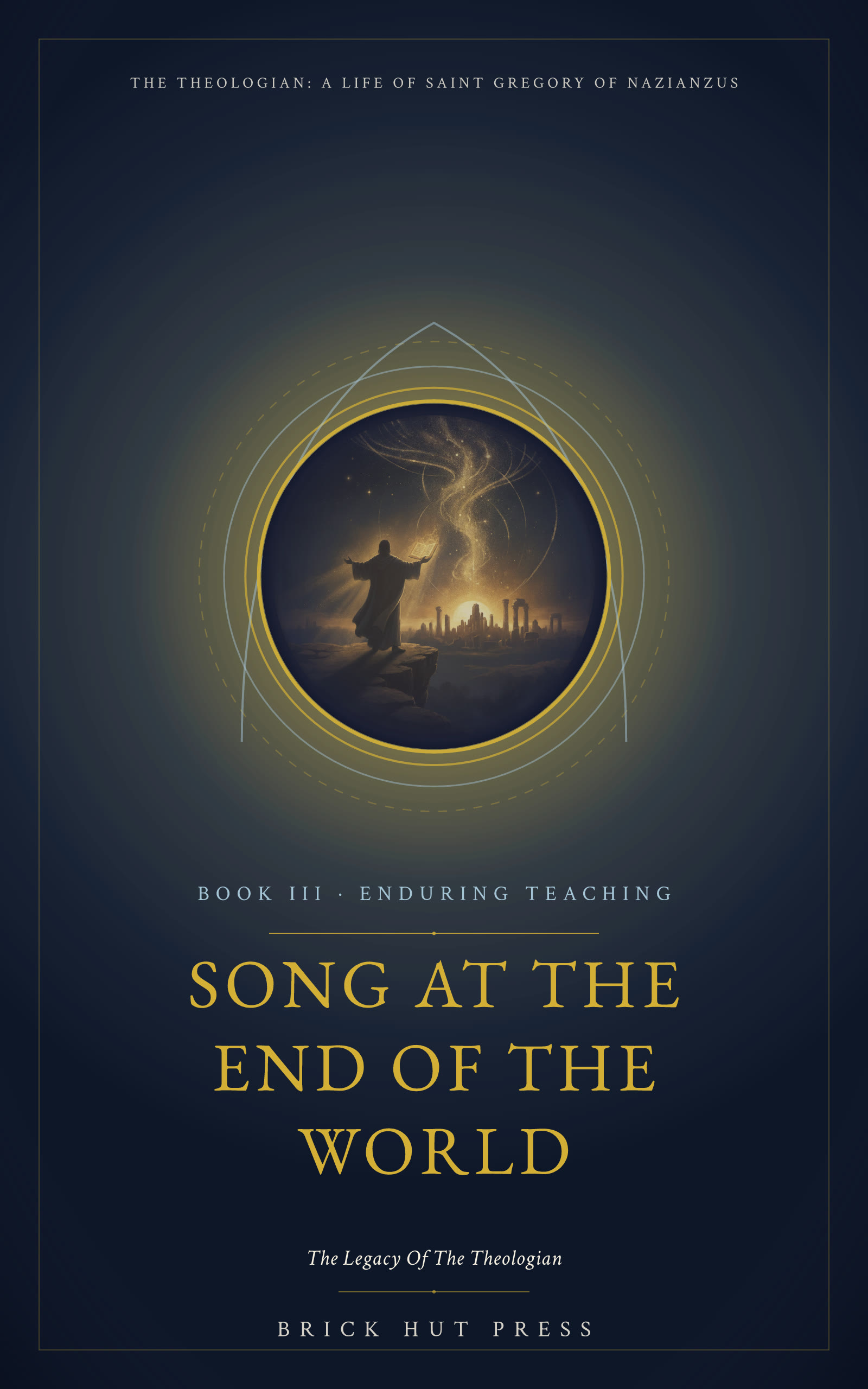
Song at the End of the World
One is the Mystical writer of the Divine Darkness .
The Man the Church Called "The Theologian", And Why That Title Still Burns In all of Christian history, only three souls have been granted the title Theologian by the Church herself. One is the Beloved Apostle. One is the Mystical writer of the Divine Darkness . And one is a fourth-century bishop who fled councils, wept in verse, and spent his final years in a garden, convinced he had failed at nearly everything, yet whose words the Church has never stopped reading.
Read the full description
His name is Gregory of Nazianzus. This is his story. Song at the End of the World: The Legacy of the Theologian traces the full arc of Gregory's extraordinary life, from his aristocratic Cappadocian upbringing and the brilliant friendships forged at Athens, through the devastating weight of the Arian crisis and the Council of Constantinople, to his retreat into silence, poetry, and an aching, luminous prayer that would outlast every empire he had watched rise and fall. This is not a dry academic survey of Nicene controversy. This is a devotional portrait of a man whose hunger for God was matched only by his capacity to suffer, and whose suffering became, somehow, theology.
Not sure yet? Begin free.
The Theologian's Light, a complete book about this life, free, kept in your own library here, read now; its narration joins free when it is finished.
Begin reading, freeAbout this volume
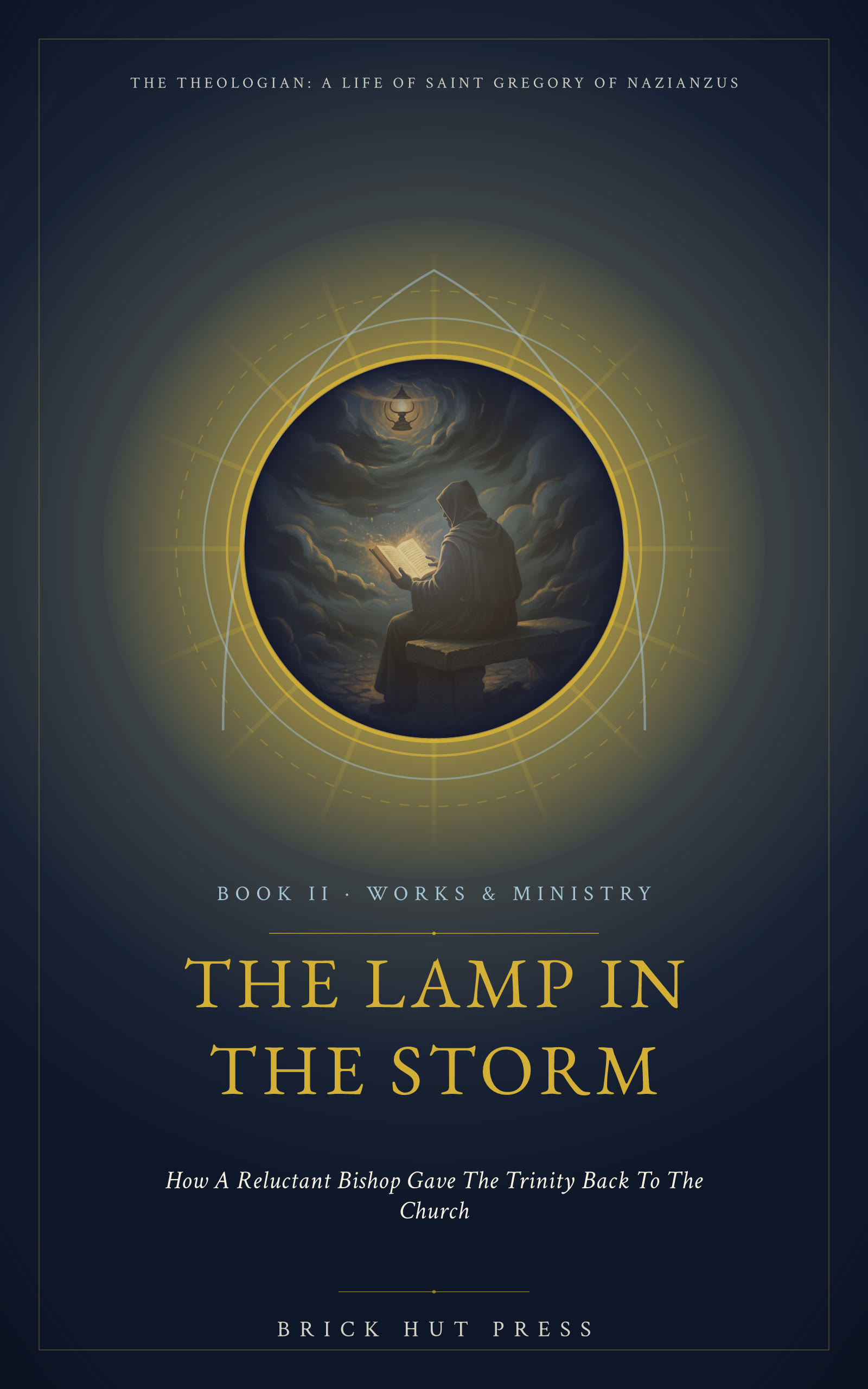
This is the third and closing volume in a three-part life of Saint Gregory the Theologian, and it is built around a question the first two volumes could only gesture toward: what does a man do with the years left to him after the Church has used him up and set him down? Volume One followed the young Gregory from Cappadocia through Athens and into the reluctant priesthood his father forced on him. Volume Two carried him through Constantinople, the Council of 381, and the bitter withdrawal that followed. This volume begins on the road back to Arianzus in the spring of 382, an old man walking home without escort, and it stays with him through the last years of his life, the poetry he wrote in them, and the long labor by which the Church came to understand what he had actually given it.
The opening chapters take seriously something many accounts of Gregory pass over quickly: that his retirement was not an ending but a second vocation. Freed from the pulpit, he became, almost helplessly, a poet, producing in a few short years more verse than any Christian writer before him, including the extraordinary autobiographical poem known as the Song Concerning Himself, a work this volume treats not as a curiosity but as a theological document in its own right, a man examining his own life under the same scrutiny he had once trained on the Trinity. From there the book turns to the Letters to Cledonius, written against Apollinarian teaching, where Gregory's exacting defense of the full humanity of Christ, body and rational soul together, shows a mind still sharpening itself in retirement, still unwilling to let a half-truth about the Incarnation pass unchallenged.
At the center of the volume sit two chapters that reach past biography into the heart of what Gregory is venerated for: his meditation on God as uncreated Light, and his lifelong insistence, worked out in sermon and poem alike, that the whole of Christian life is theosis, the slow transfiguration of the human person into the likeness of the God who first made light out of nothing. These chapters do not treat Gregory's theology as a set of propositions to be summarized but as a vision he had been living out, sentence by sentence, since long before Constantinople, and the book makes the case that everything in his earlier career, the orations, the quarrels, the flights from office, was in service of this one conviction.
The book then widens its lens to ask what the Church did with him afterward: how the councils that had treated him roughly in life came to remember him as something closer to indispensable, how he came to stand alongside Saint Basil the Great and Saint John Chrysostom as one of the Three Holy Hierarchs, and how he earned, almost alone among the fathers, the title of Theologian, a designation the book treats with appropriate weight rather than easy familiarity, asking plainly why so few before or since have been given it. A quieter chapter turns to the material facts of his last years, his poverty, the garden his father had planted, the modest will he left behind, grounding the theology in the plain furniture of an old man's final household.
The volume closes where a life of this kind should close: with his death, remembered here as the death of a man who had spent his whole life longing for light and who met it, finally, without the crowds and councils that had so often stood between him and the God he wrote toward. A final chapter, offered as practical companionship rather than appendix, gathers Gregory's own habits of prayer into something a reader today might actually use, so that the book ends not with an argument settled but with an invitation extended, the same invitation Gregory himself seems to have been writing toward all along.
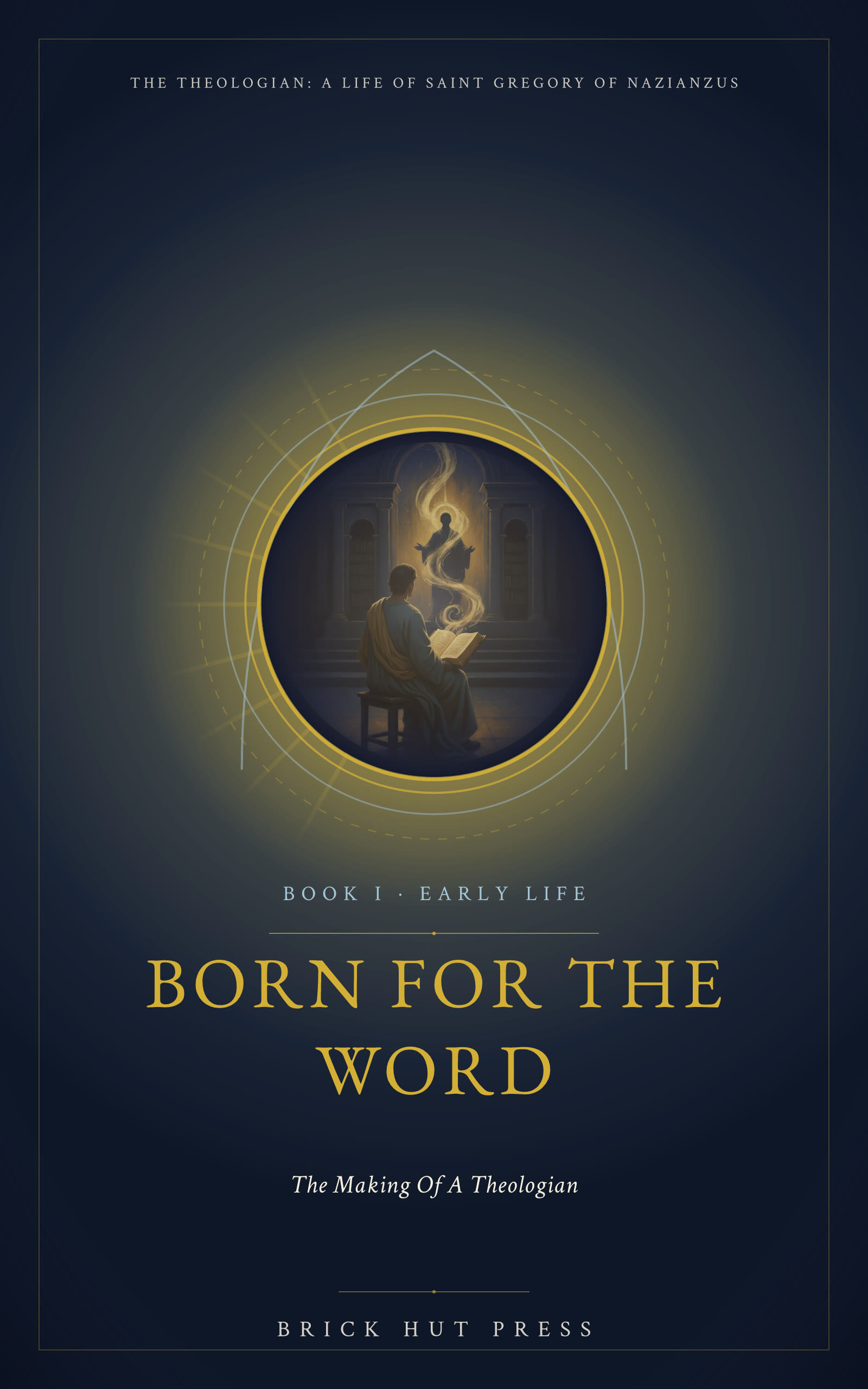
Lives that walk beside Saint Gregory the Theologian, chosen for their likeness, not their fame.