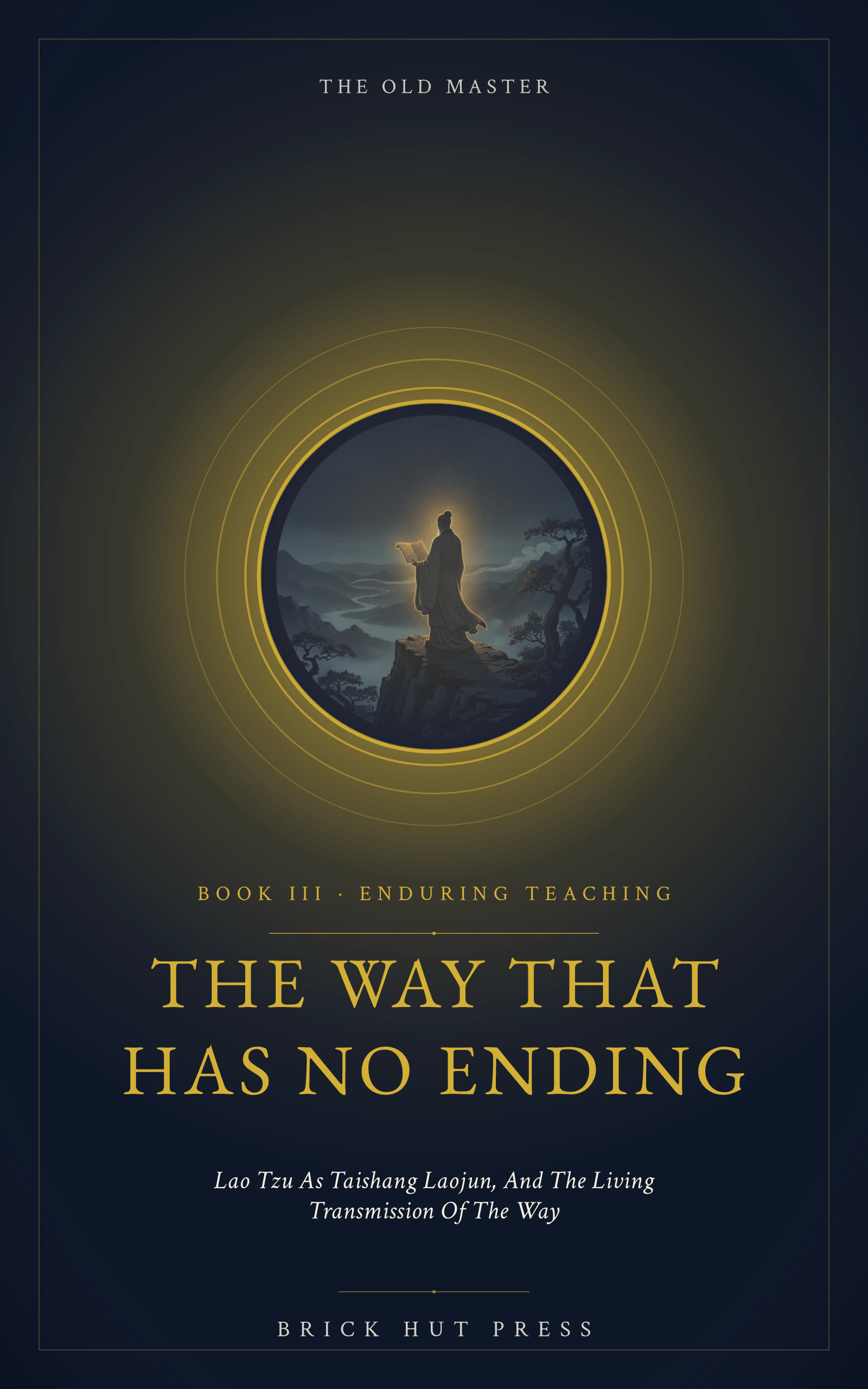
The Way That Has No Ending
Lao Tzu Did Not Only Leave a Text. He Left a Living Transmission. The Tao Te Ching is not the end of Lao Tzu, it is a doorway. Beyond the eighty-one verses, beyond the legend of a sage riding west into the mountains, there flows a current that has never stopped moving. It passes through temples and hearts, through lineages of practice and moments of silent recognition. It is the current of the Tao itself, and Lao Tzu is its living embodiment.
Read the full description
The Way That Has No Ending follows that current across 2,500 years, and brings you into its presence. This is not a commentary. It is not an academic survey. It is a book for those who already sense that Lao Tzu is more than a historical figure, more than a philosophical voice, that he is Taishang Laojun, the Supreme Venerable Sovereign , a divine presence still accessible, still transmitting, still calling practitioners deeper into the Way. Whether you are rooted in a Taoist lineage or walking this path as a fellow traveler, this book was written to be sat with, returned to, and carried.
About this volume
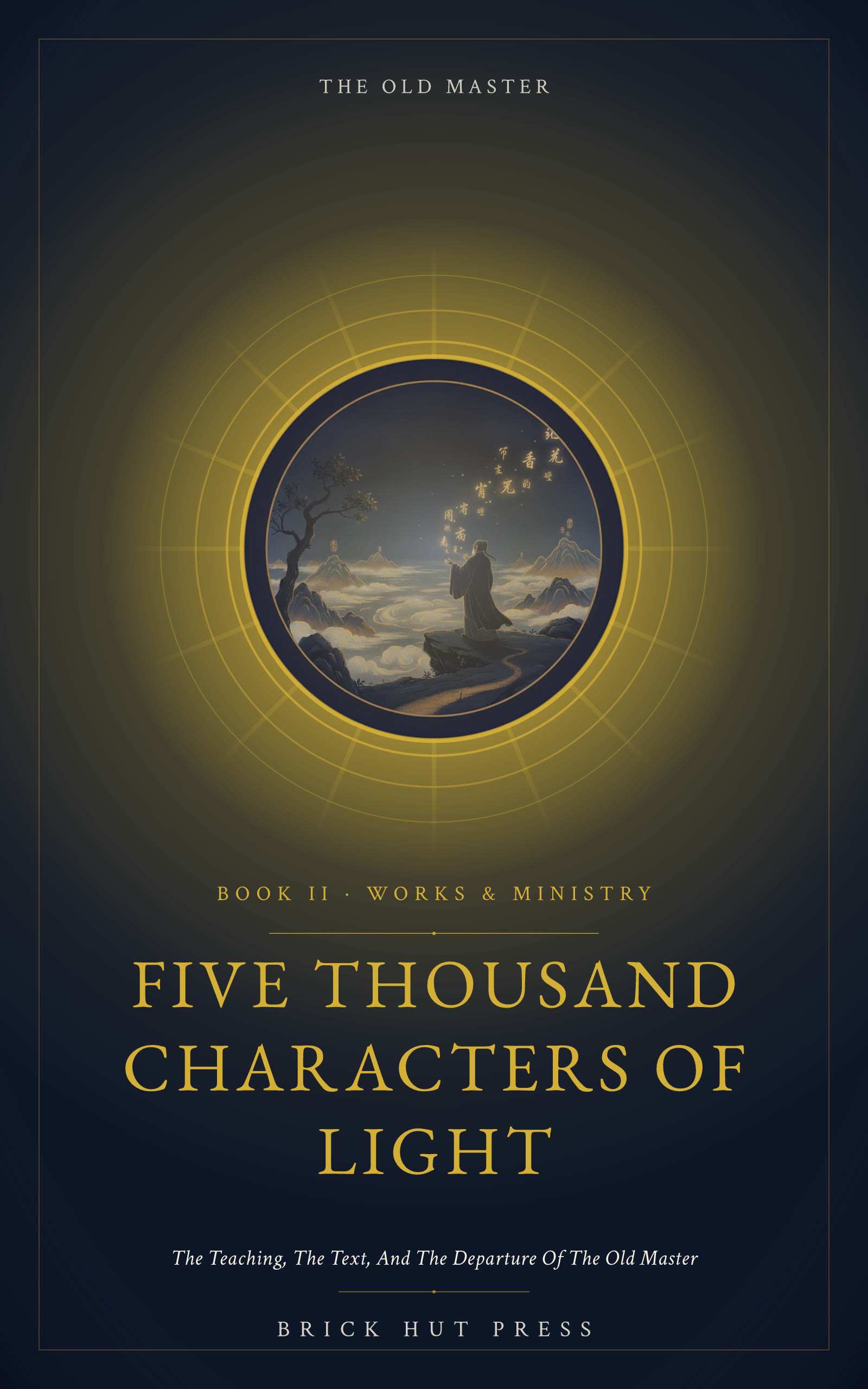
This is the third and final volume of The Old Master, and it begins where the man ends and the god begins, though as this book insists from its first pages, that is not quite the right way to say it. The Lao Tzu who rode west through the gate at the close of Book One, and whose words were gathered and tested through the centuries traced in Book Two, does not disappear from this story. He deepens. This volume follows the Old Master as the Taoist tradition itself came to understand him: not a philosopher who was later mistaken for a god, but a Being whose teaching in the human world was only one appearance among many, the descent of something that had, as the opening chapter puts it, already been there before the beginning.
The early chapters take up this claim directly, through the title by which the faithful have addressed him for two thousand years: Taishang Laojun, the Supreme Venerable Sovereign. Readers will meet the many forms in which Lord Lao was understood to have descended across the ages, appearing to kings and hermits and ordinary petitioners long before and long after his life as the archivist Confucius once questioned. From there the book turns to the Celestial Masters, to Zhang Daoling in his cave in Sichuan, and to the covenant that transformed a body of teaching into an organized religious lineage with its own priesthood, its own rites, and its own living claim to carry the Way forward. The volume follows that lineage into its grandest historical hour, the Tang dynasty, when an emperor looked back across centuries and named Lao Tzu his own ancestor, and the Way received an imperial glory it had never known before.
From history the book moves into cosmology, placing the Old Master among the Three Pure Ones in his highest dignity, and from cosmology into the patient, careful work of explaining what the tradition actually means by its central words. A full chapter is given to Tao itself, approached not as a puzzle to be solved but as a word that holds what no word can hold. Another is given to Te, the shape a life takes when it has genuinely followed the Way rather than merely admired it from a distance. Wu wei receives the same unhurried treatment, examined as both the hardest discipline a person can undertake and, properly understood, the most natural. The chapters on pu and ziran close this part of the book by bringing the reader back to something plain and immediate: not a doctrine to master but a self to return to, uncarved, already whole.
The closing chapters turn from teaching to practice and from practice to transmission. One is devoted to the Birthday of the Supreme Venerable Sovereign, the day kept by temples and households as an act of living memory rather than mere commemoration, and the book treats this observance with the same seriousness it gives the Tang emperor's court or the cave at Sichuan. The last chapter asks the question the whole volume has been building toward: what, exactly, did the Old Master leave in the hands of those who came after him. Not a system to be defended, the book argues, but a way of living that each generation has had to receive fresh, the way a river is never the same water twice and yet is still rightly called by the same name.
Readers who have followed the first two volumes will recognize the voice and the patience of this telling, its refusal to rush past a hard question or resolve a mystery too quickly for the sake of a tidy ending. Those coming to this book first will still find it whole in itself: a reverent, unhurried account of how a tradition came to recognize, slowly and across many centuries, what it says had been true of the Old Master from the very start. It closes the three-part life not with an answer but with an inheritance, offered the way such things are always rightly offered, into the reader's own open hands.
Not sure yet? Begin freely.
Born Already Old: An Invitation to Lao Tzu, a complete portrait of this life, free, kept in your own library here. The door into all 3 volumes.
Receive the free book →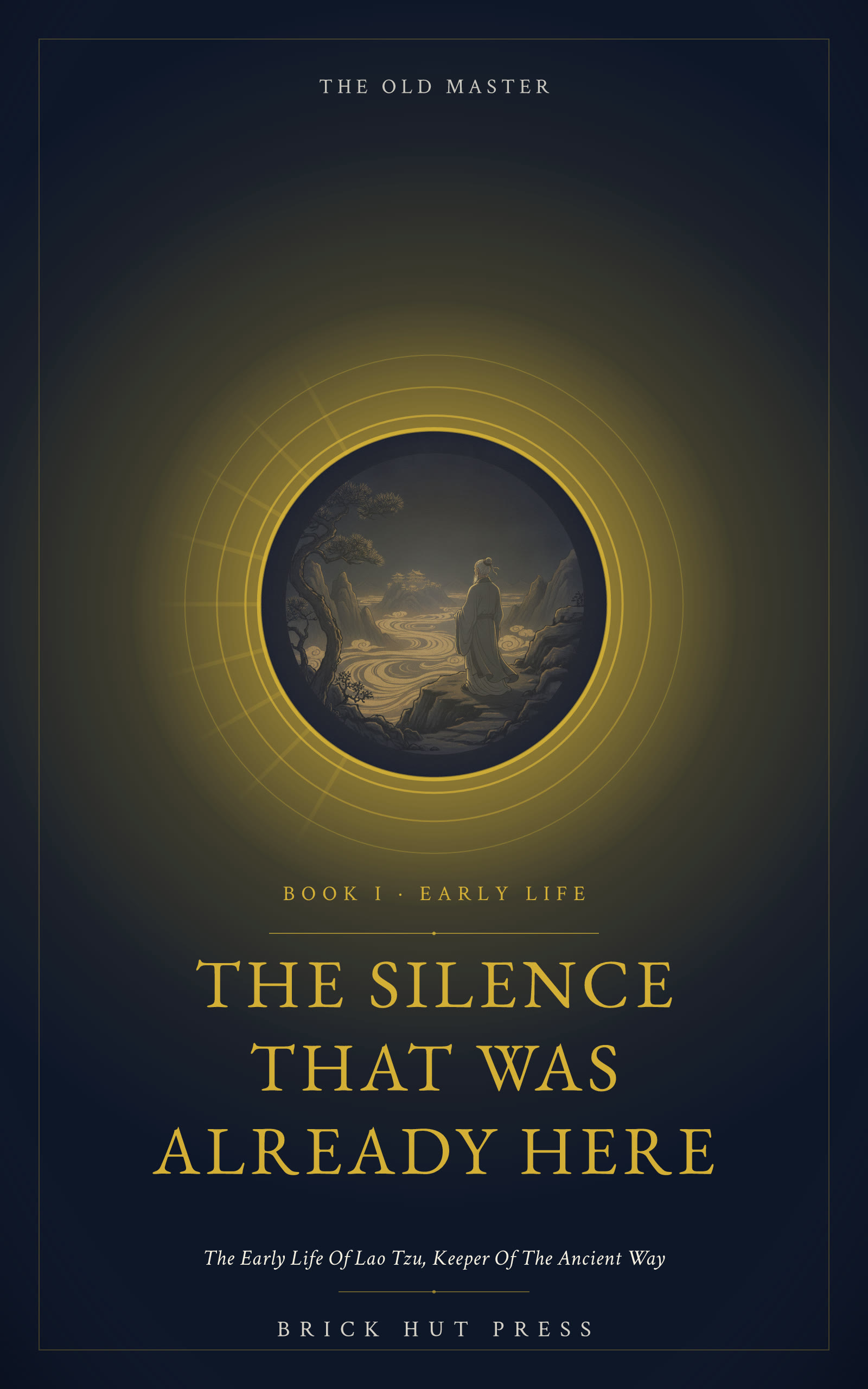
Lives that walk beside Lao Tzu, chosen for their likeness, not their fame.