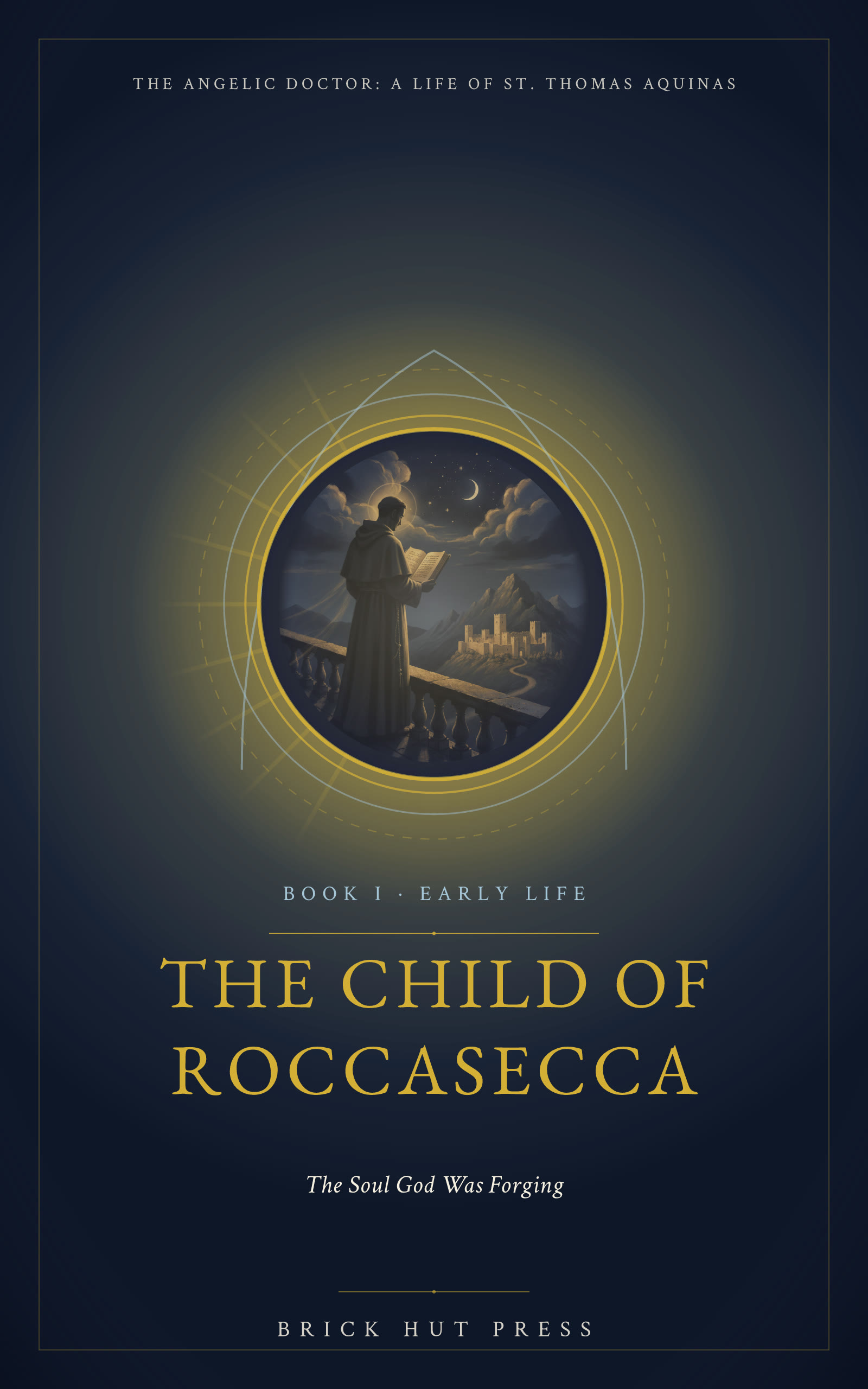
The Child of Roccasecca
He Was Not Born the Angelic Doctor, He Was Forged Into One Before the Summa Theologiae . Before the lecture halls of Paris. Before the Church declared him a Doctor for all ages, there was a boy on a clifftop in southern Italy, already burning with a question his family could not answer and his captors could not extinguish. The Child of Roccasecca is a devotional account of the early years that made Thomas Aquinas who he was.
Read the full description
This is not a dry biography or a dense philosophical survey. It is the story of a soul, headstrong and tender, brilliant and obedient, being shaped by God through family pressure, monastic silence, a daring abduction, and a faith that refused to be redirected by anyone's ambitions but Heaven's own.
About this volume
This first volume of The Angelic Doctor begins not with the brilliance for which the world would come to know Thomas of Aquino, but with the stillness beneath it: a five-year-old oblate at Monte Cassino, asking a question he would spend his whole life answering more fully without ever exhausting it. Quid est Deus? What is God? That question, posed in a child's grave and unhurried voice, is the thread this volume follows from the castle at Roccasecca through the monastery school on the Holy Mountain, into the restless intellectual air of Naples, and finally to the dramatic year that tested, more than any disputation ever would, whether this soul belonged to his family or to God.
Readers who come to Aquinas mainly through the Summa, through the cool architecture of question and article, often do not know the Thomas who had to be formed before he could form anything else. This book gives them that formation in full: the five years among the Black Monks, where silence was not absence but discipline, a kind of listening the boy seemed to have been born already practicing. It gives the shock of Naples, where young Thomas first met Aristotle not as a dusty authority but as a live provocation, a city of argument that cracked open categories the cloister had not prepared him to question and that he would spend a lifetime reconciling with the faith he never doubted.
The volume's center of gravity, though, is the decision that nearly broke his family and very nearly ended the story before it properly began: his choice of the white mantle of the Order of Preachers, the Dominicans, over the comfortable and politically useful abbacy his family had assumed was his destiny. Chapter by chapter, this book sits with what that choice cost him. His mother's ambush on the road to Paris, orchestrated with his brothers' help, is not softened into a footnote here; it is given the weight it had, a family's genuine grief and fury at a son who would not be managed. And the year that followed, the year in the tower, is rendered as the captivity it truly was: months of isolation meant to wear down a young man's resolve, met instead with a perseverance that the tradition has long remembered alongside the account of angelic strengthening that sustained him through it.
What makes this volume valuable is its refusal to rush past the years most lives of Aquinas treat as preamble. The chapters on Roccasecca and the castle on the cliff, on the particular texture of Benedictine formation, on the silence that was not emptiness, exist because the book takes seriously a claim central to the Catholic understanding of sanctity: that grace works through a whole life, including its slowest and least dramatic years, and that the grown saint cannot be understood apart from the child who was patiently, deliberately shaped. Readers looking only for the famous disputant of Paris will find him waiting at the volume's close, but they will arrive there having walked the long road that made him, rather than meeting him already finished.
The volume ends where the next one must properly begin, with young Thomas released from the tower and sent onward to Cologne, to study under Albert the Great, the teacher who would recognize in this quiet, large, slow-seeming young man the mind that would one day be called, without irony, the greatest since the Fathers. For readers of the Catholic tradition who want their saints neither flattened into stained glass nor reduced to biography stripped of grace, this is a careful, reverent, and specific account of how a soul was forged before it was ever famous, written for those who want to understand sanctity as a process lived in castles, cloisters, towers, and finally, on the road to Cologne.
Not sure yet? Begin freely.
Where Reason Kneels, a complete portrait of this life, free, kept in your own library here. The door into all 3 volumes.
Receive the free book →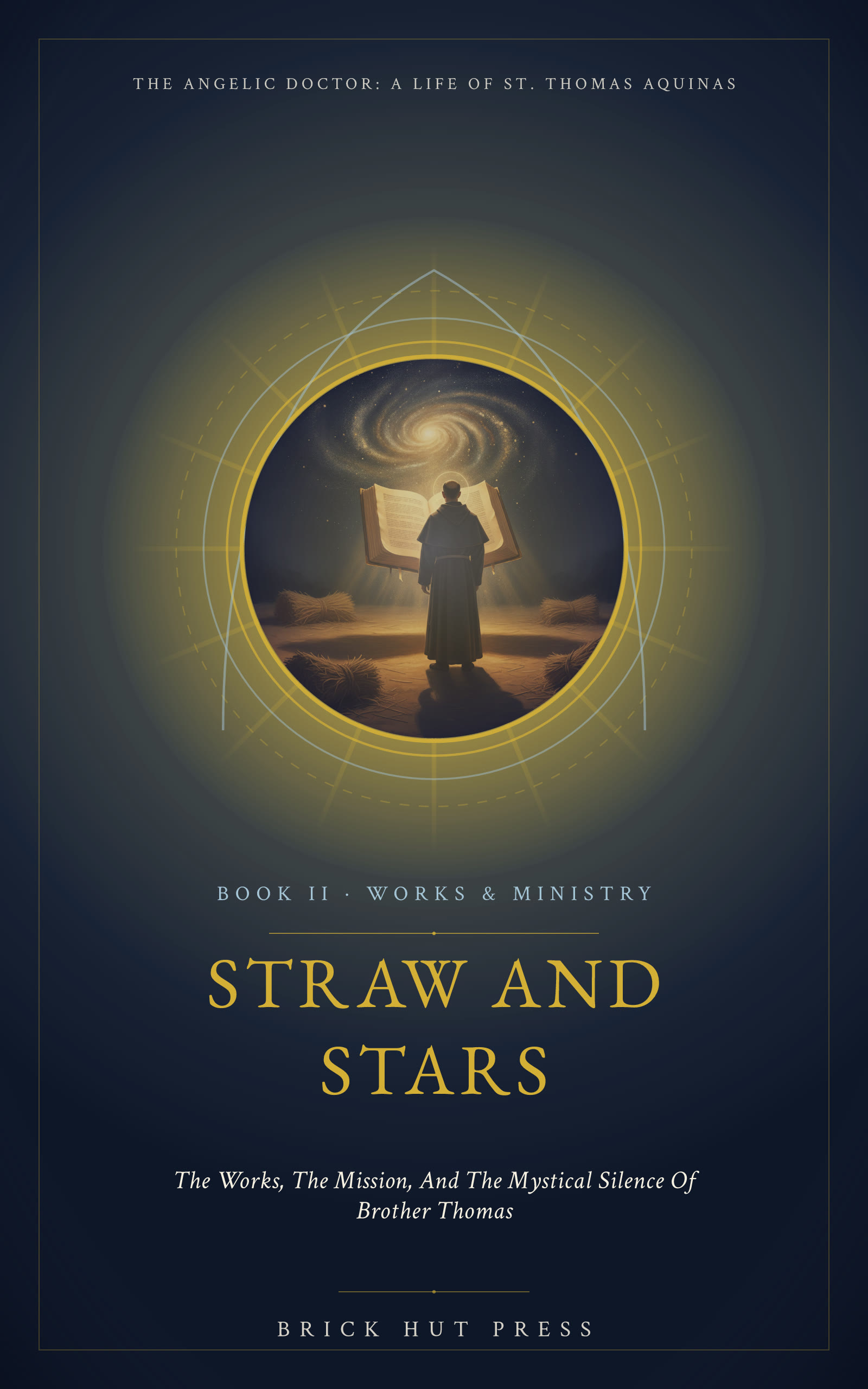
Lives that walk beside St. Thomas Aquinas, chosen for their likeness, not their fame.