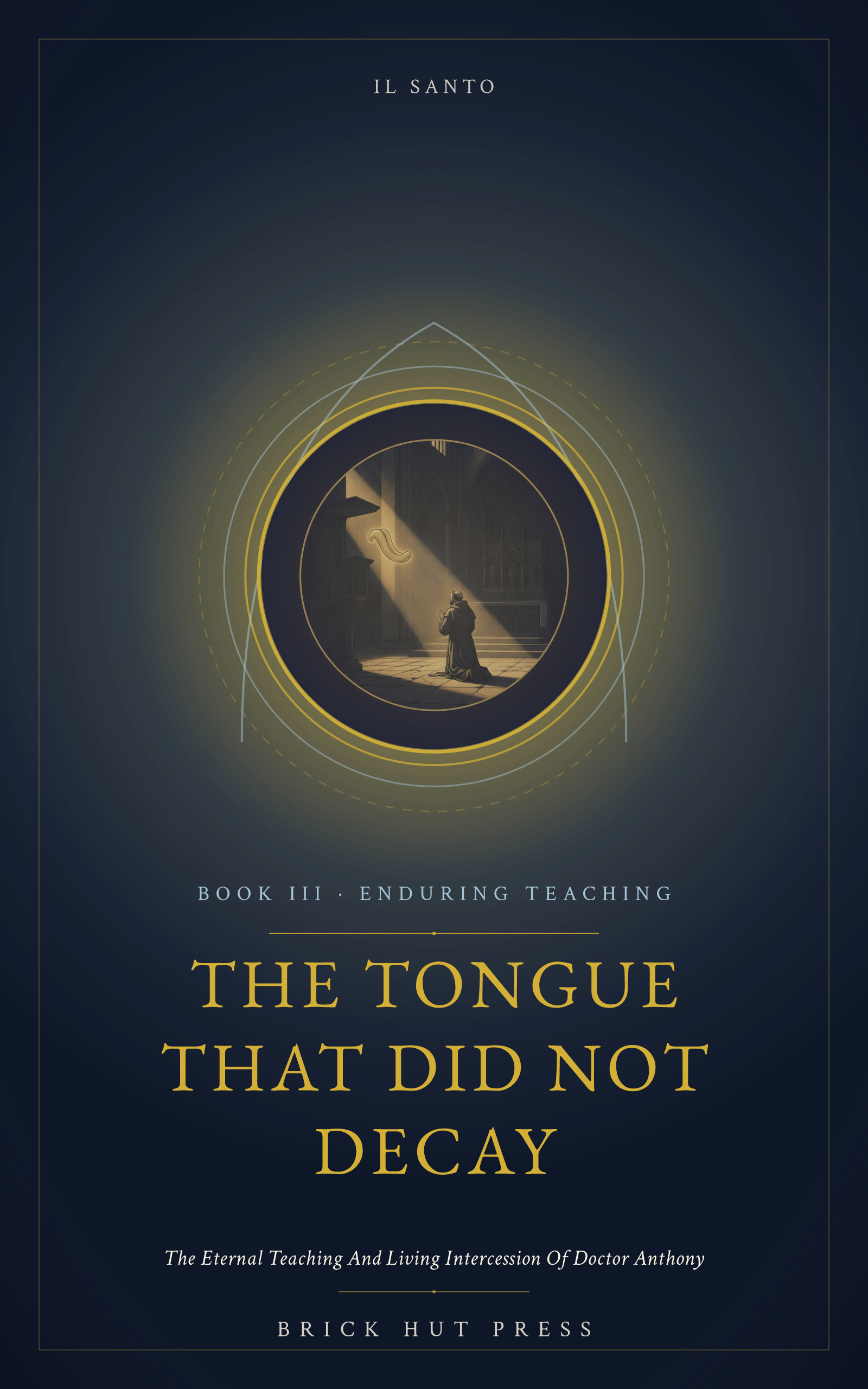
The Tongue That Did Not Decay
The Saint Everyone Calls Upon, But How Many Truly Know Him? You have pressed the prayer card. You have whispered the Tuesday novena. You have asked him to find what was lost, keys, hope, a wandering child, a peace you cannot name. And he has answered. But behind every answered prayer stands a man of thunderous intellect, volcanic charity, and a holiness so complete that when his body returned to dust, his tongue did not decay.
Read the full description
The Tongue That Did Not Decay invites you past the prayer card and into the living heart of Doctor Anthony himself. This devotional companion from the BrickHut Sanctuary, Sacred Lives series opens Anthony's own Sermones to modern readers for the first time in an accessible, spiritually nourishing form. Here is the friar formed in Lisbon and Coimbra, the Augustinian canon who surrendered everything for a Franciscan martyr's dream, the preacher who silenced heretics and moved entire cities to tears, and the Doctor Evangelicus whose teaching the Church declared eternal. Eight centuries have not dimmed him. They have only confirmed him.
About this volume
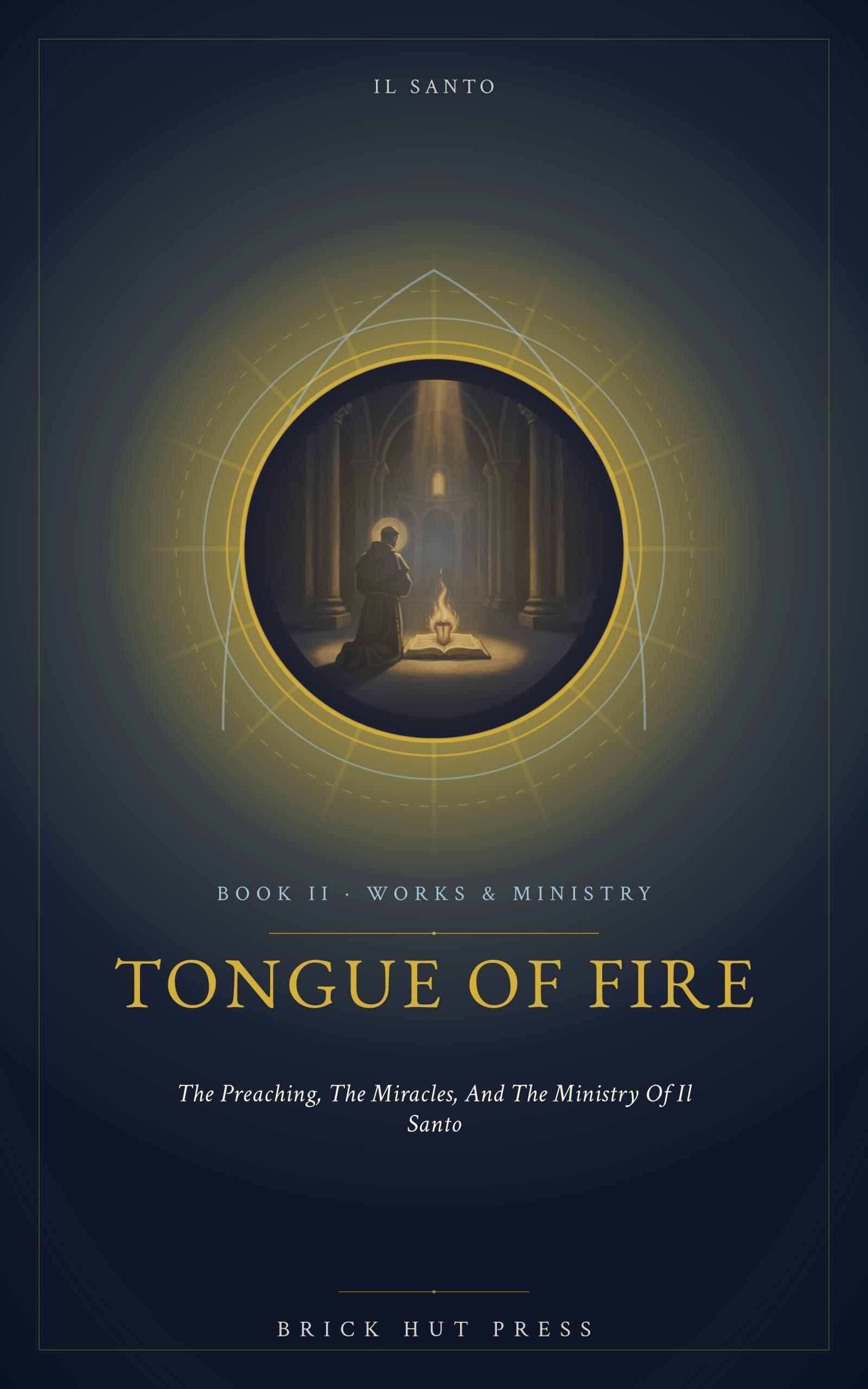
This is the third and final volume of Il Santo, and it is the one that answers the question the first two volumes have been building toward all along: what happened to Anthony of Padua after June 13, 1231, that the Church herself could not wait to call him a saint, and what has kept the world from letting him go since. The opening chapters move quickly through that extraordinary year, the three hundred and fifty-two days between the friar's death at Arcella and Pope Gregory IX's bull at Spoleto, and then turn to something stranger and more enduring: what Saint Bonaventure found when Anthony's tomb was opened decades later, the body given over to dust but the tongue, the very instrument of his preaching, found whole and incorrupt. That image gives the volume its title, and it gives the reader its governing conviction, that Anthony's voice was never meant to fall silent with his body.
From there the book turns to the title the Church has given him, Doctor of the Church, and does the patient work of explaining what that designation actually means and does not mean. This is not hagiography content to marvel from a distance. It takes seriously that Anthony stands among a small company of teachers whose writing and preaching the universal Church has judged reliable enough to form consciences across centuries, and it asks what in his sermons earned that trust. Four chapters follow that trace the shape of his teaching as he himself preached it: Scripture read not as a text to be mastered but as the very Body of Christ offered to the hearer, the Eucharist as the unmoved center around which his entire spiritual life turned, the poor man seen not as an object of charity but as an icon in whom God himself is met, and Our Lady regarded through Anthony's own particular tenderness, which the volume draws directly from his surviving sermons rather than from later sentiment layered on top of them.
The middle of the book holds the two images most people already carry of Anthony, even if they know nothing else about him, and treats them with the same seriousness as the doctrinal chapters. The appearance of the Christ Child at Camposampiero is examined not as decoration on a holy card but as the event that shaped how the whole Franciscan tradition came to understand Anthony's interior life. And the chapter on Anthony as the saint who finds what is lost traces how a friar renowned in his own lifetime for theological rigor became, across eight centuries, the patron ordinary Catholics turn to first when a key, a relationship, a vocation, or a piece of themselves has gone missing. The volume does not treat this as a diminishment of the Doctor of the Church into a folk figure. It treats it as continuous with everything that came before, the same instinct for finding what matters in what the world has set aside.
The closing chapters widen the lens outward in both directions, backward across the centuries of Tuesday novenas and the bread given to the poor in his name, and forward into the basilica at Padua itself, which the book insists on calling a building still becoming rather than a finished monument, still shaped by the pilgrims who arrive at his tomb every day. The final chapter asks plainly what Il Santo is still saying to a Church and a world eight hundred years removed from Arcella, and it answers from inside the devotion rather than above it.
Read on its own, this volume stands as a study of sanctity that refuses to let doctrine and popular love pull apart from each other, insisting instead that the same friar who reasoned with Scripture like a Doctor of the Church is the one ordinary people still ask, on an ordinary Tuesday, to help them find what they have lost. Read after the first two volumes, it completes a life whose ending, the book insists, was never really an ending at all.
Not sure yet? Begin freely.
The Saint Who Finds What Is Lost: An Invitation, a complete portrait of this life, free, kept in your own library here. The door into all 3 volumes.
Receive the free book →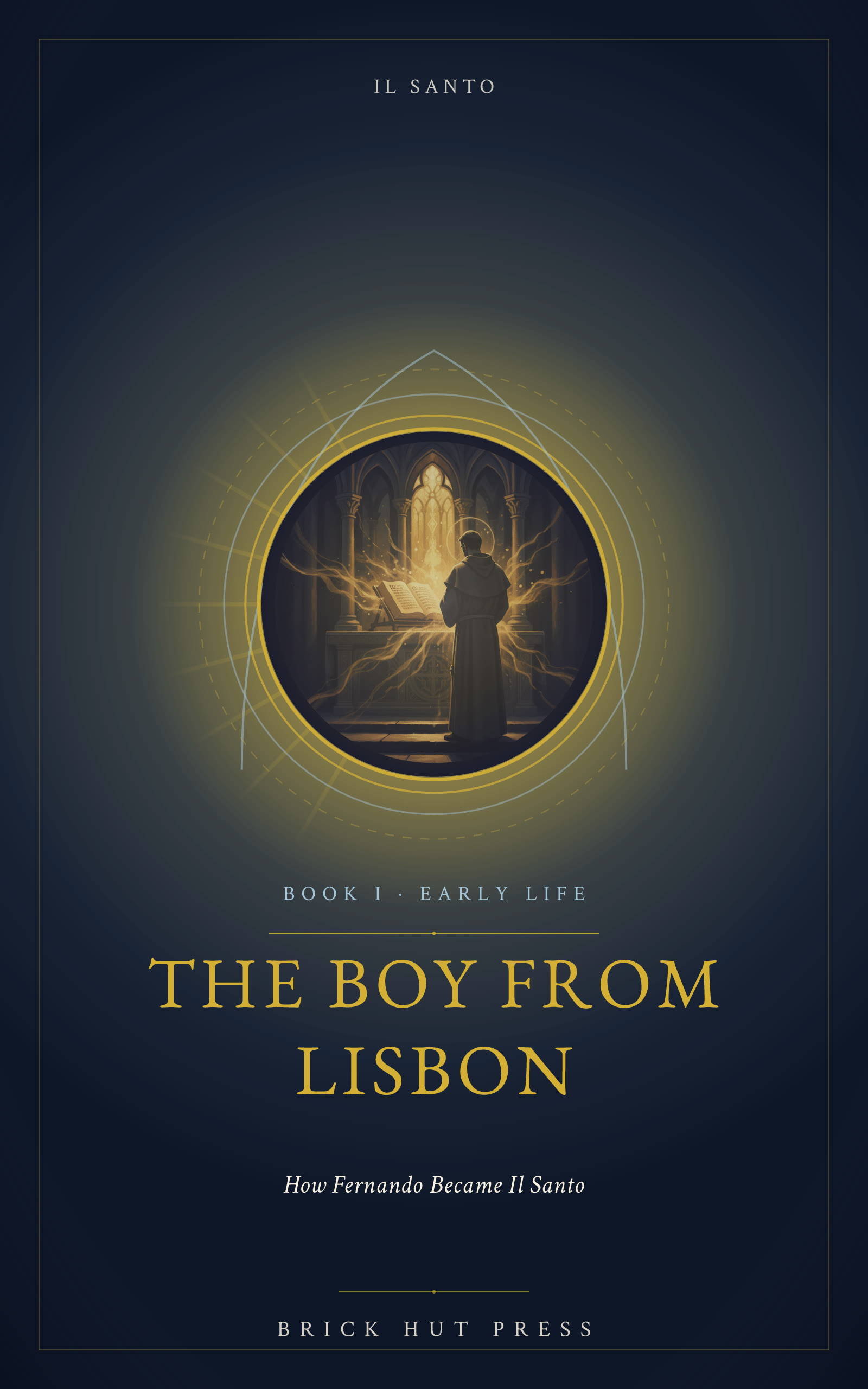
Lives that walk beside Saint Anthony of Padua, chosen for their likeness, not their fame.