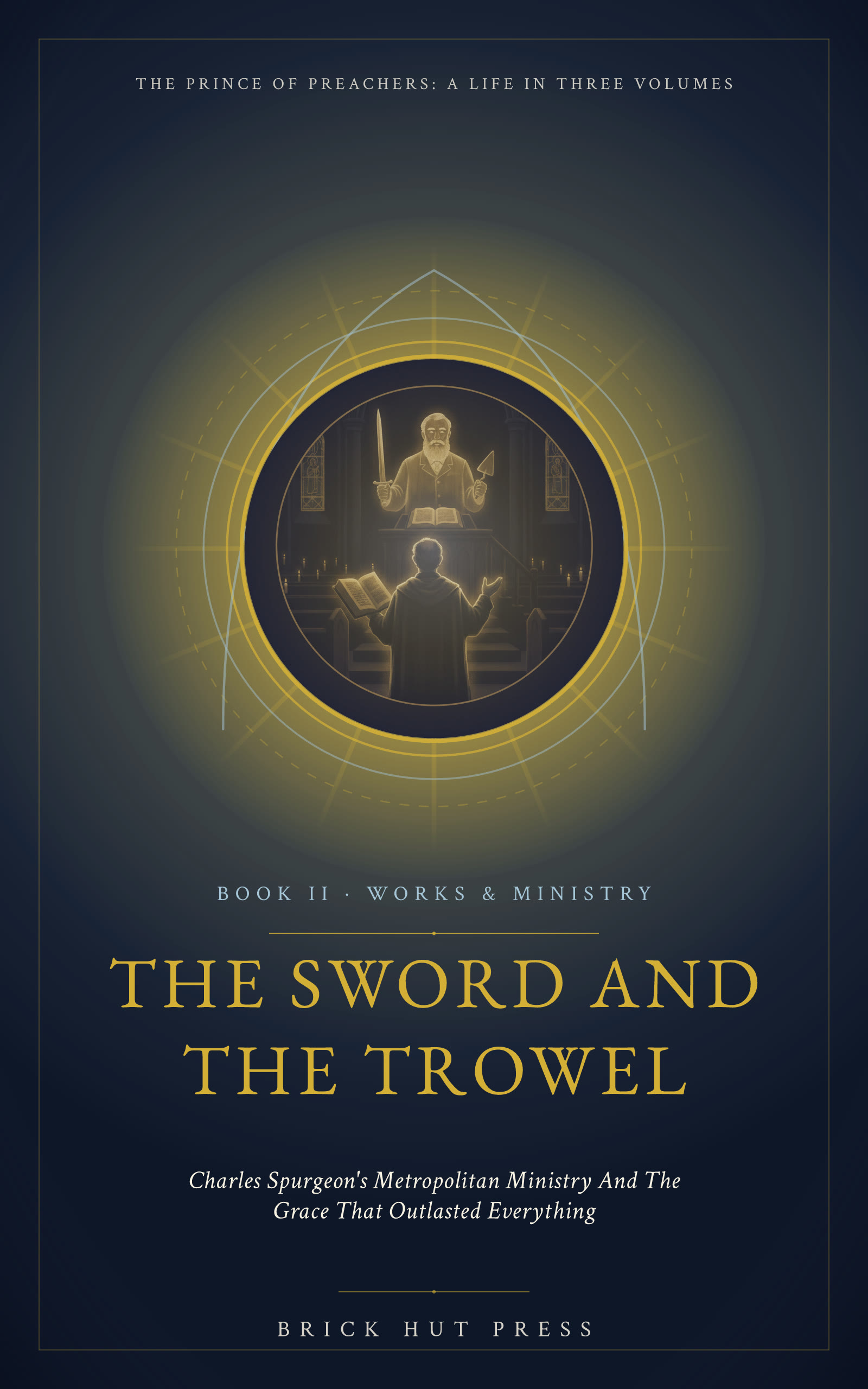
The Sword and the Trowel
And then there are those that change the way you see your own life .
He Preached to Millions, Suffered Without Ceasing, and Trusted Grace With Everything There are Christian biographies that inform you. And then there are those that change the way you see your own life . The Sword and the Trowel: Charles Spurgeon's Metropolitan Ministry and the Grace That Outlasted Everything belongs firmly in the second category.
Read the full description
This is the story of the Prince of Preachers, not as a monument to be admired from a distance, but as a man of flesh and faith whose struggles, convictions, and unshakeable confidence in God speak directly into your life today. Charles Haddon Spurgeon built the Metropolitan Tabernacle into the most extraordinary preaching ministry the nineteenth century had ever seen. He founded orphanages and a pastors' college. He published The Sword and the Trowel magazine, flooding the English-speaking world with Reformed, evangelical truth. He preached to congregations of six thousand and to readers numbering in the millions. And he did nearly all of it while enduring crippling gout, depression, and the slow agony of Bright's disease, pain that would have ended a lesser man's ministry before it began. Then, at the height of his influence, he stood nearly alone in the Down-Grade Controversy, contending for the gospel when compromise felt like the safer, more respectable path. He lost friends. He lost fellowship. He lost his health entirely. He never lost his faith. Written with the directness and warmth of a trusted friend in the congregation, no academic hedging, no cold historical distance, this book tells Spurgeon's story as it deserves to be told: as a story of grace. Sovereign, unconditional, sufficient grace that outlasted suffering, controversy, loneliness, and death itself.
Not sure yet? Begin free.
Still Speaking, a complete book about this life, free, kept in your own library here, read and heard.
Receive the free bookAbout this volume
This second volume opens where the first left its young preacher standing: already famous, already crowded out of every room London could offer him, and utterly unprepared for what fame would cost. The opening chapter takes up the Surrey Gardens catastrophe of October 1856 directly, without softening it, because Brick Hut Press believes a life in the Reformed tradition is told honestly or not at all. Seven people died in the crush that night. Charles Haddon Spurgeon was twenty-two years old, and the question this volume asks, from its first page, is how a man carries that weight into forty more years of pulpit work without either hardening against it or being broken by it.
What follows is the story of a ministry built in the shadow of that question. The Metropolitan Tabernacle rises, five thousand seats where once there had been twelve hundred, and the volume treats that building not as a monument to success but as a continuing act of faith, a congregation that kept gathering after the worst had already happened to them. Chapter by chapter the reader sees how Spurgeon's work widened outward from the pulpit itself: the Thursday evening lectures delivered without fail, week upon week, to men who would carry what they heard into trades and homes across the city; the Pastor's College, where he trained preachers rather than merely producing sermons; the orphanage at Stockwell, where the gospel he preached on Sunday became, on Monday, bread and shelter for children who had neither. This is a book about institutions, but it never loses sight of the conviction that made them: that preaching the free grace of God obligates a man to spend himself on the people grace has not yet reached.
The domestic chapters sit close beside the public ones, as they should in a life where the two were never truly separate. Susannah Spurgeon appears here not as a footnote to her husband's labors but as a minister in her own right, the Book Fund carrying theological literature into the hands of poor pastors who could never have afforded it otherwise. And the volume does not flinch from the body's betrayals: the gout that came early and stayed, the darkness that pressed on him in seasons when the crowds outside the Tabernacle had no idea what their pastor carried home. A reader who has only heard Spurgeon called the Prince of Preachers will meet here a man who preached through pain he rarely named from the platform, and who did not consider that pain a contradiction of his calling but a strange companion to it.
The later chapters turn toward controversy and cost of a different kind. The chapter on believer's baptism, sharply titled "When Baptism Drew Blood," and the long reckoning of the Down-Grade controversy show a pastor willing to spend his standing, and eventually his health, defending what he understood Scripture to require, even when it meant parting from bodies and friendships he had long been part of. The Treasury of David, his vast devotional commentary on the Psalms, sits in this volume as evidence of where his mind went when his body could not stand in a pulpit: back to the text, always back to the text. And the final chapters, set against the quiet of Mentone, where he went for his health, do not pretend that rest undid what the years had cost him.
This is a volume for readers who want the full weight of a pastor's public labor held together with the private grace that sustained it, told in the order it happened, without rearranging the hard parts to make them easier to carry. It assumes no prior theological training, only a willingness to sit with a man who believed that the same grace which saved him was sufficient for every seat he ever had to fill, and every grief he could not explain.
Lives that walk beside Charles Haddon Spurgeon, chosen for their likeness, not their fame.