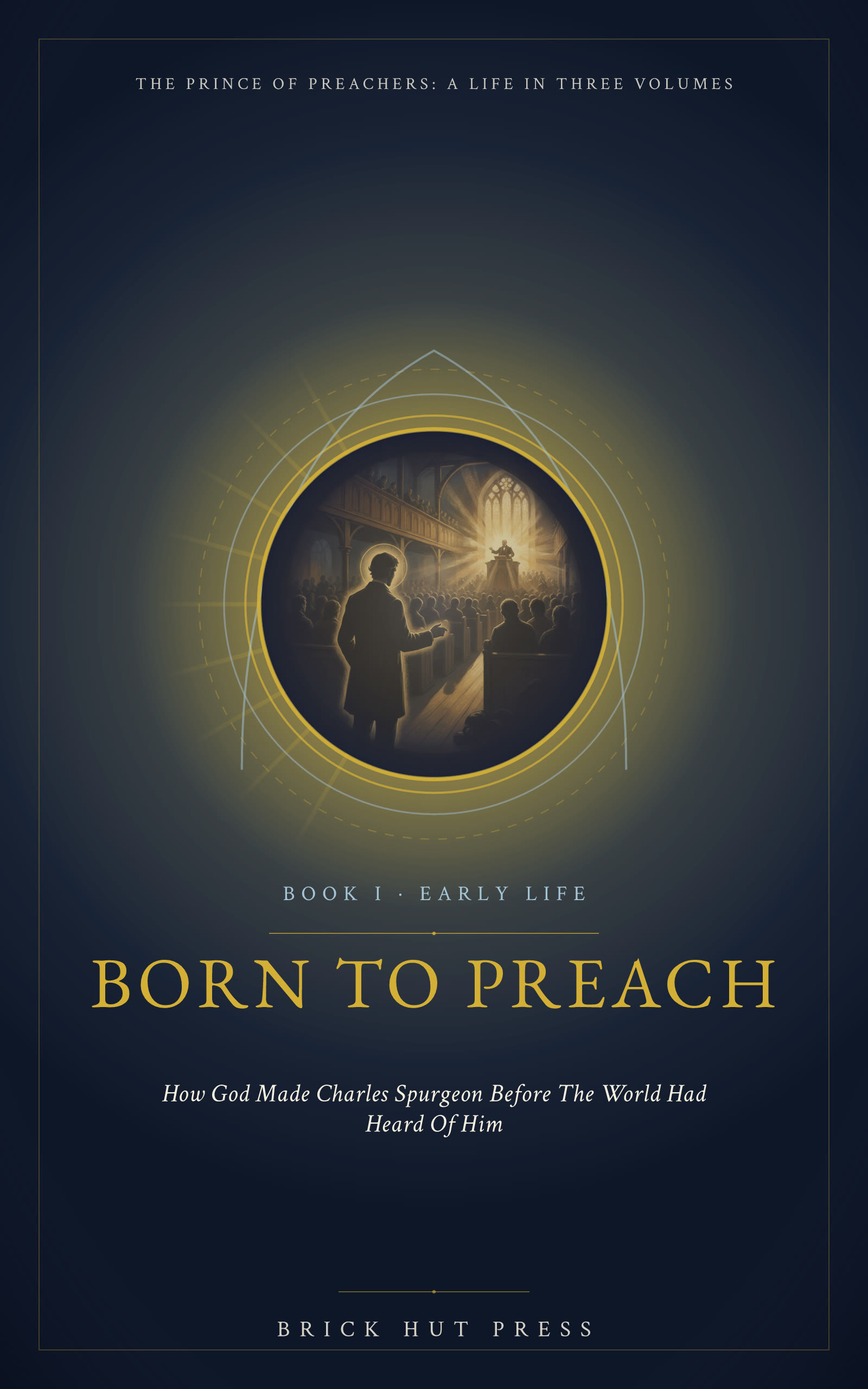
Born to Preach
Before the Metropolitan Tabernacle.
God Does Not Improvise His Servants, He Prepares Them. Before the crowds. Before the Metropolitan Tabernacle. Before London knew his name or the world called him the Prince of Preachers, Charles Spurgeon was being formed. In a country parsonage. Among Puritan bookshelves heavy with doctrine. On one unforgettable winter morning inside a small Colchester chapel where a boy walked in burdened and walked out changed forever.
Read the full description
Born to Preach is not another biography that catalogues dates and sermons. It is the story of a life shaped before it was seen, a story of sovereign grace working quietly in ordinary places, through godly grandparents, a praying mother, old books, and the convicting weight of a simple gospel word. If you have ever loved Spurgeon, or if you are only now discovering him, this is the book that takes you to the beginning and shows you what God was doing when no one else was watching. What You Will Discover Inside The hidden years that made him: How Spurgeon's childhood in Kelvedon and Stambourne, surrounded by Puritan theology and a grandfather's faithful ministry, laid the doctrinal and spiritual foundations that would one day hold the weight of thousands. The books that preached before he did: How providence placed the writings of the old Puritans directly into young Charles's hands, and why those hours of reading shaped his preaching voice for life. One winter morning in Colchester: The full, vivid account of Spurgeon's conversion, what brought him to that Primitive Methodist chapel, what he heard, and how a single sentence of Scripture split his darkness like sunlight.
Not sure yet? Begin free.
Still Speaking, a complete book about this life, free, kept in your own library here, read and heard.
Receive the free bookAbout this volume
This first volume of a three-part life follows Charles Haddon Spurgeon from his earliest years to the threshold of the ministry that would soon make him famous, and it does so by taking seriously a conviction the volume never apologizes for: that before the world had heard of this preacher, God was already making him. The book opens not in a pulpit but on a hearthrug in Stambourne, Essex, where a toddler sent to live with his grandfather absorbed, long before he could articulate it, what a minister's life actually looked like from the inside. That early separation from his parents' crowded household, far from being a wound the volume must explain away, becomes the first of several providences the chapters trace with patience and care.
The middle chapters follow the boy through Stambourne's chapel history and its curious relics (the title "Foxes and Flames" points toward Charles's early, formative encounter with Puritan writing in his grandfather's house), through the ordinary griefs of childhood, and into a passage the volume calls "The Weight He Could Not Carry," an honest reckoning with the young Spurgeon's prolonged spiritual distress, the years of conviction and self-doubt that preceded any public ministry at all. Readers who know only the later, confident Spurgeon of the Metropolitan Tabernacle will find here a boy wrestling in earnest with his own sin and standing, unsure whether grace was for him. The volume does not rush this. It treats the burden as real and the relief, when it comes, as a real work of God rather than a narrative convenience.
That relief arrives in a chapter readers of Spurgeon's own testimony will recognize by its bones if not yet its title: a snowstorm forces a fifteen-year-old off his intended path and into a small Primitive Methodist chapel on a side street, where a lay preacher, working from a half-remembered text, says something plain enough to undo years of inward struggle in a moment. "A Snowstorm and a Side Street" and "Down to the River," the baptism that follows, form the hinge of this volume: the conversion that Spurgeon himself would spend a lifetime pointing back to, told here with attention to the ordinary means God used, an unlearned preacher, a half-empty room, a boy who happened to be walking that way.
From there the volume follows the unmistakable, almost startling speed with which gifting met opportunity. "The Boy Who Stood Up" and "The Village Preacher" trace his first attempts at exhortation among the Cambridge villages, awkward and earnest, long before anyone thought to call him remarkable. Then comes the turn the volume has been building toward all along: Waterbeach, and then London, where "Something the City Had Not Heard" and "Exeter Hall and the Unstoppable Rumor" describe a teenager's preaching drawing crowds no one had prepared for, rumor outrunning fact, galleries filling before the posters were even printed. A chapter on Susannah, the woman who would become his wife, and another on his deepening immersion in the Puritan fathers who shaped his theology, round out the portrait of a young man whose doctrine and whose affections were forming together, not in sequence.
The closing chapter, "What God Had Made," steps back to ask what this volume has really been documenting: not a prodigy discovered, but a minister formed, deliberately and over years, by a grandfather's chapel, a snowstorm, a river, and a Puritan shelf, long before Spurgeon ever stood in the pulpit that would make his name known across London and beyond. Readers who come to this volume wanting the triumph of the later years will find instead something rarer and, this volume argues, more necessary to understand first: the slow, hidden work that made the triumph possible at all.
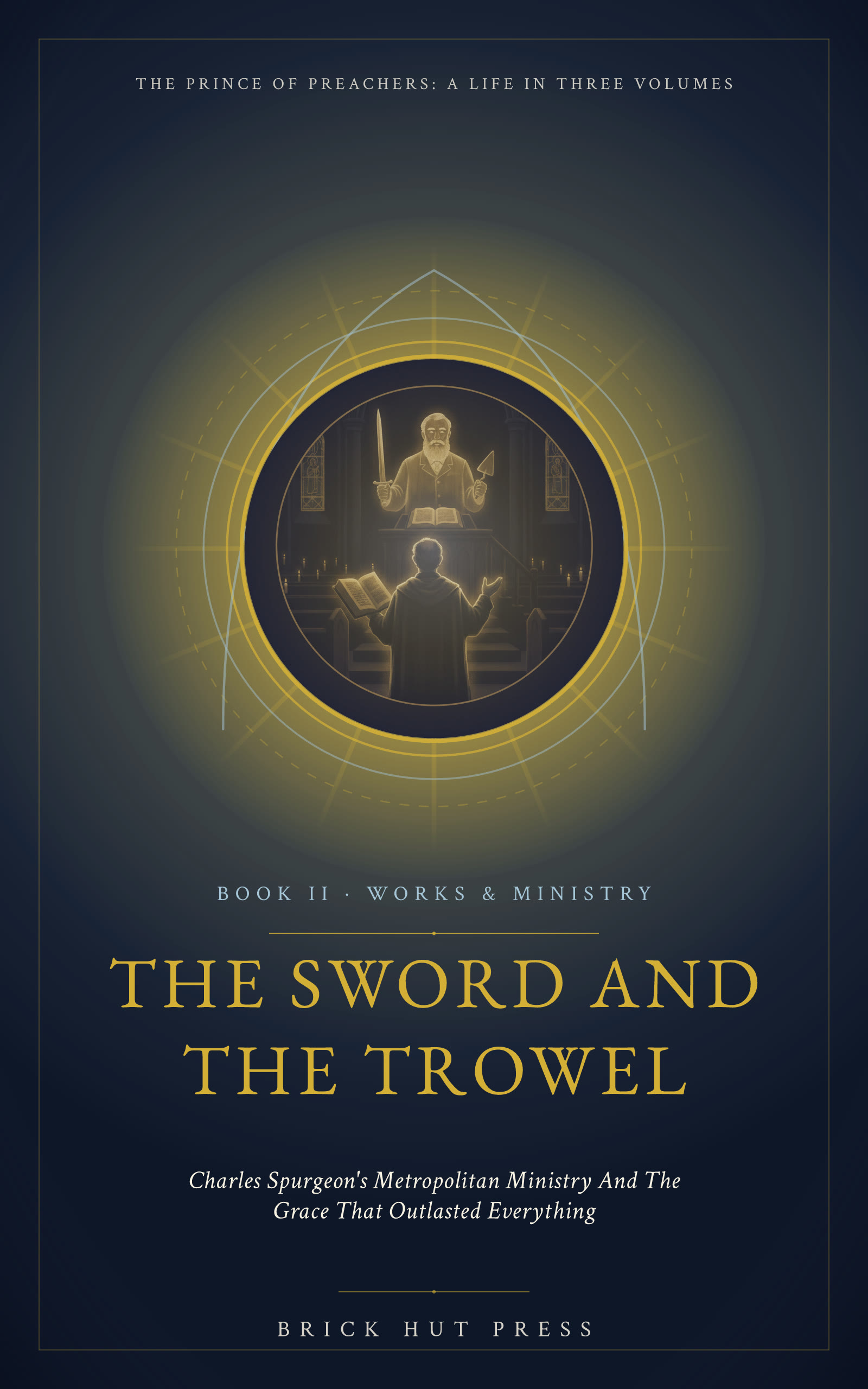
Lives that walk beside Charles Haddon Spurgeon, chosen for their likeness, not their fame.