The Poorest of the Poor: A Call Within a Call
She Spent Fifty Years Answering It in the Dark.
She Heard God's Voice on a Train. She Spent Fifty Years Answering It in the Dark. Most people know the image: the small woman in the white-and-blue sari, lifting the dying from the gutters of Calcutta, receiving a Nobel Prize with calloused hands folded in prayer.
Read the full description
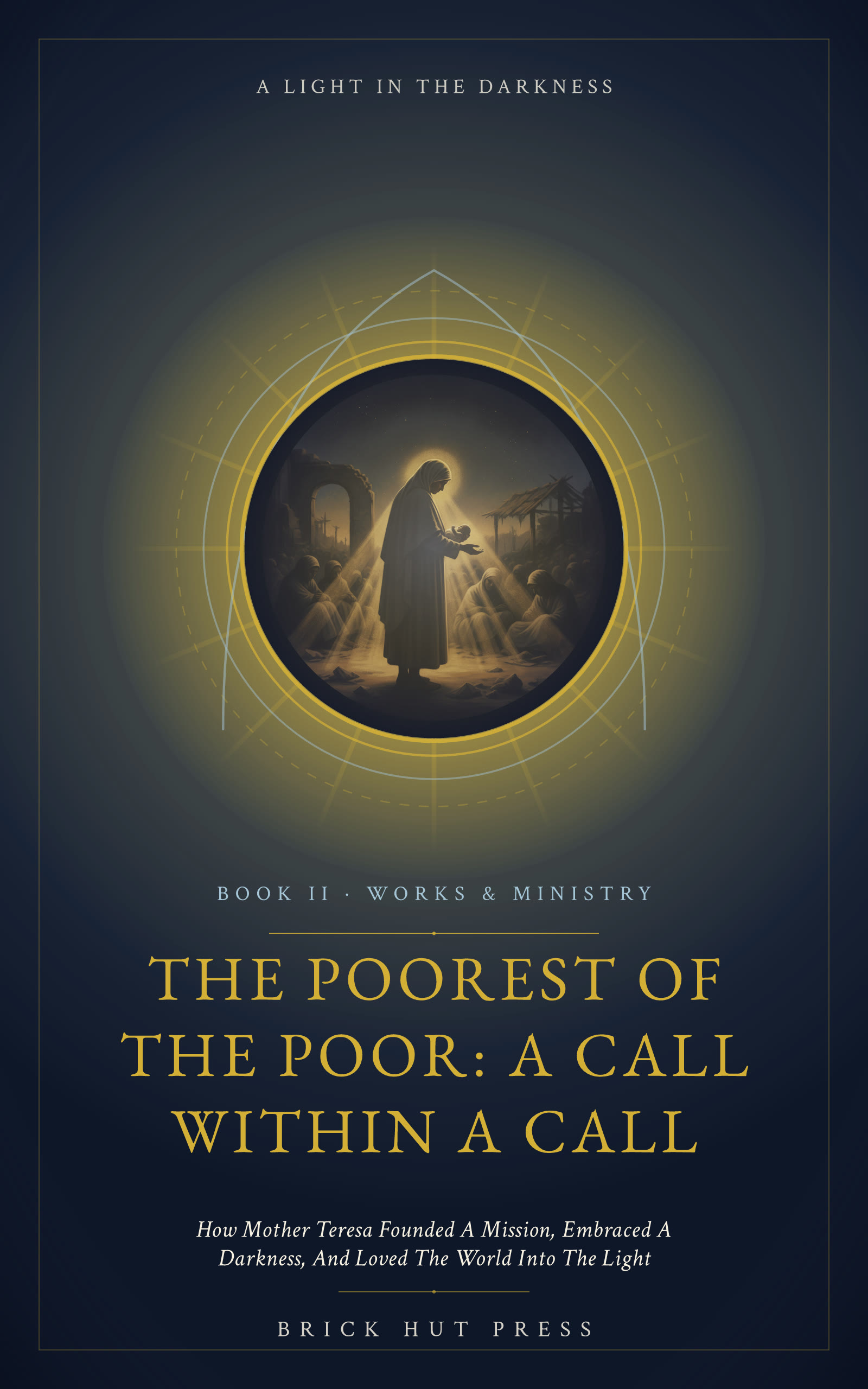
But behind the icon was a woman, a girl from Skopje who left everything, a young sister who heard something extraordinary on an ordinary train ride, a founder who built a global mission while carrying a hidden spiritual darkness so profound it would have silenced most souls forever. The Poorest of the Poor: A Call Within a Call is the deeply human, reverently told story of Mother Teresa, not the statue, but the woman. A portrait that begins in the highlands of Albania, follows her into the heat and suffering of India, and traces every extraordinary step of a life lived in radical, costly, luminous love. This is the Mother Teresa readers sense is there but rarely get to meet: the founder on her knees, the saint in the shadows, the woman who loved the world one dying stranger at a time.
Not sure yet? Begin free.
The Pencil in God's Hand, a complete book about this life, free, kept in your own library here, read and heard.
Receive the free bookAbout this volume
This second volume of A Light in the Darkness opens where certainty ends and obedience begins. Sister Teresa boards a train for Darjeeling in September of 1946 expecting eight days of silence in the hills. She receives instead a call within a call, a summons so specific and so demanding that it will take years of letters, patience, and ecclesiastical caution before Rome allows her to act on it. The volume's early chapters, "The Train to Darjeeling" and "The Long Wait for Yes," dwell honestly in that waiting. They do not rush past the bureaucratic delays, the doubts of Archbishop Perier, or the discipline required of a woman who believed she had heard Christ's voice and now had to prove it, patiently, to men who had every reason to be cautious. This is a book that trusts its readers to sit inside uncertainty alongside her, because that uncertainty is where the sanctity begins to show itself.
From there the volume follows her literal steps: the day she walked out of the Loreto convent walls in a plain white sari bordered in blue, carrying five rupees and nothing else certain, to begin teaching slum children under a tree in Motijhil. "The Day She Stepped Outside the Wall" and "A Congregation Is Born" trace how a single woman's obedience became an order, how the Missionaries of Charity took shape not from a grand plan but from daily improvisation in service of the destitute. The chapter on Nirmal Hriday, the home for the dying she opened near the Kalighat temple, is central to this volume's argument about who she was: not an administrator of charity but a woman who insisted, against every instinct of efficiency, that each dying person be touched, washed, and looked in the eye before death, one at a time. "She Loved Them One at a Time" is not a sentimental chapter title here. It is the volume's thesis.
But this book does not offer a plaster saint. "The Darkness She Carried" takes up, without evasion, the decades-long interior desolation she confided only to her spiritual directors, the felt absence of God that she bore in silence while presenting an unclouded face to the world. Readers who come to this volume wanting hagiography without cost will instead find a woman who kept her vow in the dark, who found in that very absence a deeper participation in Christ's own thirst on the cross. The volume treats this not as scandal but as mystery, and it lets her own words, sparing and exact, carry the weight rather than supplying commentary that would flatten what she chose to keep hidden for so long.
The middle and later chapters widen the frame without losing the center. Malcolm Muggeridge's visit with a film crew, the founding of houses across continents, the Nobel Peace Prize ceremony in Oslo on December 10, 1979, the audiences with popes and presidents: all of it is here, and all of it is measured against the same standard, the dying man on the street who mattered as much to her as any head of state. The volume closes with "The Darkening and the Holding On" and the account of September 5, 1997, when Mother Teresa went home, having built, out of one yes on a train to Darjeeling, a mission that reached nearly every wounded corner of the world.
This is a volume for readers who want the founding years told with patience and the interior years told with honesty, who want to understand not only what Mother Teresa did but what it cost her to keep doing it, day after day, one person at a time, in a darkness she never let anyone else carry.


Lives that walk beside St. Teresa of Calcutta, chosen for their likeness, not their fame.