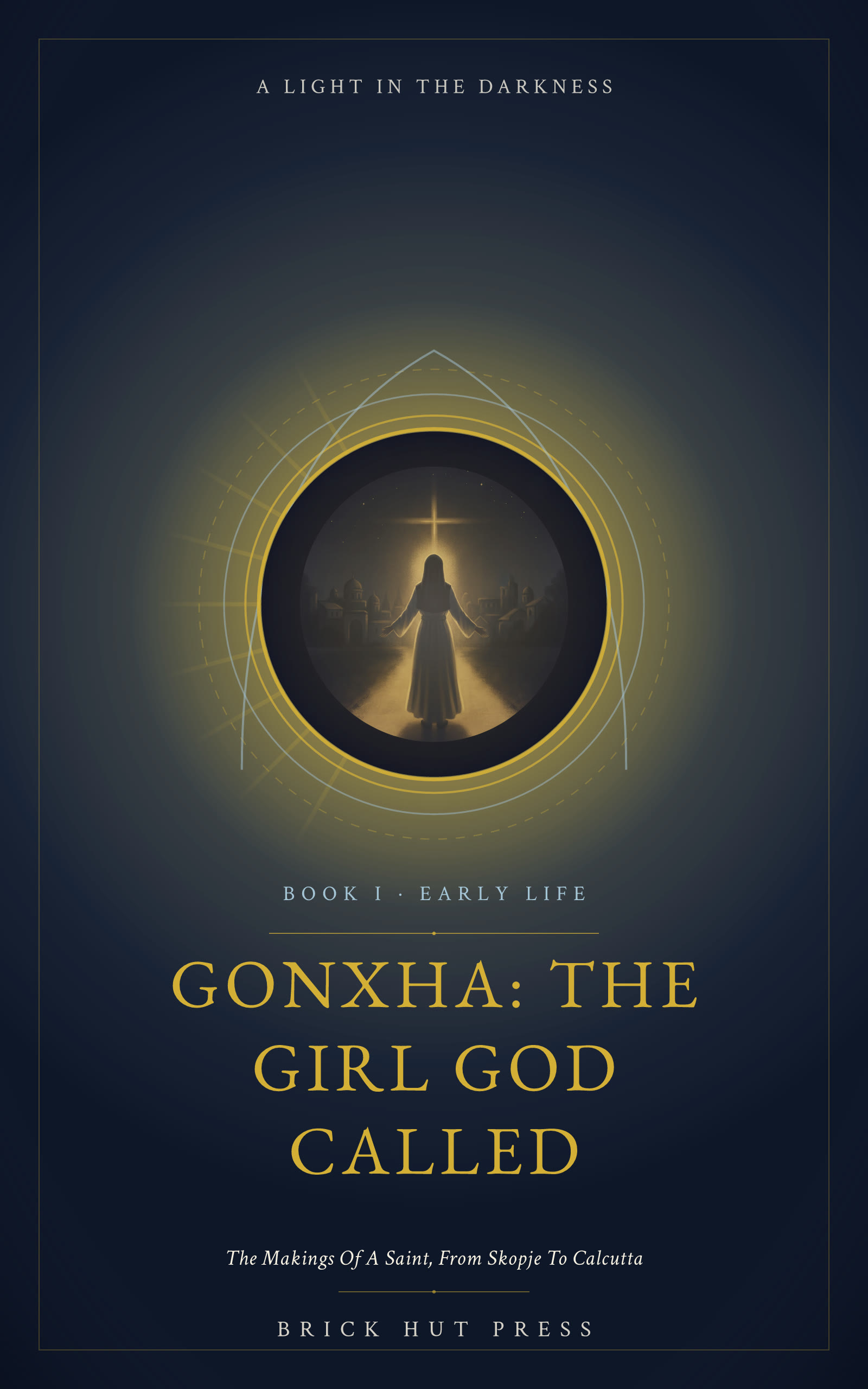
Gonxha: The Girl God Called
She would become the most recognized face of compassion in the twentieth century.
Before the World Knew Her Name, God Already Did. She would become the most recognized face of compassion in the twentieth century. But before the white-and-blue sari, before Calcutta, before the Nobel Prize, there was Gonxha. A girl from Skopje. A daughter. A dreamer. A soul quietly catching fire in the pew of a parish church while the rest of the world went about its ordinary business.
Read the full description
Gonxha: The Girl God Called takes you behind the icon and into the life, the real, textured, aching, luminous life, of the woman the world came to call Mother Teresa. This is not a biography of achievements. It is a biography of becoming. And it begins, as all great callings do, in the hidden places: a mother's kitchen, a father's sudden death, a young girl's journal entry that trembles with longing she cannot yet name.
Not sure yet? Begin free.
The Pencil in God's Hand, a complete book about this life, free, kept in your own library here, read and heard.
Receive the free bookAbout this volume
This is the volume that begins where every saint's life must begin: not with the miracles or the fame, but with a household, a street, a mother teaching a girl what it meant to give her best. Gonxha: The Girl God Called follows Agnes Gonxha Bojaxhiu from her birth in Skopje in 1910 to the moment, decades later, when she took the name by which the world would come to know her. Readers who arrive expecting Mother Teresa of Calcutta in these pages, the woman of the slums and the Missionaries of Charity, will find instead something rarer and in some ways more instructive: the long, quiet formation that made such a woman possible.
The early chapters stay close to the texture of that Skopje childhood, the Ottoman quarter, the stone bridge over the Vardar, the church that stood, as the volume insists, "at the center of everything" for the Bojaxhiu family. Here the book takes seriously a fact easy to overlook: that Gonxha herself reckoned her true birthday not as the day of her physical birth but the day after, when she was baptized. That conviction, the volume argues, did not appear from nowhere in her adult vocation. It was already alive in the household of Nikola and Drane Bojaxhiu, in a mother who taught her children that whatever they gave, they should give their best, and in a father whose sudden absence, treated in the chapter "The Year the Father Did Not Come Home," marks the first great rupture of Gonxha's young life and, the book suggests, one of the hidden hinges of her later vocation to the poor and the abandoned.
From there the volume turns to the interior drama that matters most in any life bound for religious vows: the slow, unmistakable sense of being called. "Twelve Years Old and Certain" and "The Question She Could Not Stop Asking" trace how an ordinary Albanian Catholic girl, active in her parish sodality, began to feel a summons she could neither manufacture nor ignore. The book does not rush this. It sits with the uncertainty, the waiting, the correspondence with missionary sisters in Bengal that gave the abstract call a concrete destination. "The Letters from Bengal" is where the volume lets readers watch a vocation take geographical shape, Skopje giving way in imagination to a subcontinent Gonxha had never seen and could barely picture.
The chapters that follow, "The Leave-Taking" and "Dublin in the Rain," carry the weight of departure, the wrench of leaving mother and sister behind, the brief, formative stop with the Sisters of Loreto in Ireland where she began to learn English and the rhythms of religious life before continuing on to India. "First Sight of Calcutta" delivers the reader, at last, to the city that would define the rest of her earthly life, though this volume is careful to show her first not as a foundress but as a young religious sister still learning her vocation from the ground up. "Sister Teresa, Teacher" follows her years at St. Mary's, teaching geography and history to Bengali schoolgirls, long before the streets outside those convent walls became her mission field. The volume closes with "The Vows and the Name," the formal moment when Agnes Gonxha Bojaxhiu became Sister Teresa, a threshold crossed quietly, without fanfare, years before the world would learn to say her name with reverence.
What this book offers, then, is not the Calcutta of the dying and the destitute that most readers already carry in their minds, but the hidden years that made that later mission possible: a girl, a family, a parish, a call that would not let her go. Readers drawn to how sanctity actually forms, slowly, through ordinary streets and ordinary griefs before it becomes extraordinary, will find in these twelve chapters a patient and grounded beginning to a life the Church now honors as St. Teresa of Calcutta.
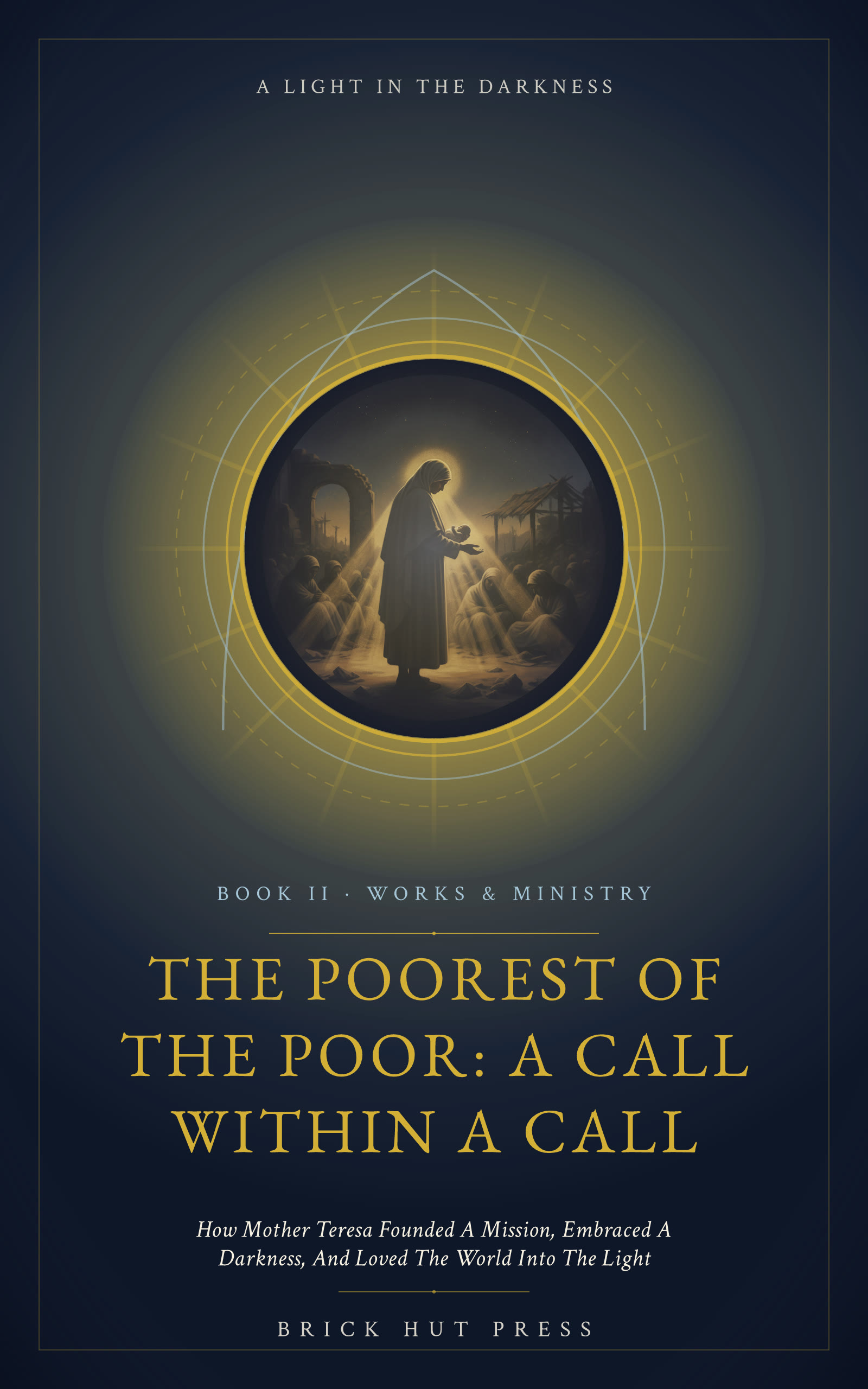
Lives that walk beside St. Teresa of Calcutta, chosen for their likeness, not their fame.