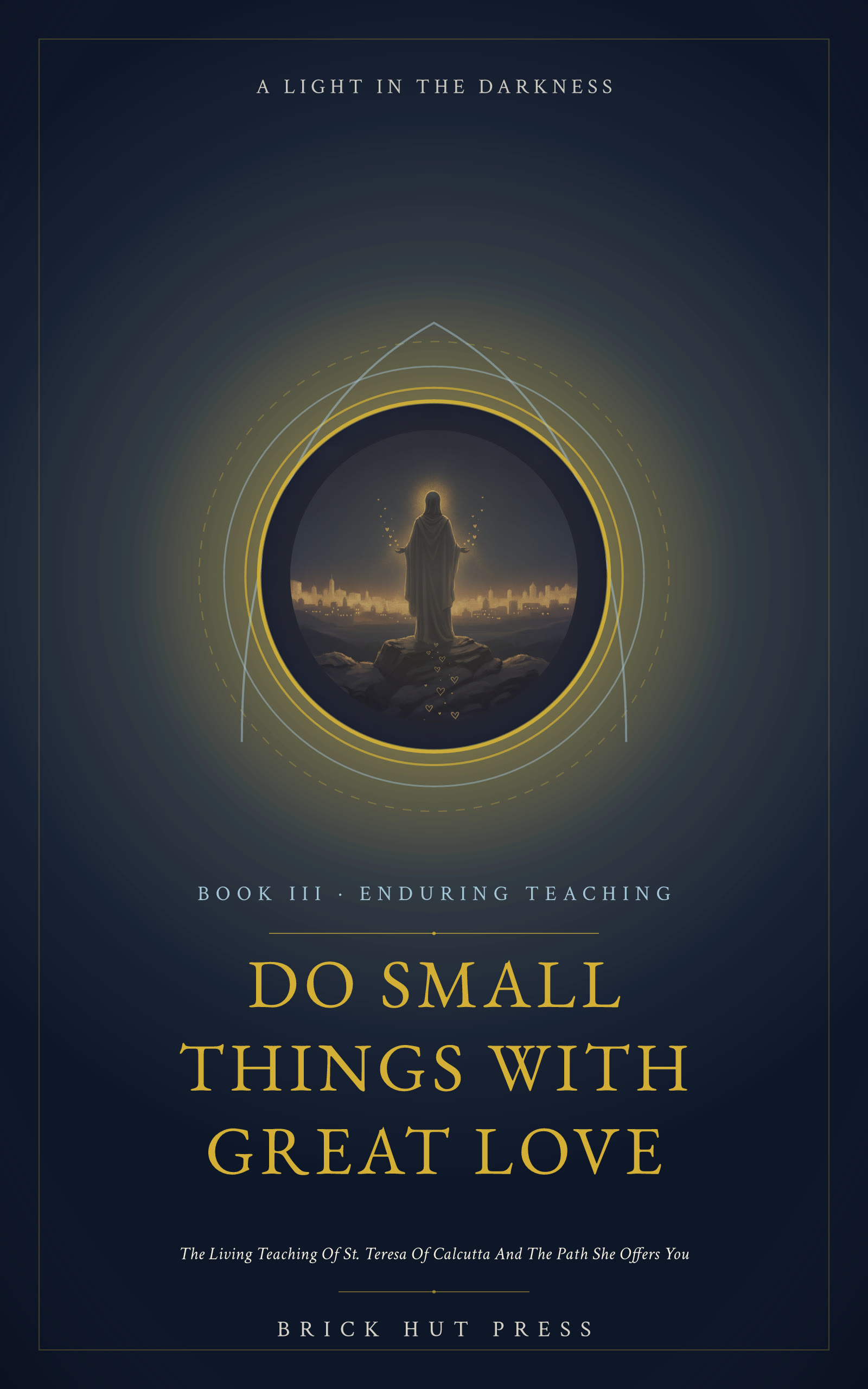
Do Small Things With Great Love
A girl born in Skopje who felt the pull of God before she could fully name it.
She Changed the World One Small Act at a Time, and She Can Show You How to Do the Same Behind the famous image, the white sari, the bent figure, the Nobel Prize, is a woman on fire. A girl born in Skopje who felt the pull of God before she could fully name it. A young sister who heard a voice on a train to Darjeeling and obeyed without flinching. A founder who spent decades in spiritual darkness and kept praying anyway.
Read the full description
Do Small Things With Great Love strips away the statue and gives you the woman: her voice, her logic, her fire, and the concrete, livable path she charted for every ordinary believer. This is not a book about a distant saint locked behind glass. It is an invitation. Mother Teresa's teaching was never reserved for those working in Calcutta's streets. It was always aimed at you, at the neighbor across the hall, the colleague no one notices, the family member who feels forgotten. Her genius was insisting that holiness lives in the small, faithful, repeated act done with great love. That path is open right now, wherever you are standing.
Not sure yet? Begin free.
The Pencil in God's Hand, a complete book about this life, free, kept in your own library here, read and heard.
Receive the free bookAbout this volume
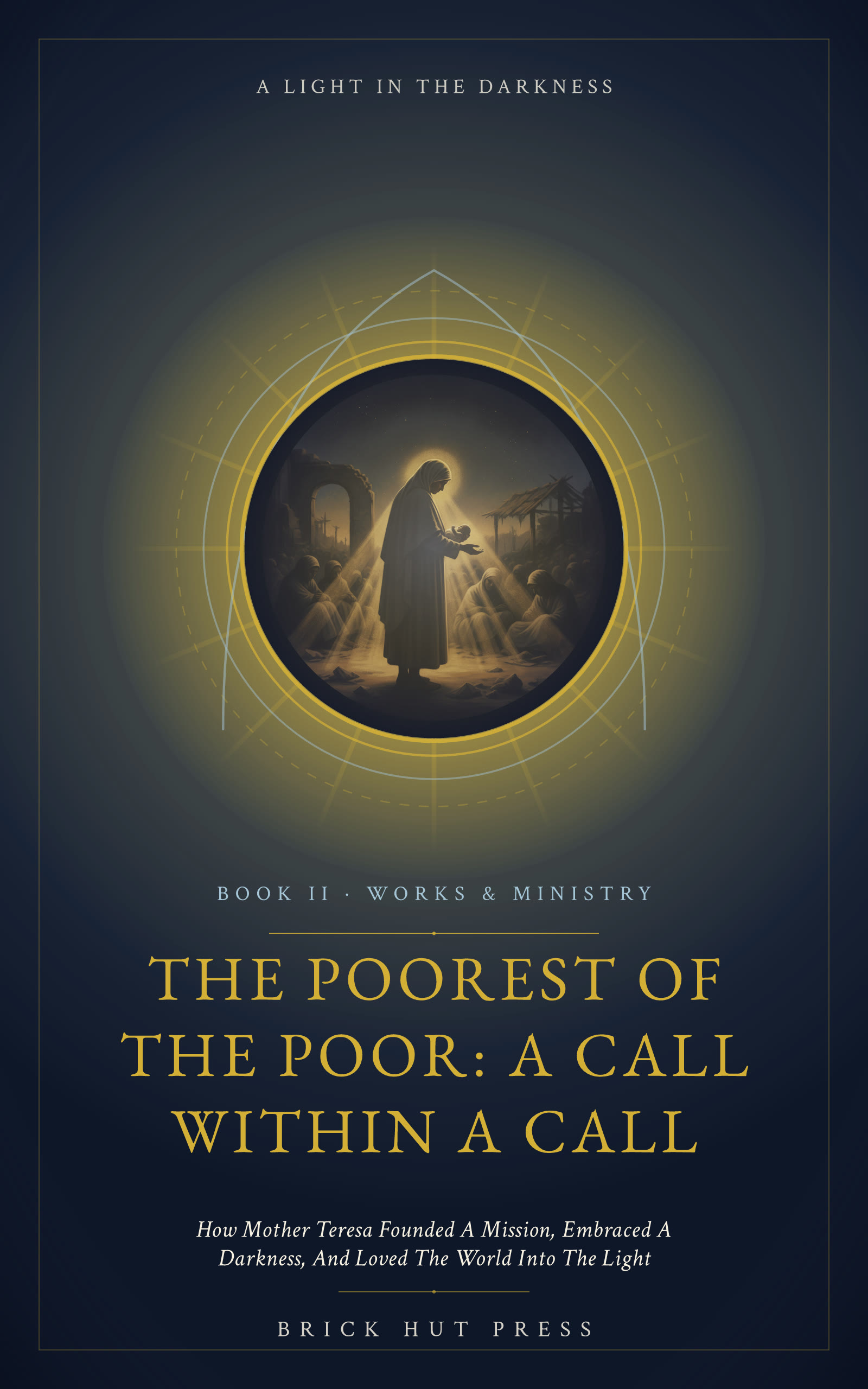
This third volume of A Light in the Darkness sets aside the chronology of a life already told and asks a different question: what did she leave behind, not in institutions or headlines, but in the actual grain of how a person might live. Where the earlier volumes followed Gonxha Bojaxhiu from Skopje to the convent, and then Mother Teresa through the streets of Calcutta and onto the world stage, this book turns to what remains when the story stops moving forward and starts moving inward, into the reader's own kitchen, workplace, and dark nights.
The volume opens, fittingly, with a room being turned, that Oslo banquet redirected without argument or theater, and it holds that image up as a lens for everything that follows: the way her presence rearranged whatever it touched, quietly and without announcement. From there the chapters move to the wellspring beneath the action, the hours of silence and adoration that the world rarely saw but that she insisted came first, before the bandages and the rice. Readers who have only encountered her as a doer of good works will find here the contemplative underneath the activist, the conviction that the work was prayer extended, not prayer's replacement.
The heart of the volume is teaching, not narrative, and it takes seriously the phrases she is remembered for, tracing them back to their source rather than treating them as slogans. The five fingers she held up to volunteers, spelling out "you did it to me," become an occasion to sit with Matthew's gospel in full. The idea of the "distressing disguise" of the poor is given room to be difficult, not softened into sentiment, because she meant it as a genuinely hard teaching about where Christ can be found. And the volume does not shy from her insistence that smallness itself was the point, not a compromise forced by limited resources but a theology, small things done with total love rather than large things done with divided attention.
One of the volume's most searching chapters takes up what her private letters revealed after her death: decades of spiritual dryness, a felt absence of God that she carried in silence while presenting an unclouded face to the world. Rather than treating this dark night as a scandal or a contradiction, the chapter reads it as continuous with everything she taught, a love letter written in the grammar of absence, and asks what it might mean for ordinary believers who feel that same silence and wonder if it disqualifies their faith.
The later chapters widen the frame outward. There is an account of her death and how quickly and completely she became, in the phrase this volume uses, a woman who belongs to the whole world now, followed by the canonization Mass in Saint Peter's Square on September 4, 2016, and her formal place on the Church's calendar of saints. The Missionaries of Charity are given their own chapter, tracing the order she founded from one house in Calcutta to a presence in a hundred thirty countries, still receiving new sisters, still bathing the dying, still asking for nothing but small things done faithfully.
The volume closes where every serious book about her must eventually close, not in Calcutta but wherever the reader happens to be living. "Your Calcutta" takes the phrase she used to mean exactly what it says: that the slum need not be geographic, that loneliness in a comfortable house counts, that the call to see Christ in the distressing disguise of the poor was never meant to require a plane ticket. This is a volume for readers who already know her outline and want her substance, who want to understand not merely what she did but why she believed it was the only thing worth doing, and who are willing to ask, chapter by chapter, whether they might do some small thing today with the same undivided love.

Lives that walk beside St. Teresa of Calcutta, chosen for their likeness, not their fame.