The Mountains Know His Name
He built towers with bleeding hands and tore them down on a master's command.
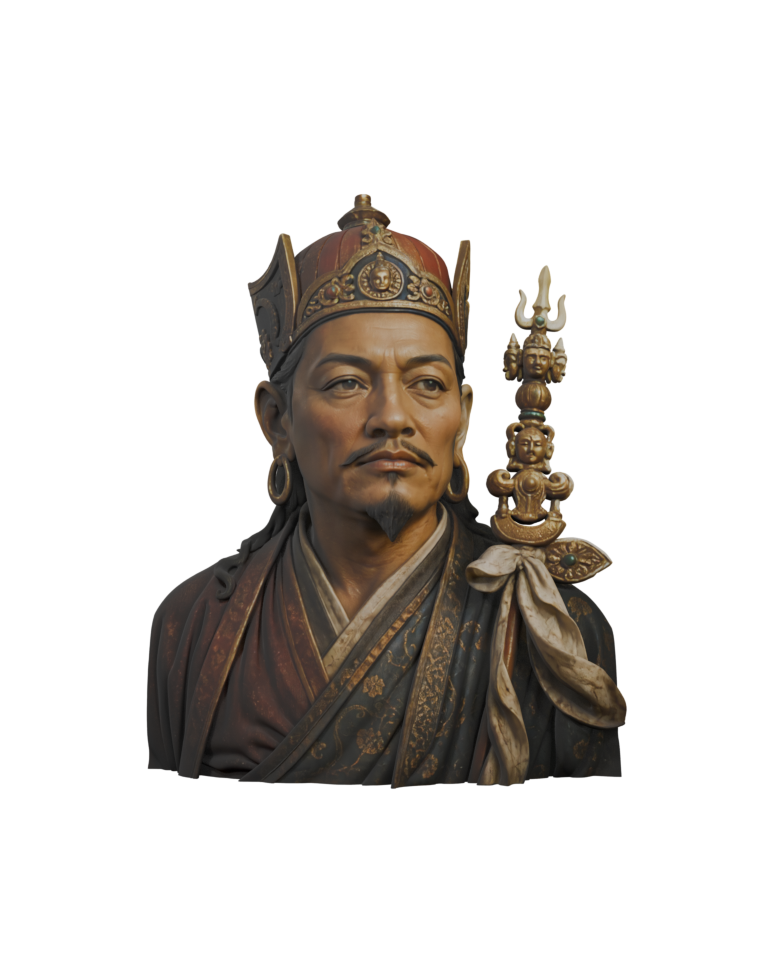
Even the Heaviest Karma Can Be Burned Clean He murdered with black magic. He built towers with bleeding hands and tore them down on a master's command. He sat in caves so cold that his body turned green. And then, Milarepa sang. If you have ever stood at the edge of your own darkness and wondered whether the path could still hold you, this book was written for your moment. The Mountains Know His Name is not a distant hagiography.
Read the full description
It is a practitioner's companion, a step-by-step journey through the complete arc of Milarepa's life, from the weight of devastating karma, through the merciless compassion of Marpa the Translator, into the caves of solitary realization, and finally into the luminous ministry of the Cotton-Clad One whose songs still resonate across every lineage of Tibetan Buddhism. This is the story that proves the dharma means what it says: liberation is not reserved for the already-pure.
Not sure yet? Begin free.
One Lifetime, Burned Clean, a complete book about this life, free, kept in your own library here, read and heard.
Receive the free bookAbout this volume
This is the volume where the story turns from ruin toward refuge, and refuge, it turns out, is harder than ruin. Book One left Jetsün Milarepa standing at the edge of Lhodrak, carrying thirty-five deaths and a mother's grave and nothing else. This volume opens with him meeting a plowman who will not tell him who he is, and closes, thirteen chapters later, with a parting from that same man that neither of them will survive to repeat. Between those two moments lies the whole architecture of transformation the tradition has always insisted cannot be rushed: towers built and torn down on a word, initiations promised and withheld, a wife's quiet intercessions, a forged letter that very nearly ends everything. This is the Marpa material in full, the part of Milarepa's life most readers already carry some fragment of, and the volume takes its time letting that fragment become a whole story again.
The early chapters stay close to the humiliations, because the tradition asks us not to look away from them. "The First Cup Marpa Does Not Offer" and "Build the Tower, Tear It Down" are not detours before the real teaching starts; they are understood here as the teaching, the guru's method of exhausting a disciple's pride and despair until nothing is left to hide behind. Dakmema's mercy, chapter three, gives the volume its necessary tenderness: without her intercessions the whole arrangement between guru and disciple might have broken under its own severity. The forged letter and the false initiation that follow are treated honestly as a genuine crisis of faith, not a plot device, and "The Night He Almost Left" is given its full weight, because a life of realization that skips over the night the disciple nearly walked away tells a smaller truth than the one this tradition means to preserve.
Then comes the turn the volume is named for: "The Opening of the Sky" and "The Cotton Robe," the chapters where the ordeals resolve into transmission and Milarepa receives what he came for, and receives, too, the single cotton garment that will mark him for the rest of his life as ras pa, the cotton-clad one. From there the volume follows him out of Marpa's household and into solitude, first at Drakar Taso, where realization does not arrive as comfort but as a stripping-down even more severe than what came before. "Green as Nettles, Clear as Sky" and "The Demons at Drakar Taso" sit at the center of this volume's account of retreat, taking seriously both the near-starvation of a man living on nettles in a cave and the visionary confrontations that tradition holds were not metaphor to him.
The final chapters turn outward, if only slightly, as Milarepa's solitude begins to draw others toward it. "The Student Who Arrived Like a Storm" and "The Physician Who Wept the First Night" mark the quiet beginning of a teaching life that the third volume will take up in full, while "The Last Time He Saw Marpa" closes this book with the grief and gratitude of a final leave-taking, the guru's role in the story now complete.
Readers coming to this volume without the first should know that its power depends on having sat with the weight Milarekpa carried into Lhodrak; readers who have read Book One will find here the account of how that weight was finally, unbearably, then mercifully set down. What this volume offers is not a shortcut through the hardest chapters of the life but a steady, respectful dwelling in them, on the understanding that the caves and the cotton robe mean nothing without the years at the plow that came first.

Lives that walk beside Jetsün Milarepa, chosen for their likeness, not their fame.