The Ear Cupped to the World
He ended as the most beloved saint in Tibetan Buddhist history.
No Karma Too Heavy. No Beginning Too Dark. The Door Milarepa Opened Is Still Open, For You. He began as a murderer. He ended as the most beloved saint in Tibetan Buddhist history. Between those two points lies a transmission so raw, so ruthlessly honest, and so alive that practitioners across every lineage have kept his image on their shrines for nearly a thousand years.
Read the full description
The Ear Cupped to the World follows that living thread, through Milarepa's songs, his iron renunciation, his fierce devotion to Marpa, and his final dissolution into light, and places it directly in your hands. This is not a biography. It is not an academic survey. It is an invitation. Jetsün Milarepa did not leave behind a closed system or a relic locked in a reliquary. He left behind a method, a demonstration, carved in suffering and song, that the heaviest karma can be burned clean in a single lifetime. If you have ever sat on your cushion wondering whether your past disqualifies you, this book was written for the exact shape of that doubt.
Not sure yet? Begin free.
One Lifetime, Burned Clean, a complete book about this life, free, kept in your own library here, read and heard.
Receive the free bookAbout this volume
This is the third and final volume in Brick Hut Press's three-part life of Jetsün Milarepa, and it is the one that turns from his life toward you. The first two books carried him from the murderous years of his youth through the black retreats of Marpa's testing to the caves of Drakar Taso and beyond, where disciples climbed for weeks to sit before a man who ate nettles and sang. This volume does not retell that story. It asks what remains of Jetsün Milarepa now that the story is over, what the songs actually are, and why, nine centuries later, his picture still hangs in shrine rooms belonging to lineages that agree on almost nothing else.
The book opens with the physician from Book 2, the man who rode three days with a list of doctrinal questions and received, instead of answers, an unbroken song that dissolved the questions rather than resolving them. That scene is the hinge the whole volume turns on. Chapter after chapter takes up what looks, at first, like settled teaching, Mahamudra, renunciation, devotion, impermanence, and shows how Jetsün refused to let any of it calcify into doctrine. Renunciation is not what you think it is, one chapter insists, because for Jetsün it was never a subtraction performed on a life but a recognition performed on the mind. Impermanence is sung rather than preached, because a truth that can only be stated has not yet been metabolized. The book takes these distinctions seriously, without softening them into aphorism.
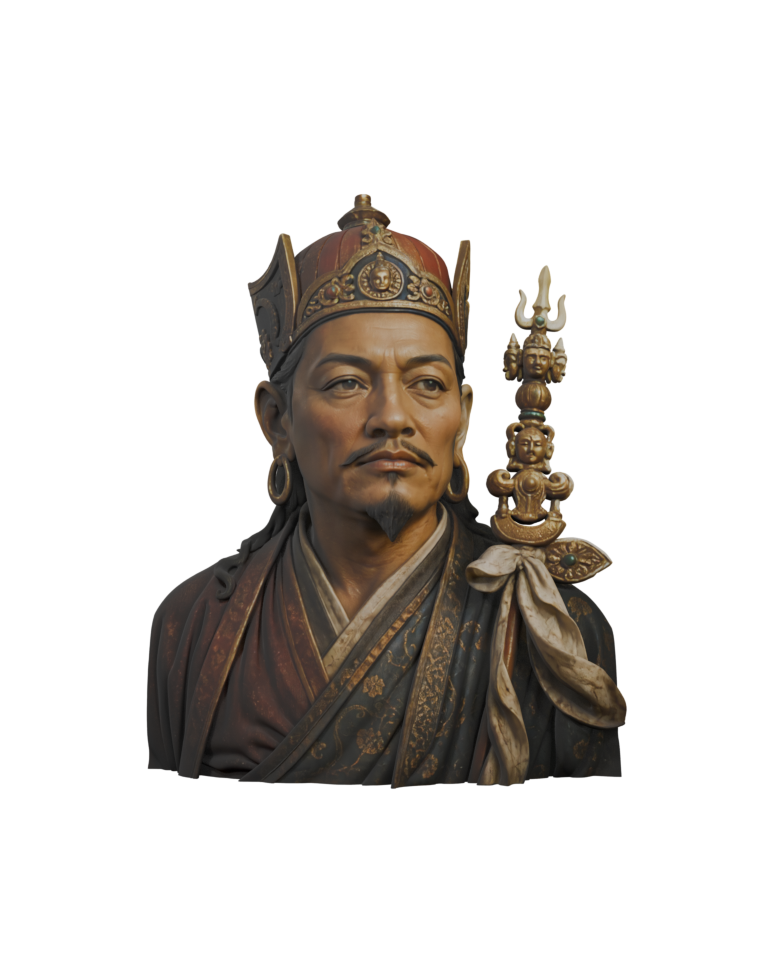
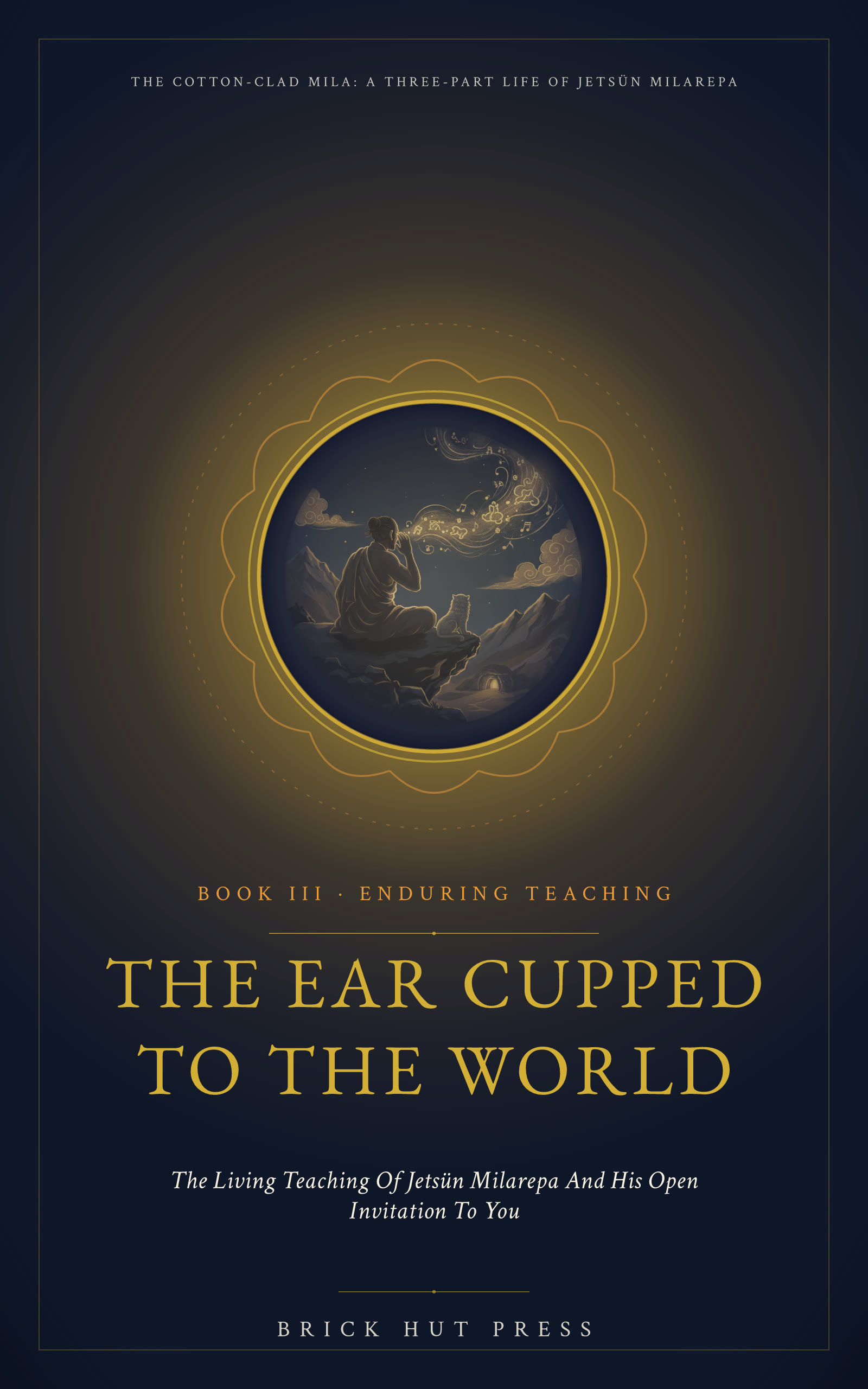
From there the volume moves into the specific ways Jetsün has continued to be present after his own passing: the guru yoga built around his form, the cotton robe and green body and hand cupped to the ear that appear in nearly every thangka, the lineage that did not stop when his body did, and Milarepa Day, when practitioners across Tibet and its diaspora turn toward him once a year in a gesture that is neither memorial nor mere commemoration but an active renewal of transmission. A full chapter is given to the poisoned curd and the dissolution of his form, treated here not as a grim coda but as the last and perhaps clearest teaching he gave, the moment when his own death became one more song about the nature of appearance.
One of the volume's quieter arguments, carried across several chapters, is that Jetsün Milarepa belongs to no single school in the narrow sense, even as he sits at the root of the Kagyu lineage in particular. The chapter asking why every tradition keeps his picture takes this seriously as a question rather than a compliment: what is it about a man who owned nothing, wrote no treatises, and left behind only songs sung to yak-herders, hunters, and demons, that made him usable, even necessary, to traditions that never claimed him as their founder. The answer offered here has to do with the raw, unmediated quality of the songs themselves, discussed at length in the opening chapter: they were not composed the way court poetry was composed, they arrived, shaped by whatever had already been recognized in the mind that spoke them.
The volume closes, as its subtitle promises, with an open door. Having spent two books establishing who Jetsün Milarepa was and a third chapter establishing what his songs actually are, the final chapter turns the invitation outward, toward the reader holding the book, in the same plain terms Jetsün used with hunters and murderers and grieving physicians who arrived expecting doctrine and left with something they had not asked for. This is not a volume that asks you to admire Jetsün Milarepa from a comfortable distance. It asks whether the ear he cupped toward the world nine hundred years ago is still cupped toward you, and what you might do about it if it is.


Lives that walk beside Jetsün Milarepa, chosen for their likeness, not their fame.