The Little Flower, Opening
She never founded a religious order.
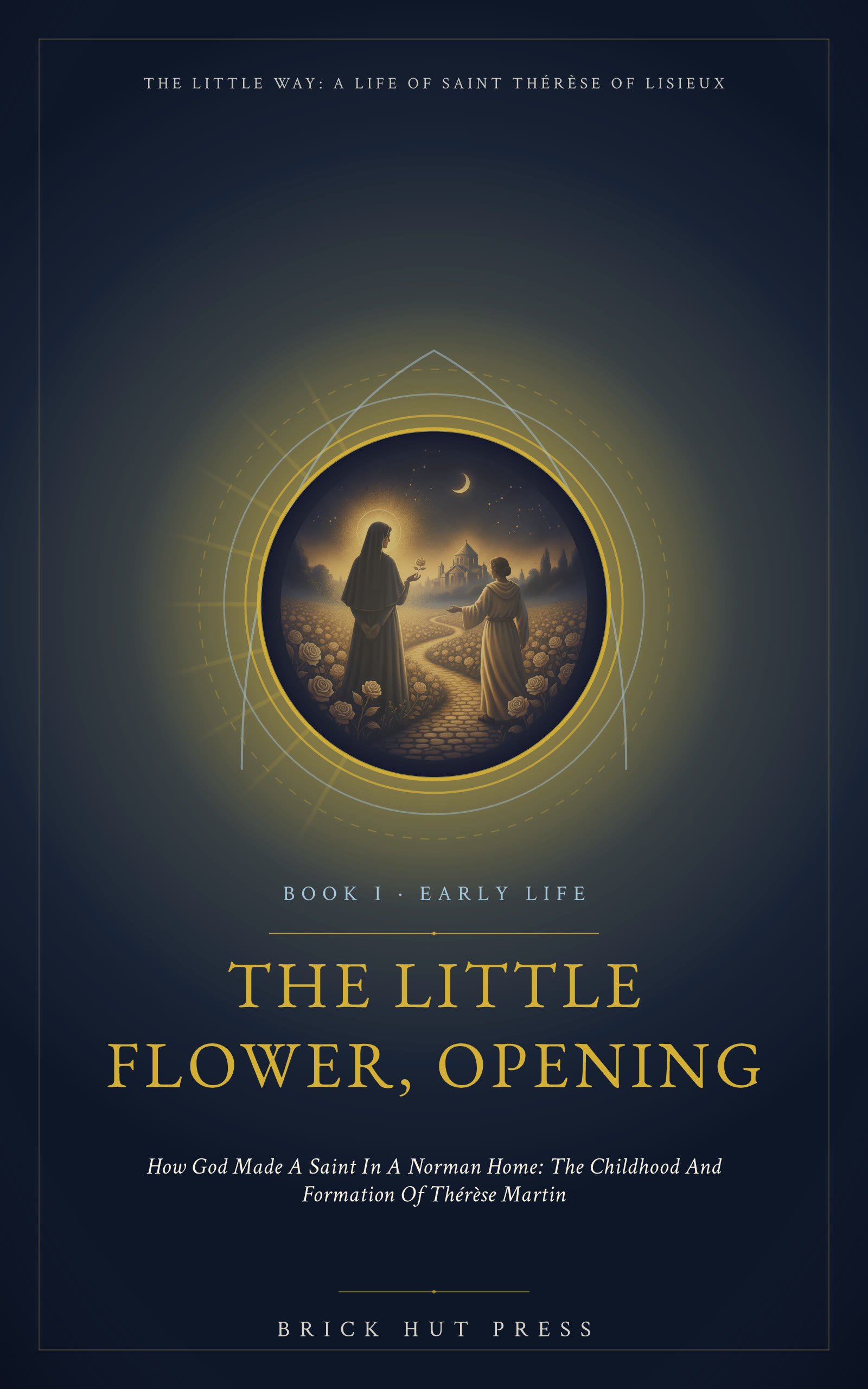
Before the Carmel, Before the Vows, God Was Already at Work She never led an army. She never founded a religious order. She spent her entire life within the walls of a Norman home and a Carmelite cloister, and the Church named her a Doctor of the Universal Church. How does that happen? It begins long before the veil, long before the famous autobiography, long before the roses.
Read the full description
It begins in a watchmaker's parlor in Alençon, in a mother's prayers offered through sleepless nights, in a little girl who felt everything too deeply and could not understand why her heart was always aching for something more. This intimate, reverently researched account opens the door on the world that made Thérèse Martin, the childhood, the family, the losses, the graces, and the hidden providential design that was quietly shaping a saint. If you have ever felt too ordinary, too wounded, or simply too small for holiness, this book was written for you. Because smallness, as Thérèse would one day show the whole Church, is precisely the point.
Not sure yet? Begin free.
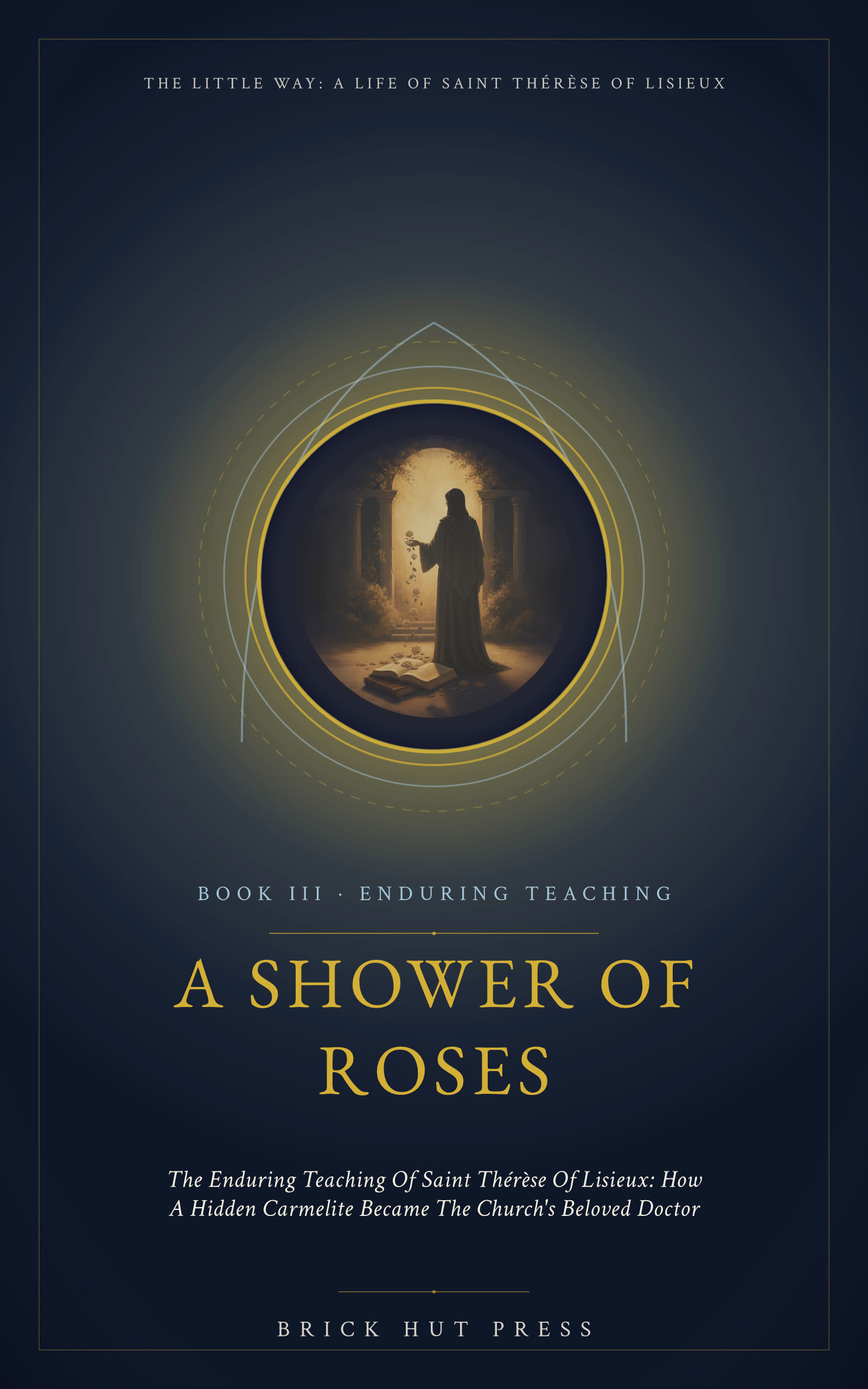
My Vocation Is Love, a complete book about this life, free, kept in your own library here, read and heard.
Receive the free bookAbout this volume
A house on the rue Saint-Blaise, a lamp burning past midnight, a mother who has already buried four children fighting to bring a ninth into the world: this is where Volume One of The Little Way begins, and it begins there deliberately. Before Thérèse Martin becomes the saint of the small way, before the Carmel, before the autobiography that would be read in a hundred languages, she is simply a girl who almost did not survive her own birth, born into a household that had already learned, at great cost, what it meant to hold life loosely and love it fiercely anyway. This volume asks the reader to start there, in the cold and the danger and the relief, because the shape of everything that follows is already present in that first night.
The chapters that follow trace the Norman childhood in patient, unhurried detail. We meet Louis and Zélie Martin not as pious abstractions but as a working watchmaker and a lacemaker, two people who took holiness seriously in the middle of ordinary domestic life, raising daughters, running households, burying children, and somehow remaining tender through it. We meet Thérèse as "the littlest one," a position in the family that this volume takes seriously as formation rather than mere fact, the last-born, the most petted, and therefore, in ways she would spend her whole life reckoning with, the most exposed. And then comes the wound that reshapes the entire house: the death of Zélie, when Thérèse is only four, an event this volume calls plainly "the first wound" and refuses to soften or rush past.
From there the book follows the family to Les Buissonnets, the house that becomes, in these pages, both a literal refuge and a slow, patient image of grief learning to become something like a garden. But peace does not hold. When Pauline, the sister who had become something like a second mother to Thérèse, leaves for the Carmel of Lisieux, the volume treats this departure as a second shattering, and it does not shy from the years of illness, oversensitivity, and inner turmoil that follow, the "notebook years" in which a child is, quite literally, learning to feel too much and finding no easy way to carry it.
The turning point of this volume, and perhaps of the whole life, arrives at Christmas 1886, a single night the book calls "the night everything changed," when something in Thérèse's interior world reorganizes itself and the fragile, weeping child begins to give way to someone steadier, someone capable of the desire that will not be quiet in the chapters that follow. That desire carries her, remarkably, to Rome itself, where at fourteen she kneels before Pope Leo XIII and asks, in her own voice, for what she wants, an episode this volume renders with the seriousness it deserves rather than as a charming anecdote. The volume closes at the threshold: April 9, 1888, the door of Carmel opening.
This is a childhood biography in the fullest sense, unhurried and specific, attentive to the particular Norman rooms, the particular losses, the particular temperament of a girl whose littleness was not incidental to her sanctity but, this book argues, the very material of it. Readers who come to Thérèse already loving her later writings will find here the ground those writings grew from; readers meeting her for the first time will find a family, a house, a series of griefs and graces, and a girl standing at a door about to open. Nothing here is rushed toward the miraculous. The volume trusts that the ordinary, looked at closely enough, is where the saint was actually made.
Lives that walk beside Saint Thérèse of Lisieux, chosen for their likeness, not their fame.