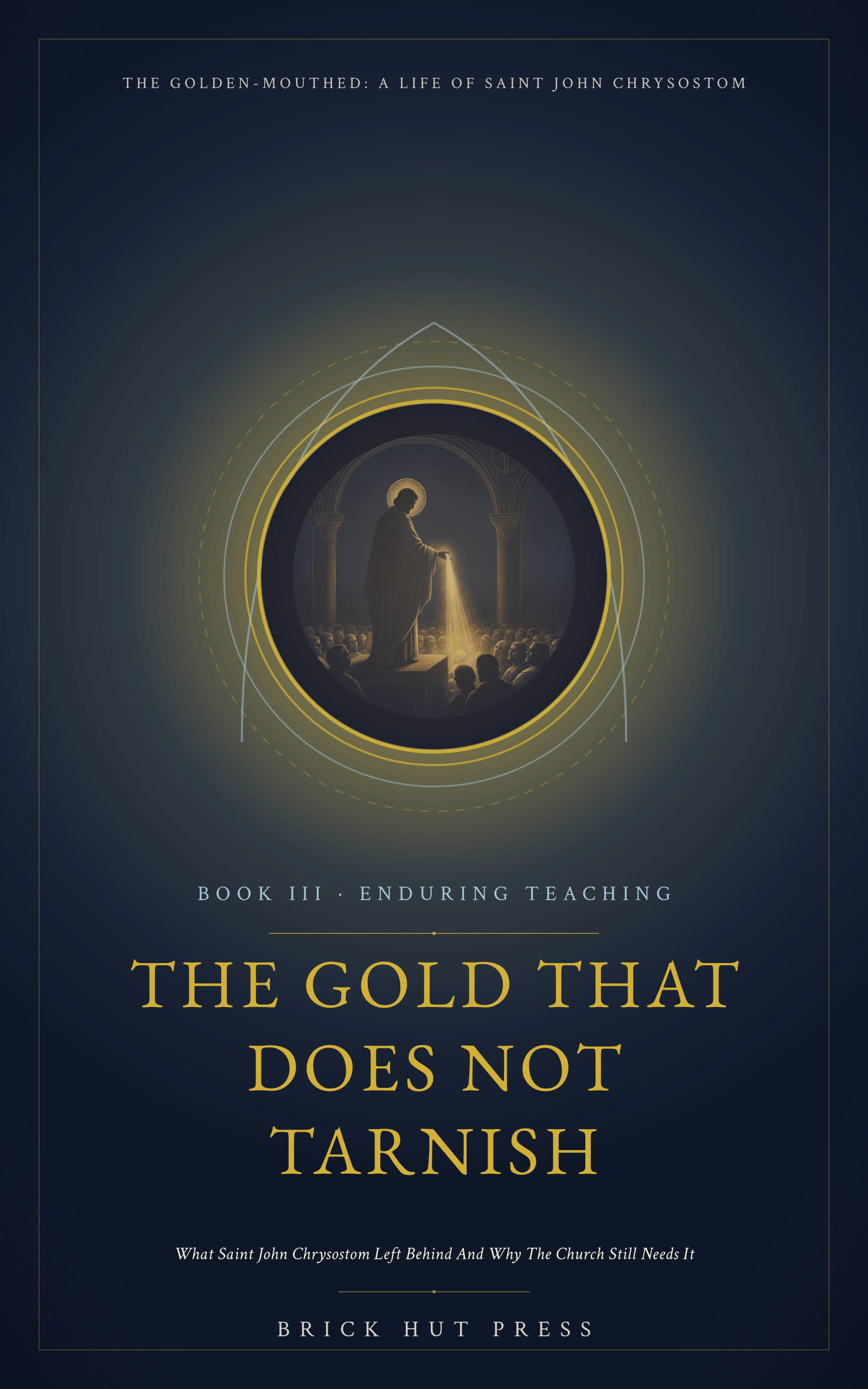
The Gold That Does Not Tarnish
Fifteen centuries after his death in a remote corner of the Roman Empire, John Chrysostom still opens every Divine Liturgy celebrated in the Eastern Church.
He Was Silenced. Exiled. Forgotten by the Powerful. His Words Outlasted Every One of Them. Fifteen centuries after his death in a remote corner of the Roman Empire, John Chrysostom still opens every Divine Liturgy celebrated in the Eastern Church. His homilies are still copied, studied, and preached. His letters from exile, written cold, sick, and abandoned, still move readers to tears. This is not the story of a plaster saint.
Read the full description
This is the story of a man who burned so bright that the empire itself tried to put him out. In The Gold That Does Not Tarnish , readers meet John Chrysostom whole, the young ascetic who nearly broke his body in the Syrian desert, the electrifying preacher who packed the churches of Antioch and Constantinople, the bishop who locked horns with an empress and lost his throne but never his voice. Drawing closely from his own homilies, letters, and treatises, this devotional account is warm, direct, and deeply rooted in primary sources. It is written for faithful readers in the Eastern Orthodox, Catholic, and broader Christian traditions who love the Church Fathers and want something richer than a feast-day summary.
Not sure yet? Begin free.
Come and Hear, a complete book about this life, free, kept in your own library here, read and heard.
Begin reading, freeAbout this volume
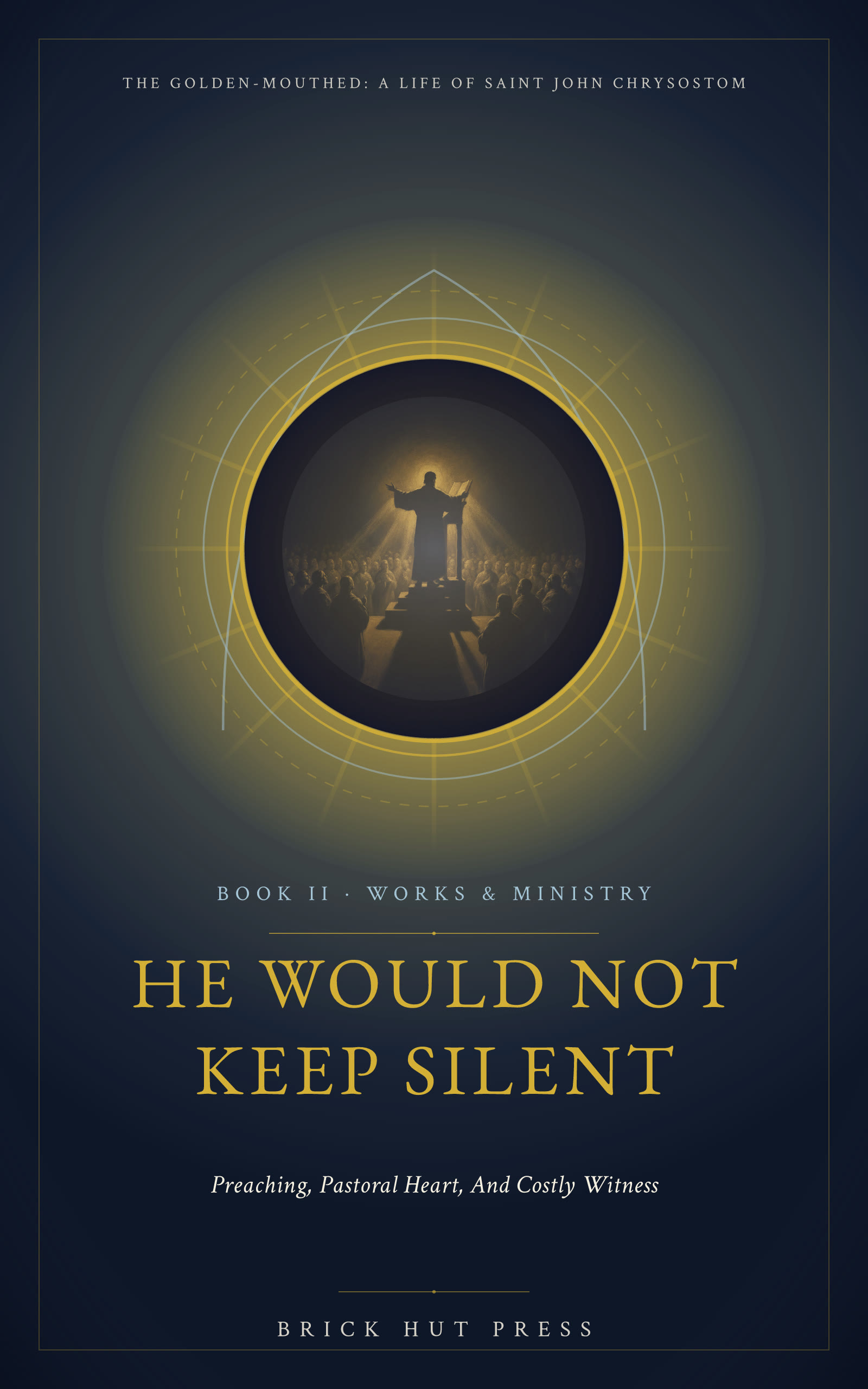
This third volume opens where the second one ended, at the grave, and then asks a harder question than any biography can answer alone: what does it mean that a man the empire tried to erase became a man the Church cannot stop quoting. The opening chapter follows the coffin home across thirty-one years of silence, through a harbor filled with torchlight, to an answer that is really a beginning. From there the volume turns away from the events of Saint John Chrysostom's life, already told, and toward the afterlife of his witness: how it was received, codified, prayed, and handed down, and why it still presses on anyone who stands at an altar or opens a Bible today.
The middle chapters trace how the universal Church came to recognize what Constantinople had exiled. Readers will find the September feast he shares with two other towering voices of the patristic age, and the account of how Rome, centuries later, named formally what the Christian East had never stopped quietly insisting: that here was a teacher whose authority rested not on office but on fidelity to the text and the flock in front of him. This is not hagiography trading in legend. It is the slower, more convincing story of reception, of a reputation that survived exactly because it was tested by hostile emperors, nervous bishops, and the ordinary forgetfulness of history, and was not found wanting.
At the heart of the volume sits the question of method: how did he actually read Scripture, and why does it matter now. The chapter on his exegesis does not flatten him into a modern commentator or a mere moralist. It shows a preacher who trusted the plain sense of the text, who refused allegory as an escape hatch, and who expected his congregation to recognize themselves in Genesis and in Matthew alike. From there the book moves to the altar itself, to the liturgy that still bears his name in Eastern churches on most days of the year, and asks what it means that millions of worshippers pass through words he shaped without always knowing whose voice they are praying in.
The volume does not shy from the costs of that voice. A chapter is given over to the burden of episcopal office, the weight Saint John Chrysostom himself described as something no honest man should covet and no faithful man should refuse, and another to the price exacted when plain speech meets imperial vanity. His pastoral counsel on marriage and household life is treated with the same seriousness, neither softened into modern sentiment nor dismissed as a relic of its age, but read as the record of a man who believed the family was itself a small church, with its own altar and its own discipline of love.
One of the most quietly moving sections concerns his letters from exile, written to the deaconess Olympias and others, which the volume treats as sermons in another form: shorter, more intimate, but carrying the same insistence that suffering does not excuse a Christian from gratitude. That insistence culminates in the volume's closing chapters, where the famous last words attributed to him, Glory be to God for all things, are allowed to stand as both epitaph and instruction, the mouth that the title of this series has always meant literally, golden not because it was eloquent but because it would not stop praising God even as the empire marched it toward death.
Readers who have walked through the first two volumes will find here the payoff those books were building toward: not merely the life, but the legacy, and the case, patiently made, for why a preacher silenced in 404 is still being read, still being prayed through, and still asking the Church to examine whether it has the courage he had.
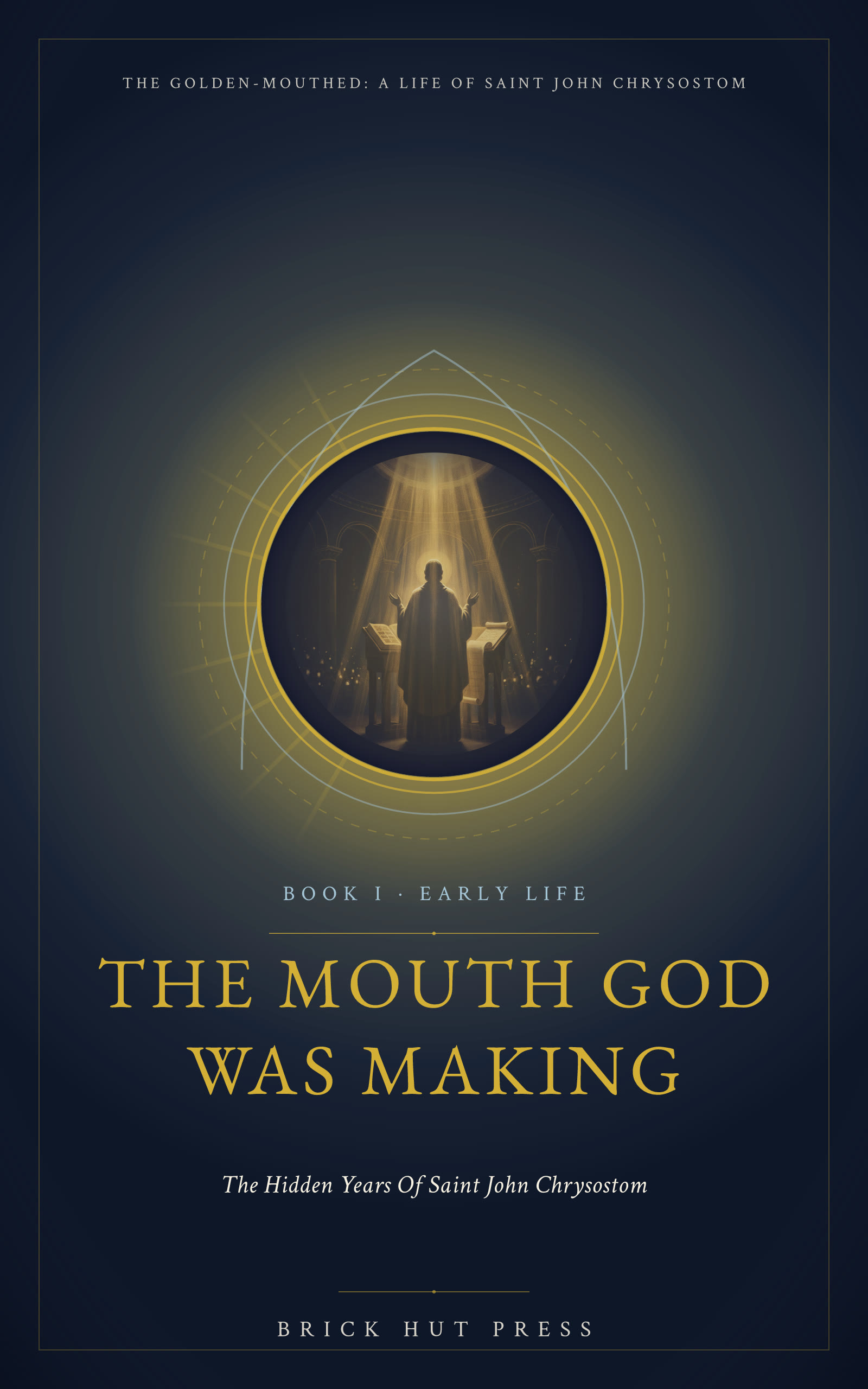
Lives that walk beside Saint John Chrysostom, chosen for their likeness, not their fame.