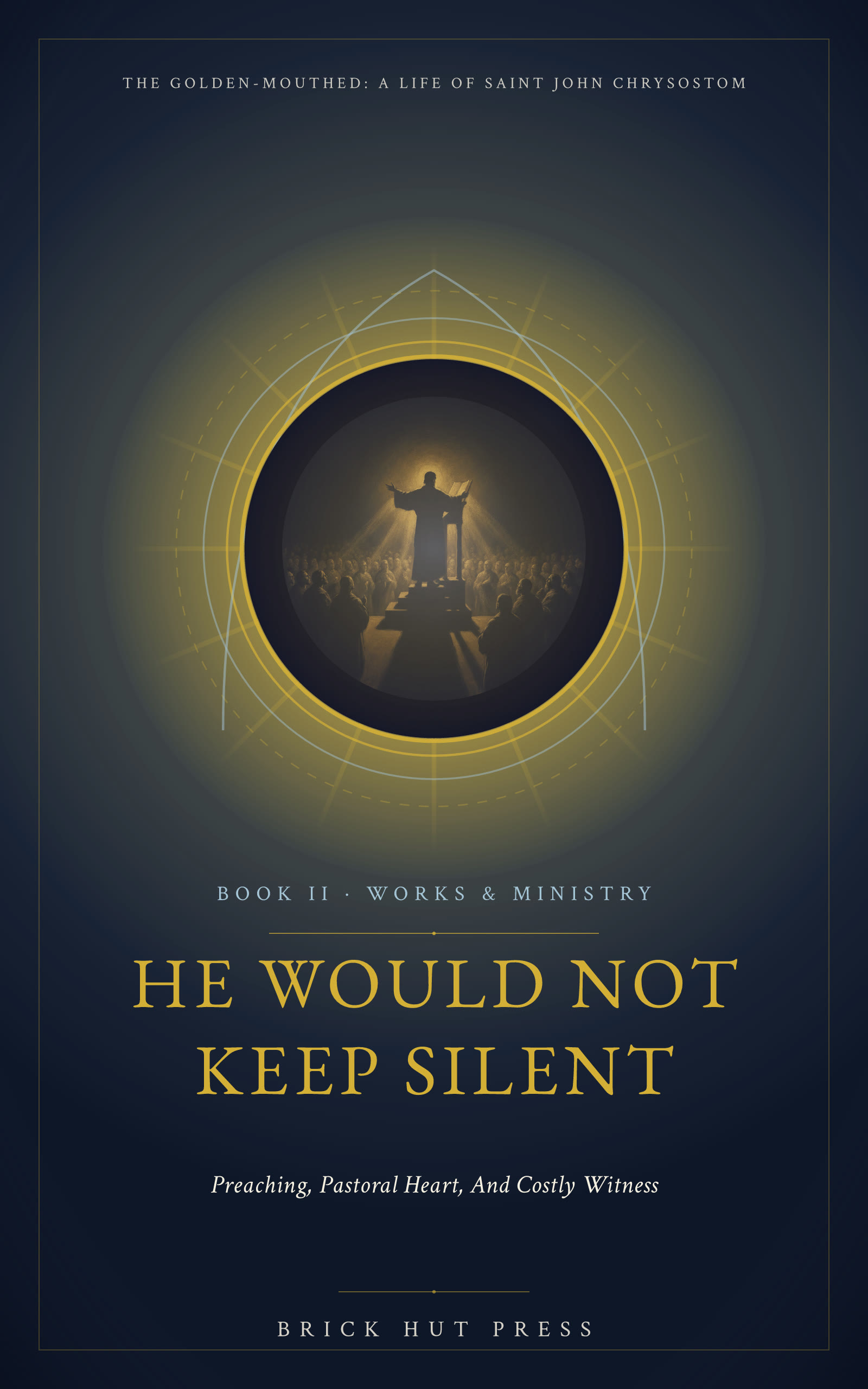
He Would Not Keep Silent
He Would Not Keep Silent changes that.
He Sold the Bishop's Silver. He Named the Empress from the Pulpit. They Could Not Make Him Stop. John Chrysostom, Golden-Mouth, is one of the most venerated figures in Christian history, yet most readers know him only as a name above a church door or a feast day in the calendar. He Would Not Keep Silent changes that.
Read the full description
Drawing on his own sermons, his letters from exile, and sixteen centuries of living testimony within the tradition that never stopped loving him, this book puts you inside the crowd, inside the basilica, inside the prison ship, close enough to feel the cold of that final winter march through Pontus. This is the John Chrysostom the Church Fathers knew: a desert-trained ascetic who fasted until his stomach failed him, a bishop who auctioned the episcopal silver to feed the city's poor, a preacher whose homilies on Matthew and Romans still electrify readers today, and a man of pastoral tenderness who wrote some of the most consoling letters in all of Christian literature, from the very exile his enemies designed to break him. He would not keep silent. He never did.
Not sure yet? Begin free.
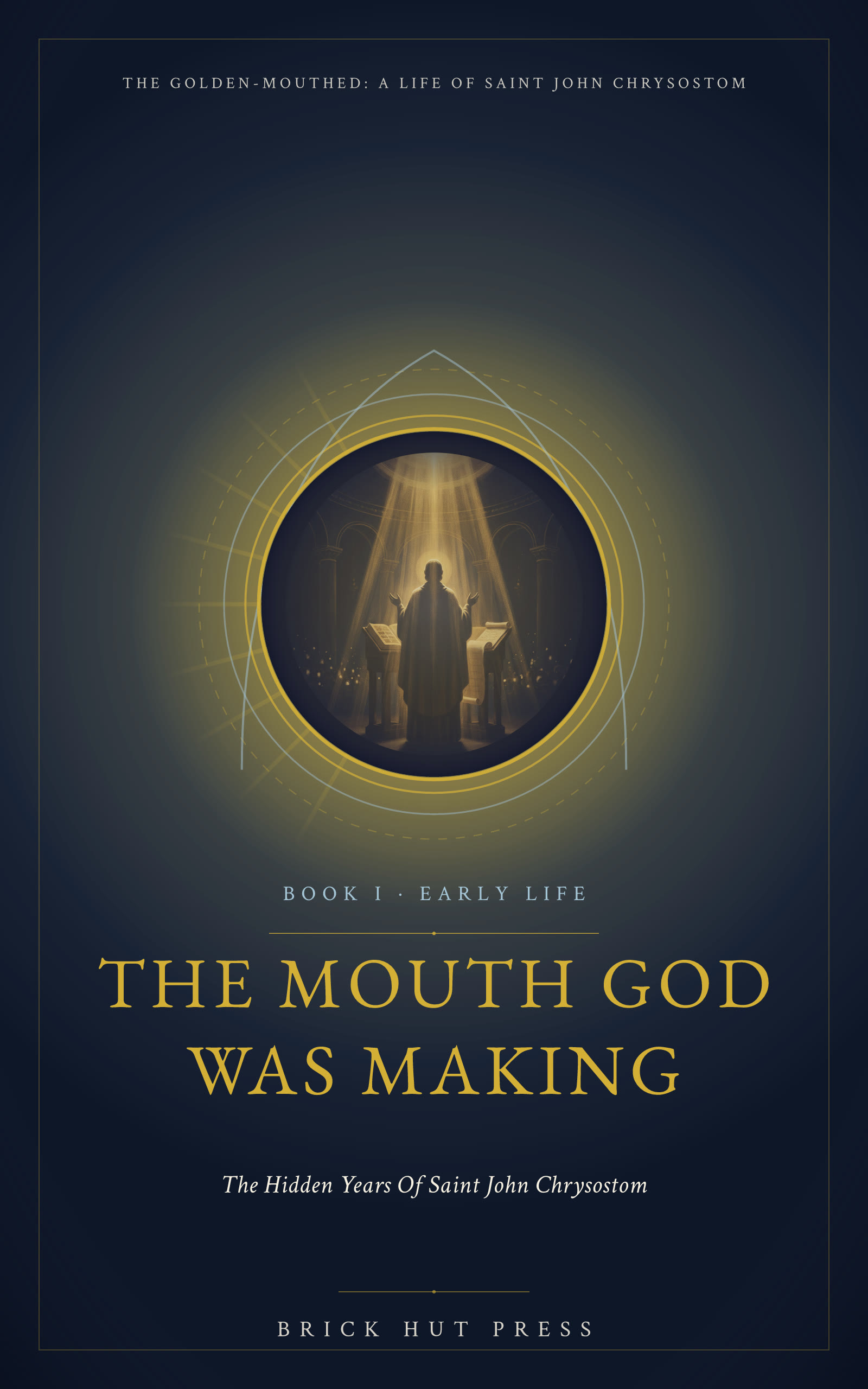
Come and Hear, a complete book about this life, free, kept in your own library here, read and heard.
Begin reading, freeAbout this volume
Few preachers have had their words outlast an empire. Saint John Chrysostom, the man Antioch and then Constantinople called the Golden-Mouthed, is one of them, and this second volume of his life opens at the hour when preaching first became dangerous for him: the Riot of the Statues, when a tax dispute turned into treason against Theodosius himself, and a newly ordained priest found his Lenten sermons were suddenly the only thing holding a terrified city together. Readers who followed him through the desert years and the long formation under Meletius and Flavian now watch that formation tested against bronze torn from its pedestals and a population that genuinely believed annihilation was coming.
This volume follows Saint John through the two pulpits that made him famous and the one throne that nearly broke him. It lingers, rightly, on his homilies on Paul, not as literary artifacts but as the record of a mind that lived inside the apostle's letters the way other men live inside their own households. It takes seriously his insistence that the altar and the gutter belong to the same gospel, that a Eucharist offered while the poor starve outside the church doors is a Eucharist offered in vain. The chapter on what he wrote about the priesthood before he ever wore a bishop's pallium is essential reading for understanding everything that follows: a man who diagnosed, years in advance and in his own voice, the exact temptations that would later be used to destroy him.
The arc bends, as it must, toward Constantinople, where the Archbishop who sold the cathedral's furniture to feed the hungry made exactly the kind of enemies that selling furniture makes. This volume does not flinch from the court intrigue that followed: the empress Eudoxia, whose relationship with her outspoken Archbishop is given the complexity it deserves rather than reduced to caricature, and the Synod of the Oak, rendered here under its proper, uncomfortable title, "The Synod That Was Not a Synod," a gathering convened by his enemies under forms that mocked the canons they claimed to uphold. The night they came for him, the exile that followed, and the letters he wrote from the edge of the known world to a Church that had not forgotten him are given the full weight they carry in the historical record: a bishop stripped of his see, writing to deacons and widows and fellow exiles with the same pastoral attention he once gave a packed cathedral.
The volume closes where history closes it, on the road to Comana, an old man being marched in weather no one should be marched in, a destination he reached only to die there. It is not a triumphant ending in any worldly sense, and the volume does not pretend otherwise. But it sets that final road beside the liturgy that still bears his name, celebrated in Orthodox churches on ordinary Sundays by people who may never have heard of Eudoxia or the Oak, and lets the two sit together: the exile and the inheritance, the man broken by an empire and the voice still heard every time his liturgy is prayed.
What distinguishes this volume from a simple chronicle of persecution is its refusal to separate the preacher from the pastor. Saint John's eloquence is never treated here as mere rhetorical gift; it is shown as the instrument of a man who could not, by his own nature and by what he believed his ordination demanded of him, keep silent about injustice, whether it stood in an imperial palace or sat comfortable in a pew. Readers come away understanding why "He Would Not Keep Silent" is not a flourish of a title but a literal description of the choice that cost him his see, his health, and finally his life, and why the Church that exiled him now keeps his name in gold.
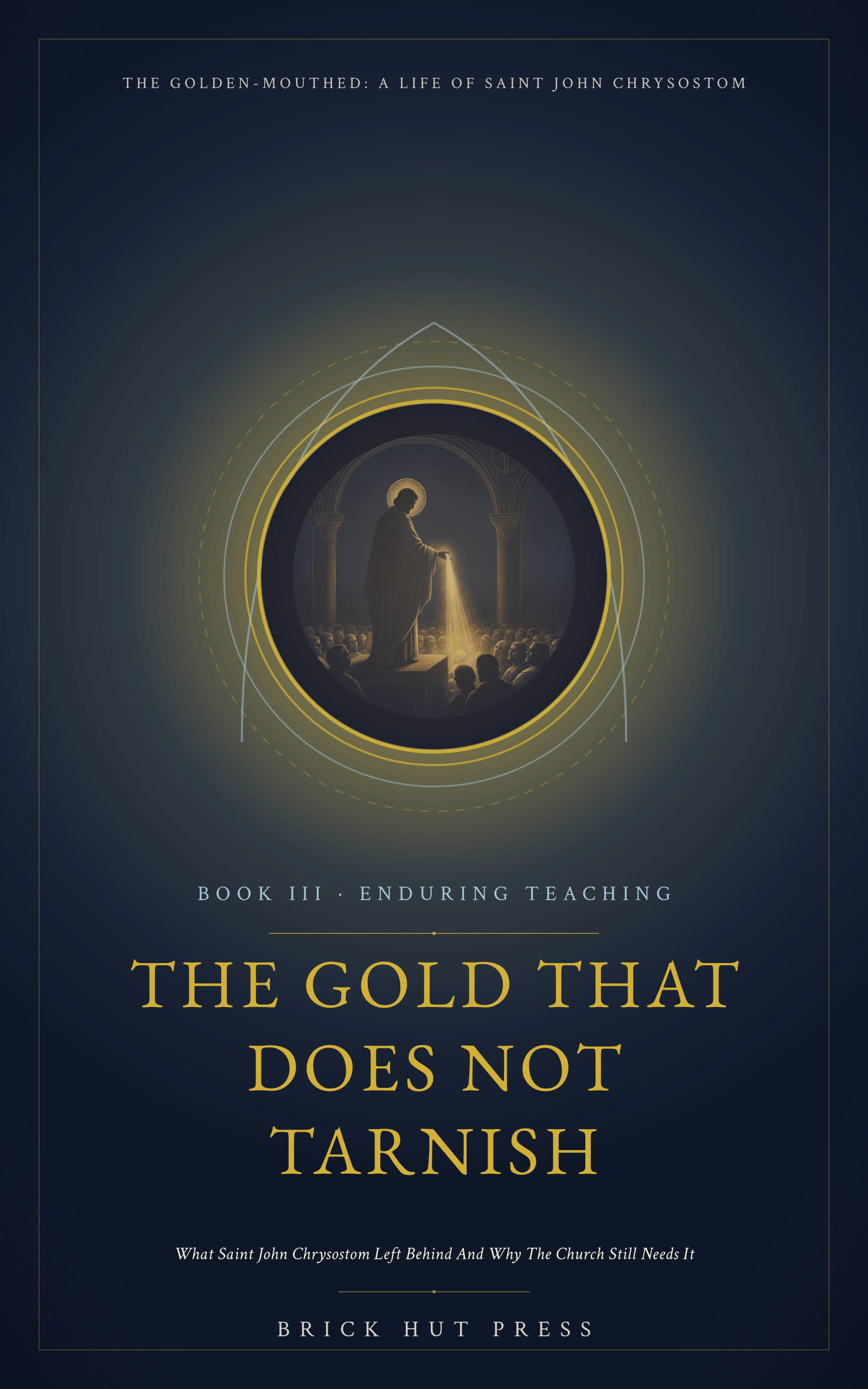
Lives that walk beside Saint John Chrysostom, chosen for their likeness, not their fame.