The City That Cannot Fall
The whole Augustine, lover, doubter, theologian, bishop, saint, and his theology of grace and the two cities.
He Wept Over His Wasted Years, And Gave the Church a Gift That Has Never Stopped Giving You already know the line: "Our heart is restless until it rests in Thee." But do you know the man who wrote it, the brilliant, broken, searching man who spent decades running from the very God he could not escape? Augustine of Hippo is one of the most quoted figures in the history of Christianity, yet he remains, for many believers, little more than a name on a shelf.
Read the full description
The City That Cannot Fall changes that. This is the whole Augustine, the lover, the doubter, the theologian, the bishop, the saint, and his story turns out to be startlingly, uncomfortably close to your own. Written for Catholic, Anglican, and broadly Western Christian readers who hunger for more than doctrine, this book walks you through Augustine's remarkable life, his towering theology of grace and the two cities, and his astonishing influence across fifteen centuries of the Church. It arrives at a sustaining discovery: this fifth-century bishop from North Africa is not a historical relic to be admired from a distance. He is a companion for the interior life, for the restless hours, the seasons of doubt, the long slow return to faith.
Not sure yet? Begin free.
The Garden and the Flame, a complete book about this life, free, kept in your own library here, read and heard.
Receive the free bookAbout this volume
This is the third and closing volume of a life told in three movements, and it opens not at the beginning but at the center: Book Ten of the Confessions, the paragraph that begins Late have I loved you. If the earlier volumes carried the young Augustine through Carthage and Milan, through Monica's tears and the garden at Cassiciacum, this book asks a different question. What did the bishop of Hippo, writing at night after the boundary disputes and the broken betrothals had been settled, actually leave behind for the Church that would claim him for sixteen hundred years? The answer, chapter by chapter, is not a doctrine filed away in a library. It is a way of praying, a way of arguing, a way of building, and a way of remembering that has never stopped shaping the people who inherited it.
The volume's early chapters stay close to the theological center of gravity: grace, and the wound it heals. What Grace Actually Means and The Wound We Carry Together take up the hardest, most contested ground in Augustine's legacy, the doctrine of original sin and the conviction that the will, left to itself, cannot lift itself toward God. Seawater in a Shell turns to the limits of human language before divine mystery, a theme Augustine returned to again and again when he tried to say what could not quite be said. These chapters do not flatten the difficulty. They sit with it, because Augustine himself never resolved grace into something easy, and a book that reveres him owes him the same patience.
From there the book widens outward into history. Two Cities in the Mirror takes up The City of God, the vast defense Augustine built in the last fourteen years of his life, and asks what it means to live as a citizen of an eternal city while Rome itself is burning. The Rule That Outlived the Ruins follows the small community he founded in Hippo into the religious orders, Augustinian and Dominican and beyond, that still keep a version of his rule today. And two chapters trace the astonishing reach of his afterlife: Luther's Augustine, Calvin's Augustine shows how the Reformers read him as their own, sometimes against the very Church that canonized him, while The Mystics Who Sat at His Feet follows a quieter inheritance, the contemplatives who found in his restlessness a map for the soul's ascent.
The book does not shy from the strange fate of his body. Bones in a Golden Shrine tells the story of relics carried across a fractured Italy, a saint's remains becoming, centuries later, a pilgrimage and a controversy, proof that even in death Augustine kept generating argument and devotion in equal measure. It is a small, human chapter in the middle of large ones, and it earns its place: a life this consequential does not end cleanly, even at the grave.
The final movement turns from history back to practice. The Confessions as a Way of Praying reads Augustine's most famous book not as autobiography but as prayer, a text meant to be spoken to God rather than merely read about him, and it offers the volume's clearest invitation: try praying it yourself. Still Restless: Augustine for Seekers Today closes the series where the whole project began, with the line that gives this series its name, the heart that finds no rest until it rests in God. This is not a chapter aimed only at scholars or the already devout. It is aimed at anyone who has felt the floor tilt while reading Late have I loved you and wanted to know what to do next.
Read as a whole, this volume does not try to resolve Augustine into a single tidy legacy. It shows him claimed, argued over, and prayed through by Catholic and Protestant and Anglican alike, each finding in him something they needed and could not quite let go. That contested inheritance is itself the gift. A reader who finishes this book will not have settled every question Augustine raised, but will understand, with more clarity than before, why the questions themselves have refused to fall silent.
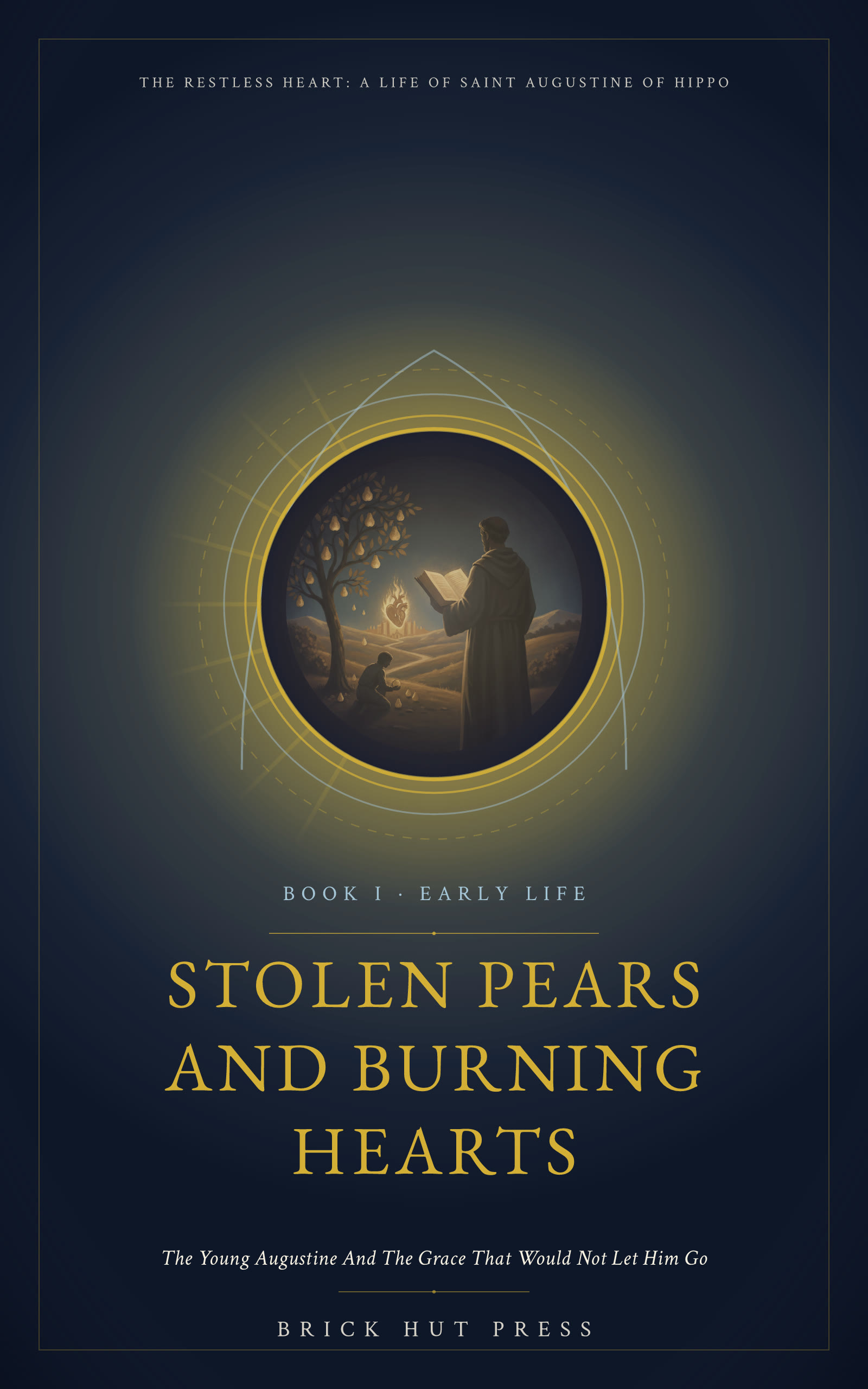
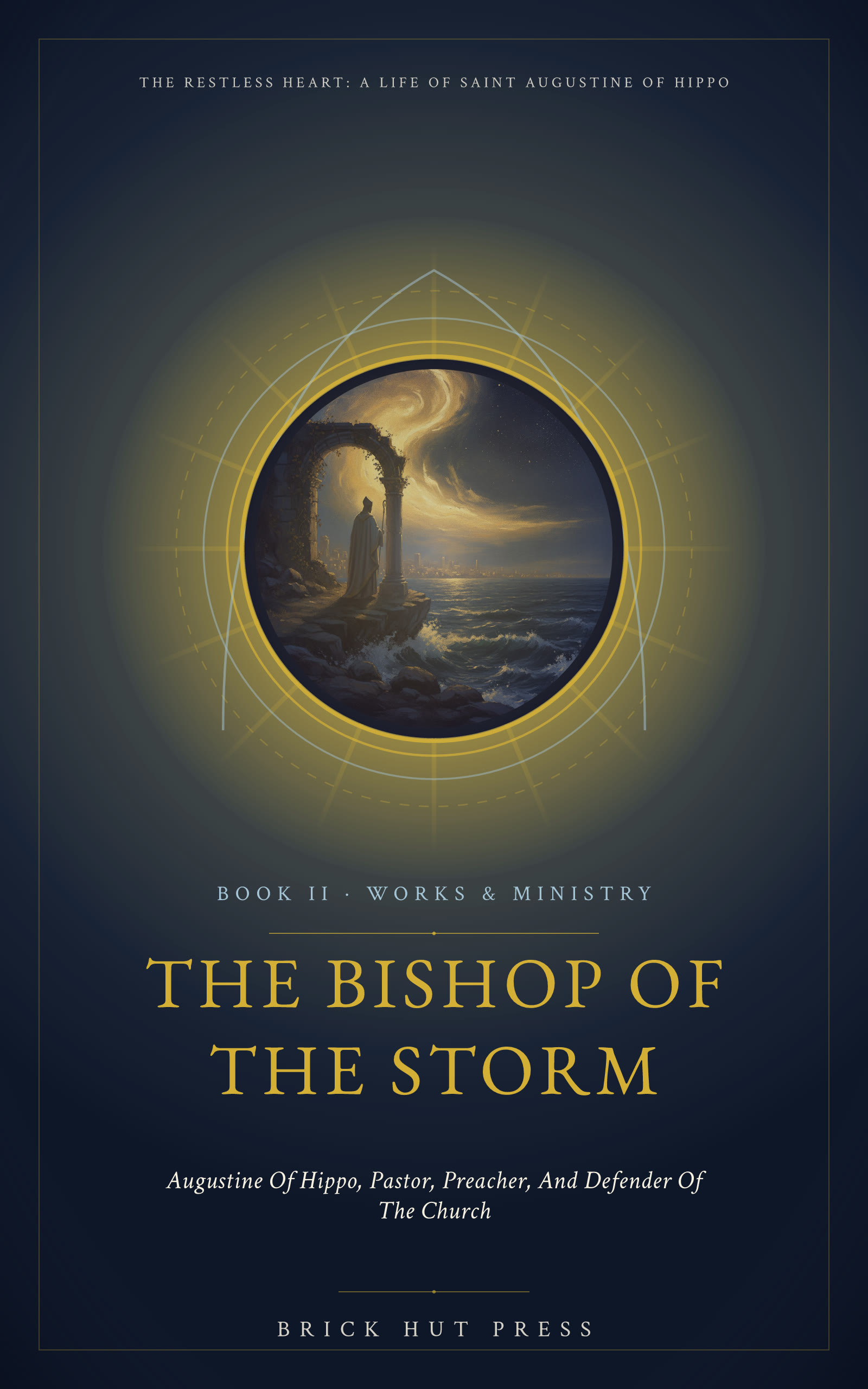
Lives that walk beside Augustine of Hippo, chosen for their likeness, not their fame.