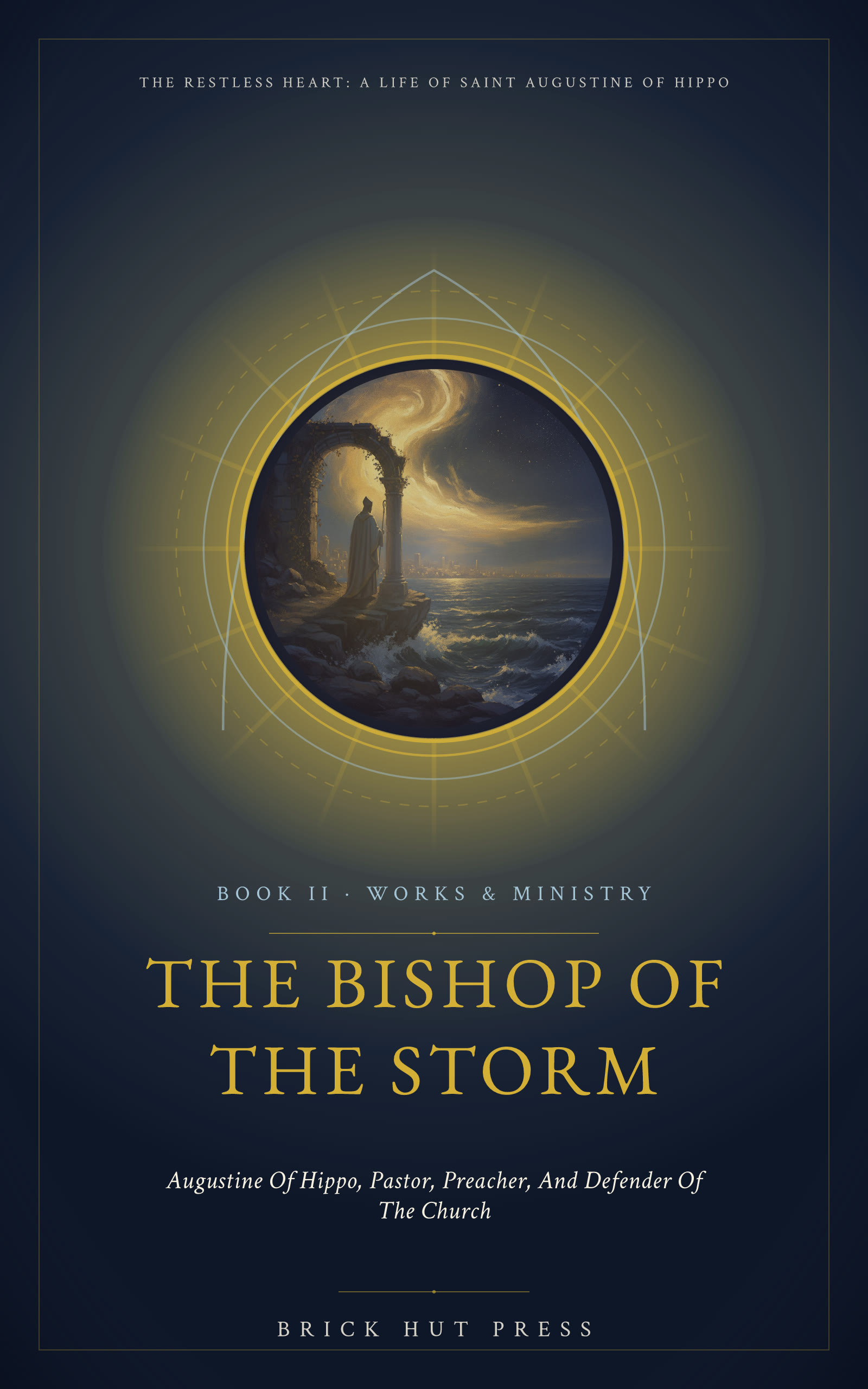
The Bishop of the Storm
The exhausted bishop mediating disputes at dawn, the preacher thundering through the summer heat, the pastor weeping over his people.
He Prayed the Most Famous Prayer in Christian History, Then Spent Thirty-Five Years Living the Answer "Our heart is restless until it rests in Thee." You know the words. But do you know the man who wrote them, not the serene philosopher enshrined in stained glass, but the exhausted bishop mediating village disputes at dawn, the preacher thundering through North African summer heat, the pastor weeping over a congregation he loved and feared losing?
Read the full description
The Bishop of the Storm restores Augustine of Hippo in full, not as an icon to be admired from a distance, but as a soul whose struggles feel startlingly, uncomfortably close to your own. This is the Augustine history tends to forget. Yes, he wrote Confessions . Yes, he shaped Western theology in ways still echoing a millennium and a half later. But for thirty-five years after his baptism, Augustine of Hippo did not sit in quiet contemplation. He stood in the breach. He argued, arbitrated, pleaded, and preached, week after week, year after year, for a church buffeted by schism, heresy, invasion, and despair. Drawing directly on his own sermons, letters, and treatises, The Bishop of the Storm tells the story of a restless heart that found its rest not in a scholar's tower but in the daily, costly labor of love.
Not sure yet? Begin free.
The Garden and the Flame, a complete book about this life, free, kept in your own library here, read and heard.
Receive the free bookAbout this volume
This is the volume that takes Augustine off the page and puts him behind an altar. Volume One ended with a man who had found his God in a garden in Milan; this book opens with that same man trying, quite deliberately, to stay a private scholar, and being overruled by a congregation that would not let him be. The irony is the engine of the whole story: a life spent avoiding ordination becomes a life spent, for the next thirty-four years, unable to leave the pulpit of Hippo Regius. Readers who want to understand how a reluctant convert became one of the most consequential churchmen in Christian history will find here the mechanics of that transformation, not as legend but as lived practice: the crowd in the basilica, the frightened glance toward old Bishop Valerius, the sudden weight of a vocation nobody asked him to want.
From that ambush the book moves outward in careful, deliberate stages. The Garden Community shows what Augustine tried to preserve of his old monastic household even as episcopal duties multiplied around him, the same hunger for common life and shared reading that had shaped him at Tagaste now transplanted into a working cathedral close. Preaching in the Basilica and The Two Suns turn to the daily labor that consumed most of his years: sermon after sermon, the discipline of expounding Scripture to ordinary Hippo Regius on ordinary Sundays, and the harder controversies, the Manichean shadow of his own youth met now from the other side of the pulpit. This is Augustine as working pastor before he is Augustine as theologian, and the volume insists on that order.
The middle chapters carry real weight and real grief. The Wound That Would Not Heal and The Grace He Would Not Soften trace the long, exhausting controversies of his episcopate: the Donatist schism that divided African Christianity down to the level of every town's two rival churches, and the Pelagian dispute that forced Augustine to say, in public and without softening, exactly what he believed about human will and divine grace, even when the saying cost him friends and made him enemies who would outlast him. The Night Rome Fell and Two Cities, One Pilgrim People take up the catastrophe of 410, when the sack of the old capital forced Christians everywhere to ask what their faith had promised and what it had not, and show Augustine answering that question with the vast, patient architecture of thought that would become his City of God. This volume does not summarize that work; it shows the bishop living inside the question that produced it, preaching to a congregation frightened that the world itself was ending.
Letters Across the World and A Love Letter to the Church widen the frame further, into the correspondence that connected Hippo to the whole Mediterranean church and into Augustine's own late reflections on what the Church he had spent decades defending actually was, and was for. The final chapters, The Bishop Grows Old and Three Walls Still Standing, bring the story to its close without sentimentality: an old man in a city under siege, a library he tried to save, a death that came, as Possidius tells it, with the Vandals already at the gates.
What this volume offers, finally, is not a study of Augustine's ideas in the abstract but a portrait of the man who held a congregation together through schism, heresy, war, and the slow attrition of age, and who never stopped believing that the restless heart he had once described in his own Confessions was the same heart he was still, every week, trying to shepherd toward rest. Readers who come to this book already knowing the philosopher will meet here the pastor who made that philosophy costly, lived, and real.
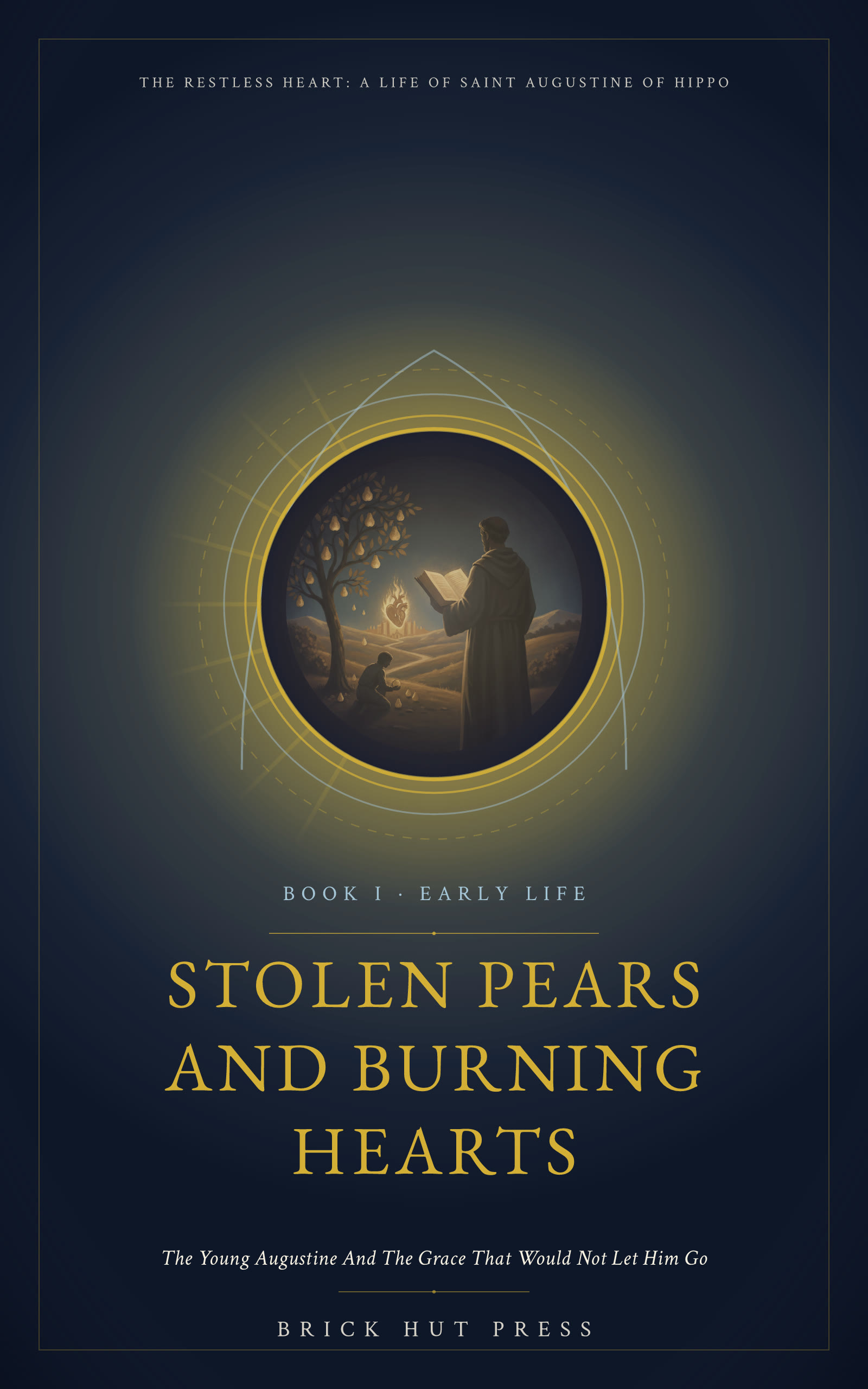

Lives that walk beside Augustine of Hippo, chosen for their likeness, not their fame.