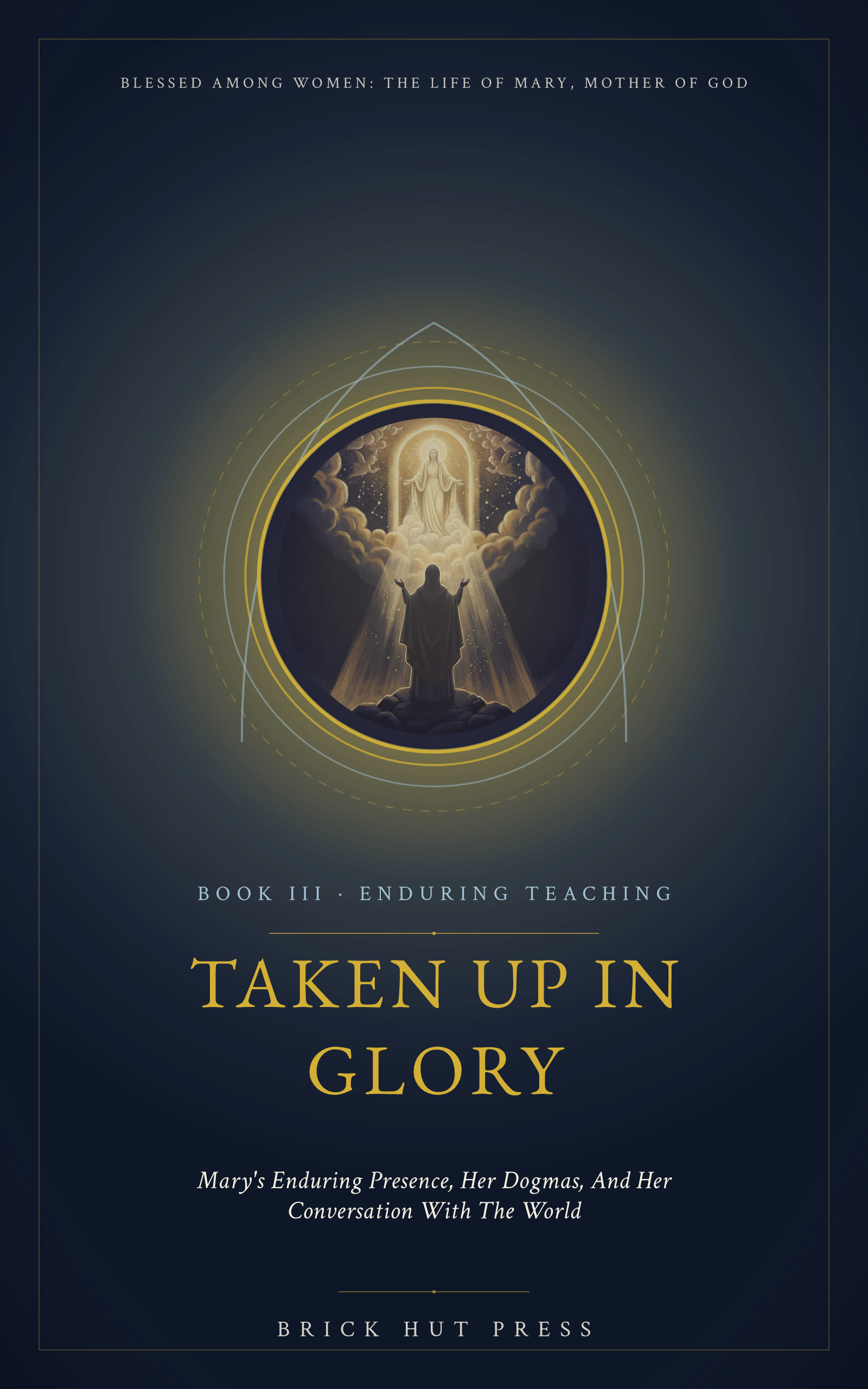
Taken Up in Glory
She Was Taken Up, and She Never Stopped Speaking. Across two thousand years, through cathedrals and candlelit shrines, through apparitions witnessed by children and mystics alike, one presence has remained constant: Mary, the Mother of God, still drawing souls toward her Son. Taken Up in Glory is not merely a book about Mary, it is an invitation to know her. To sit with her origins, walk beside her sorrows, and stand in wonder before her glory.
Read the full description
Written with the warmth of lifelong devotion and the sureness of deep faith, this is the book for every Christian, Catholic, Orthodox, or devout Protestant, who has ever felt that pull of beauty and longing that Mary alone seems to awaken. And for seekers who cannot yet name what draws them to her, this book offers a beginning.
About this volume
This third volume closes the trilogy by following Our Lady past the borders of ordinary biography, into the places where history gives way to dogma and dogma gives way to the living, speaking presence the Church has never stopped encountering. It opens in that stone room on Jerusalem's western hill, with an old woman who had spent a lifetime saying yes now asked to say it one final time, and it closes, thirteen chapters later, with the recognition that she has never stopped saying it since. Between those two points lies the whole architecture of Marian doctrine and devotion: not as abstract propositions handed down from councils, but as truths that grew, as the book shows, out of the Church's long contemplation of exactly who this woman was and is.
The early chapters take up the Dormition and the four great dogmas in turn, Mother of God, Ever-Virgin, Immaculate Conception, Assumption, treating each not as a late invention but as the Church's patient unfolding of what was already implicit in Gabriel's greeting and Elizabeth's cry. "The Dogma of the Mother" walks through Ephesus and the long argument over Theotokos, a word that turned out to be as much about her Son's identity as about hers. "Ever-Virgin" and "Conceived Without Shadow" linger over consecration and preservation, asking what it would mean for a human life to be so wholly given over to grace that even its beginning bore no shadow. "Assumed Into the Mystery She Had Always Lived" brings the Dormition to its completion, the body that bore God not left to corruption but taken, as the ancient Transitus accounts and the Church's own definition both attest, body and soul into glory.
The volume then turns, without any loss of reverence, from doctrine to encounter. Four chapters are given to the hill at Tepeyac, the grotto at Lourdes, the secret entrusted at Fatima, and the beads that have carried ordinary believers through centuries of ordinary days. These are treated as what the faithful across six communions have always understood them to be: not additions to revelation but the same Mother, known in the same way she was known at Cana and at the foot of the cross, still speaking to particular people in particular places, still saying the same thing she has always said. Juan Diego's hill, Bernadette's grotto, the shepherd children's secret, and the rosary's quiet repetitions are given their own chapters not because they compete with the dogmas but because they illustrate them, showing doctrine as something lived rather than merely defined.
The final movement widens the lens again, considering Mary as the Second Eve and first disciple, as Mother of all the living, and as the hidden architecture of the Church's own calendar, her feasts marking the year the way her yes once marked the turning of the ages. The book closes where its title points, with the conviction that the Assumption did not end her nearness but confirmed it, that the woman taken up in glory is, for that very reason, more present to the Church now than she was even in Nazareth.
Readers of the first two volumes will recognize the same patient, devotional method applied here to harder material: dogma, apparition, and the strange insistence of Catholic, Orthodox, and other Christian traditions alike that this particular woman remains reachable. Readers coming to the trilogy fresh will find a clear, careful account of why the Church believes what it believes about her ending, and why so many believers across so many centuries have found that ending to be, in fact, no ending at all.
Not sure yet? Begin freely.
According to Your Word, a complete portrait of this life, free, kept in your own library here. The door into all 3 volumes.
Receive the free book →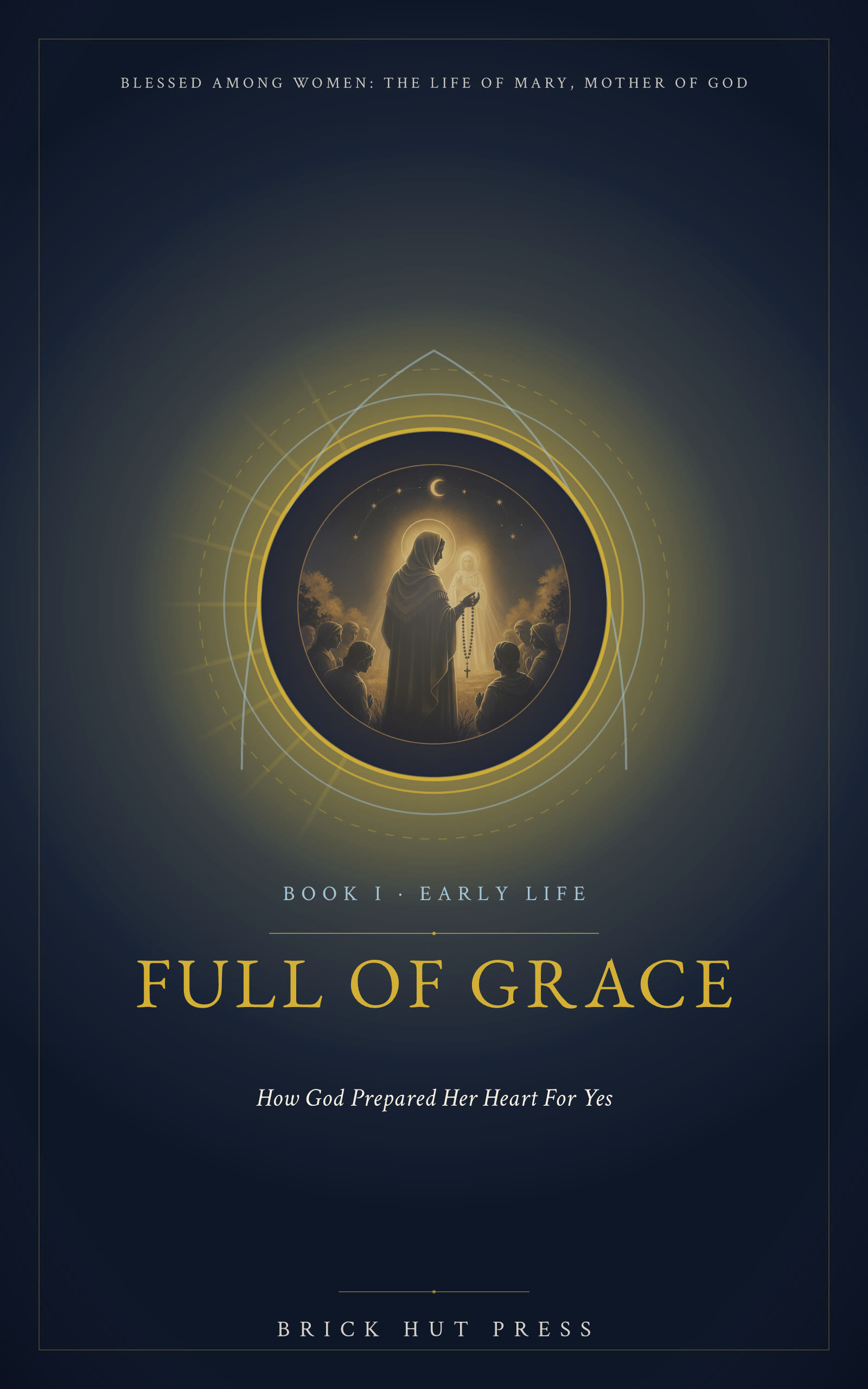
Lives that walk beside Mary of Nazareth, the Blessed Virgin Mary, the Theotokos, Our Lady, chosen for their likeness, not their fame.