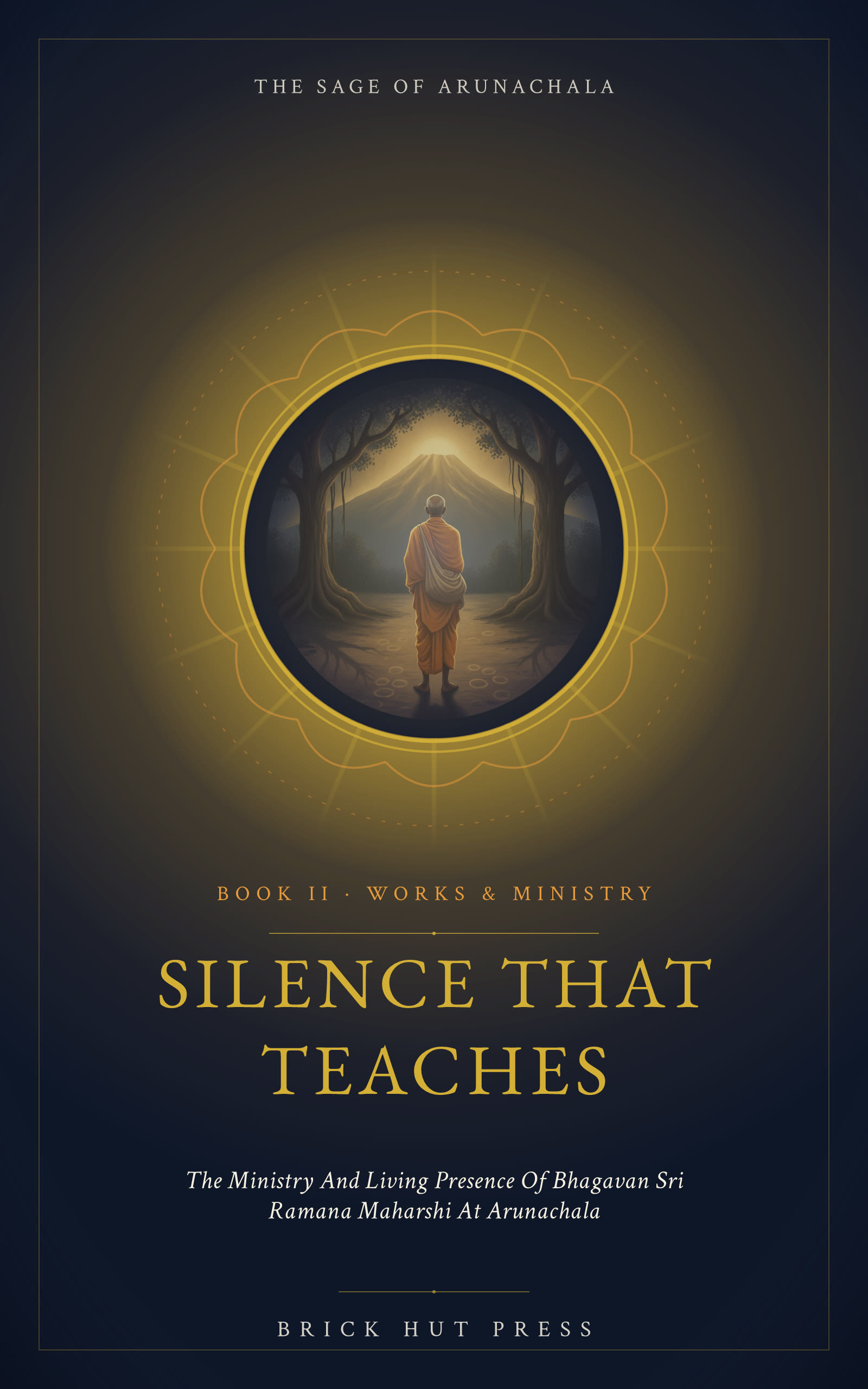
Silence That Teaches
The caves where he sat in tapas, the darshan hall, and the ancient paths that circle the holy mountain he never left.
The Sage Who Said Everything by Saying Nothing He sat in stillness. Devotees wept. Questions dissolved before they could be spoken. And something, call it Grace, call it the Self, call it the inexplicable, passed between the sage and the seeker without a single word being exchanged. This is the living miracle of Bhagavan Sri Ramana Maharshi, and it has not ceased. It continues now, at Arunachala, in the silence he left behind, a silence that still teaches.
Read the full description
Silence That Teaches is an act of reverent pilgrimage in book form. It walks you through the sacred caves where Ramana sat in tapas, through the darshan hall where seekers from every nation came to rest in his gaze, and along the ancient paths that circle the holy mountain Arunachala, the hill he called his Guru, the hill he never left. This is not merely biography, and it is not academic theology. It is an invitation to meet the Maharshi where he still lives: in the depths of your own awareness. What You Will Discover Inside The ministry of silence, how Ramana Maharshi transmitted the highest teaching through stillness, and why this form of upadesa may be the most direct path to Self-recognition ever offered The sacred geography of Arunachala, Virupaksha Cave, Skandashram, Sri Ramanasramam, and the Girivalam path brought alive as living spaces of awakening rather than historical monuments The practice of self-enquiry, Vichara , the question Who am I?
Not sure yet? Begin free.
The Hill That Waited, a complete book about this life, free, kept in your own library here, read and heard.
Receive the free bookAbout this volume
This second volume takes up Bhagavan Sri Ramana Maharshi's life at the point where the boy who arrived at Tiruvannamalai with three and a half rupees has already become the young sadhu of the temple precincts, and it follows him upward, quite literally, into the caves of the hill where the greater part of his young manhood was spent in a silence that asked nothing of the world and yet drew the world to it. Readers who have not read Volume One will still find their footing here, for the opening chapter pauses in Virupaksha Cave itself, in the cool stone air that the author describes settling over a visitor the way water settles once a stone has stopped disturbing it, and from that pause the whole shape of the book unfolds: not a chronicle of events so much as a patient description of a presence, and of how that presence gradually became a ministry without ever becoming a doctrine imposed.
The volume's early chapters are concerned with recognition rather than teaching in any active sense. We meet Ganapati Muni, the Sanskrit poet and scholar who gave Bhagavan the very name by which the world now knows him, and the chapter treats this naming with the seriousness it deserves, since it marks the moment when a wandering hill ascetic became, in the eyes of the learned and the devout alike, a Maharshi. Close behind this comes the long meditation on mouna, on the transmission that needed no words, which sits at the heart of everything this book is trying to convey: that Bhagavan's silence was not an absence of teaching but its most complete form, and that those who sat before him often left having received more than any sermon could have given them.
The domestic and human dimension of the story is not neglected. The chapter on his mother, who came to fetch him home and found instead another home entirely, is one of the tenderest in the volume, tracing how a mother's ordinary love was drawn, without her quite choosing it, into the current of her son's realization, until Tiruvannamalai became her home as much as his. From there the book follows the slow ripening of the years at Skandashram, higher on the hill, where a settled community began to form around him even as he remained, in essence, unchanged from the young man in Virupaksha, and then it turns to a chapter of unusual value for readers who want to know Bhagavan in his own words: the teachings that came through his own hand, the verses and prose pieces he set down himself, which the volume treats not as literary artifacts but as rare instances of the silence choosing to speak.
The book's later chapters trace the descent, so to speak, of the mountain into the plain: the founding of Sri Ramanasramam when the ashram came down the hill, and the opening of the darshan hall as a door held open to every soul that came, without distinction of caste, nation, or creed. The chapter on East and West at his feet is especially rich, describing how seekers from London, Paris, and beyond found their way to a small hall at the base of Arunachala and sat there in the same silence that had once filled a cave. Even the animals of the ashram receive their due, in the chapter on Lakshmi the cow and the creatures who knew, a reminder that this presence was felt by more than human hearts. The volume closes fittingly with girivalam, the practice of circling the hill itself, offered here as the final teaching: that Arunachala was never merely Bhagavan's dwelling place but his living guru and, through him, ours.
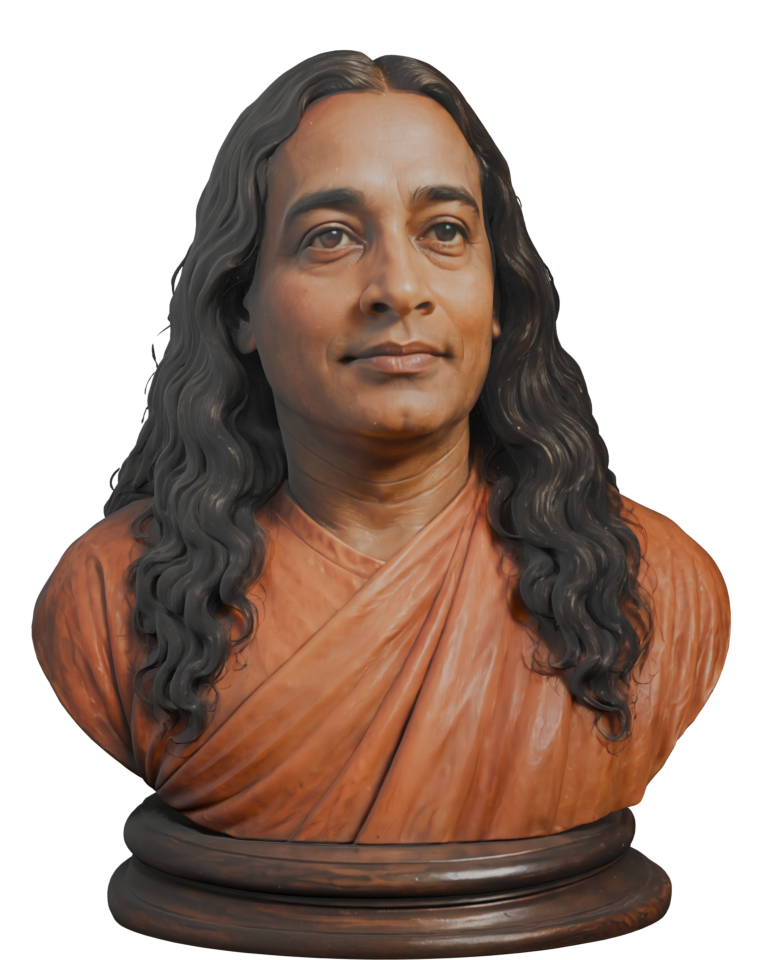
Lives that walk beside Bhagavan Sri Ramana Maharshi, chosen for their likeness, not their fame.