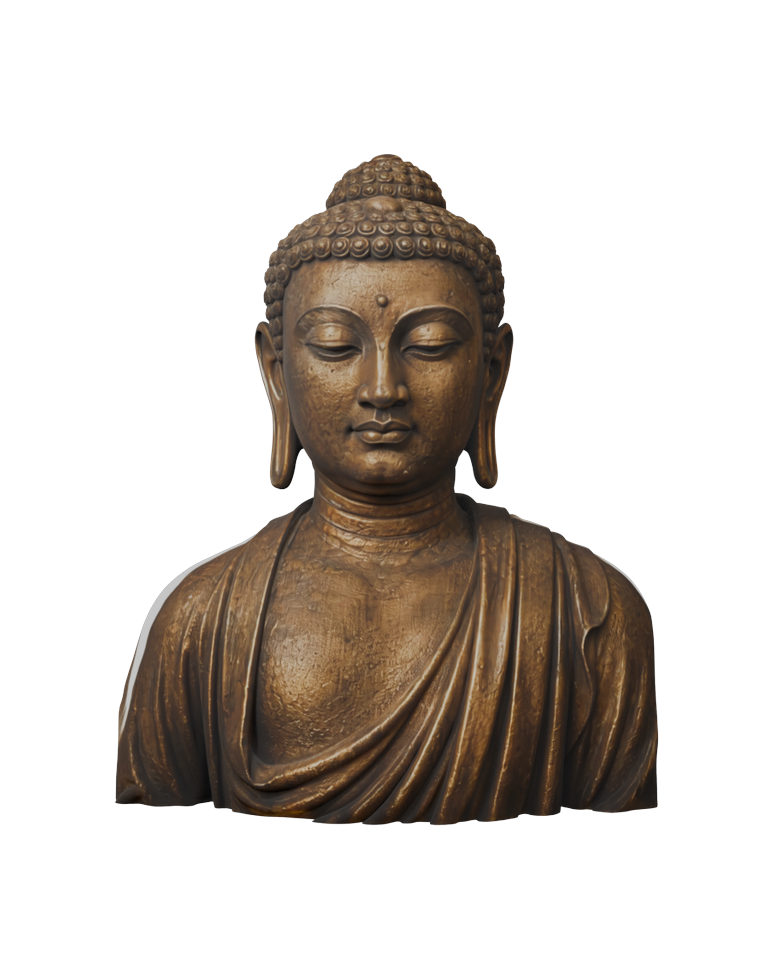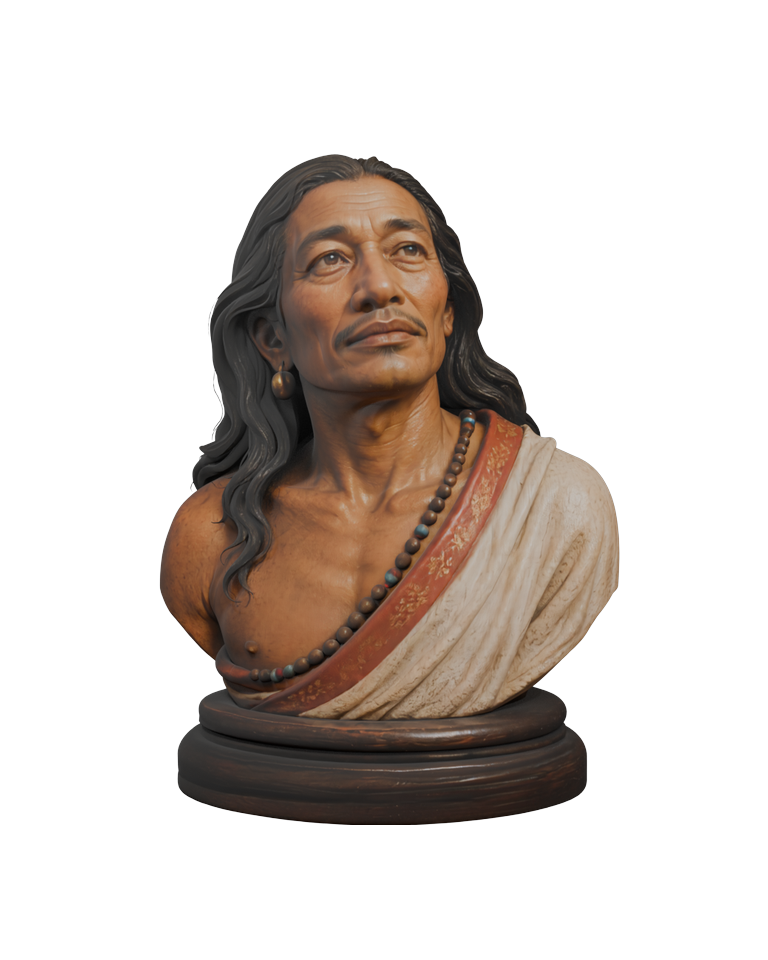
Lotus-Born
Before the lineages branched and the treasure-texts were hidden in rock and sky and the marrow of devoted minds, there was one arrival.
A Lotus Opens, and the World Is Never the Same Before the teachings reached Tibet. Before the monasteries rose. Before the lineages branched and the treasure-texts were hidden in rock and sky and the marrow of devoted minds, there was one arrival. Sudden. Impossible. Complete.
Read the full description
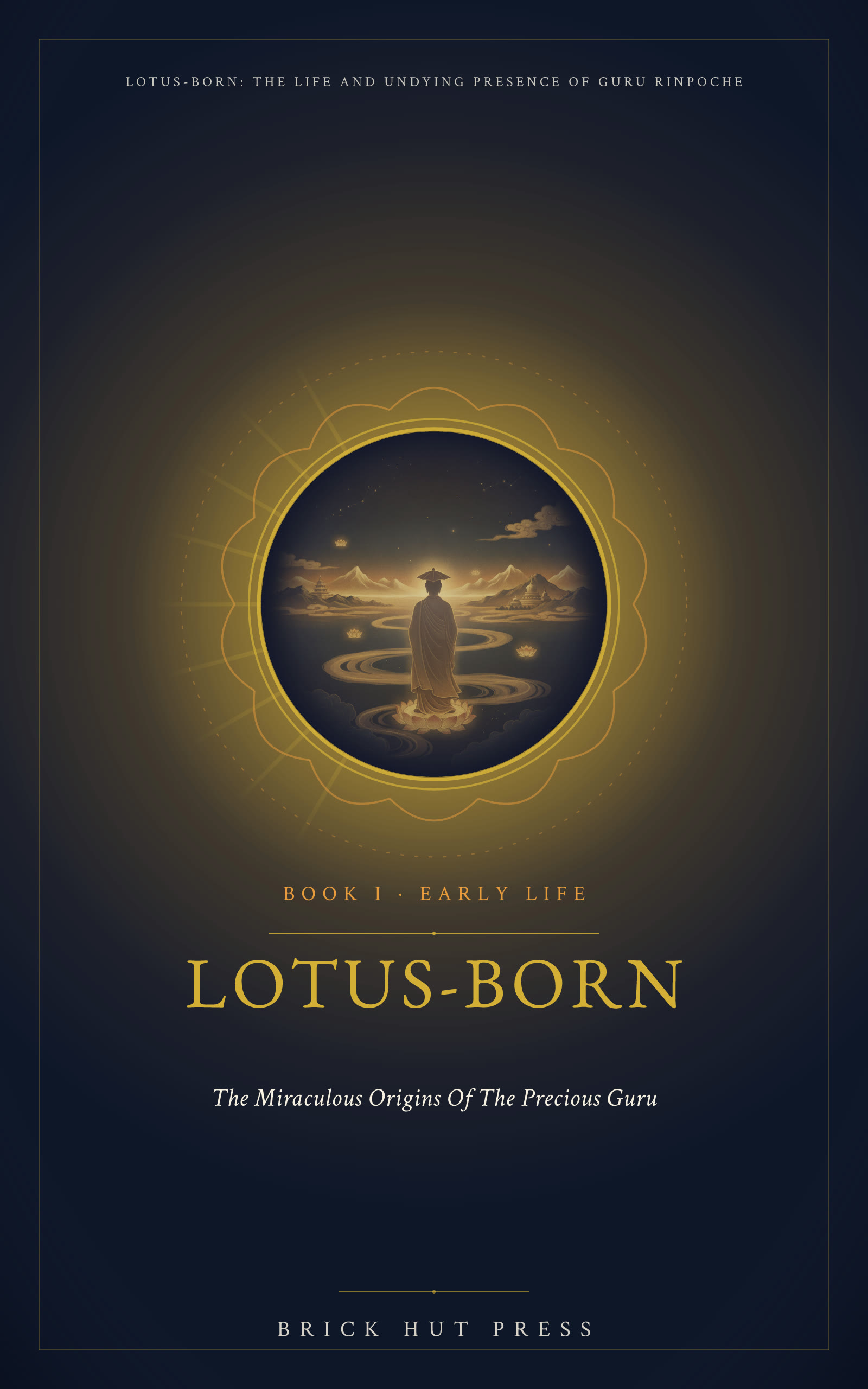
A lotus bloomed on the waters of Lake Dhanakosha in Oddiyana, and upon it sat a child who had never been born of woman, who carried in his eight-year-old form the wisdom of all Buddhas and the wildness of awakened compassion unbound by convention or fear. This is the story of Padmasambhava, Guru Rinpoche, the Lotus-Born, the Precious Guru, told from the heart of the tradition he founded. Lotus-Born: The Miraculous Origins of the Precious Guru traces his sacred life from that first impossible flowering through charnel grounds thick with siddha-power, through fire that could not burn him, through the embrace of wisdom-consorts and the company of realized masters, through sky-teachings descending like rain, through every ordeal and transmission and miraculous turning that prepared him for the task no other being could accomplish: carrying the full blaze of Vajrayana Buddhism into the waiting darkness of Tibet. Drawn faithfully from the tradition's own sources, offered with love and precision for devoted hearts.
Not sure yet? Begin free.
The Second Buddha Among Us, a complete book about this life, free, kept in your own library here, read and heard.
Begin reading, freeAbout this volume
This is the volume where everything begins, and begins without beginning in the ordinary sense. Lake Dhanakosha, the old chronicles tell us, has never once rippled under the pole of a fisherman's boat, and it is onto that unnaturally still water that the Lotus-Born first appears, not as an infant waiting to grow into wisdom but as an eight-year-old already awake behind his eyes. Readers who come to the life of Guru Rinpoche wanting a conventional nativity, a mother, a labor, a lineage traced through blood, will find instead something the tradition insists on precisely because it cannot be explained away: a being who arrives already formed, already teaching simply by being seen, because the causes that produced him were never the causes that produce an ordinary child.
The volume follows King Indrabhuti's discovery of the child on the water and the court's uneasy, then joyful, recognition of what has washed up among them, before turning to the restlessness that no palace, however devoted, can hold. "The Prince Who Could Not Stay" marks the hinge of this book: the luxury of Oddiyana's court cannot contain a being whose purpose points outward, toward the charnel grounds where ordinary monks fear to meditate and ordinary teachers refuse to send their students. It is there, among the bone ornaments and the silence of the dead, that the chapters find their real curriculum. The charnel ground becomes a classroom not because death is glamorized here, but because the tradition holds that fearlessness toward impermanence is the first true teaching, and no palace tutor could have given it to him.
From there the volume moves through the company Guru Rinpoche kept and the powers he mastered, each chapter building toward the same quiet argument: that his realization was not acquired in the way a scholar acquires knowledge, accumulated book by book, but recognized, drawn out of a nature that was complete from the lotus onward. We meet the vidyadharas at whose feet he sits, not as a pupil lacking something but as a vessel confirming what he already carries. We meet the consort who, the tradition says, held a key no other hand could turn, and the book does not shy from the frank implication that her presence was not incidental but necessary to what he became. The chapter on fire that does not burn and the chapter on the rainbow body he could already wear belong together: both insist that the ordinary laws governing flesh and element simply did not apply to him in the way they apply to the rest of us, and the book asks readers to sit with that claim rather than translate it into something smaller and safer.
The later chapters widen the lens without losing the intimacy of the earlier ones. "Mastering the Eight Directions of Power" and "The Siddhas Who Shaped Him" trace how his authority accumulated not through conquest but through recognition, siddha after siddha confirming in him what they had spent lifetimes seeking in themselves. "A Name Written in the Future" turns, briefly and without excess, toward prophecy, toward the sense that his life was already known before it was lived, a thread Vajrayana readers will recognize as central to how this tradition understands its own great teachers. The volume closes at dusk in Oddiyana, not with departure but with a kind of held breath, the same stillness that opened Lake Dhanakosha now settling over the kingdom he is about to leave behind.
What this book offers, finally, is not argument but immersion: a patient, reverent dwelling inside the terrain where the Precious Guru's life takes its first shape, before Tibet, before the Samye temple, before the long work of taming that later volumes will tell. Readers already devoted to Guru Rinpoche will find here the familiar episodes rendered with unhurried attention to place and atmosphere, Oddiyana's lake and charnel grounds given weight and particularity rather than treated as mere backdrop. Readers newer to his life will find a clear, confident entry point, one that trusts the strangeness of the material rather than apologizing for it. Either way, the volume asks for what the tradition itself has always asked: not proof, but presence.
Lives that walk beside Padmasambhava, chosen for their likeness, not their fame.