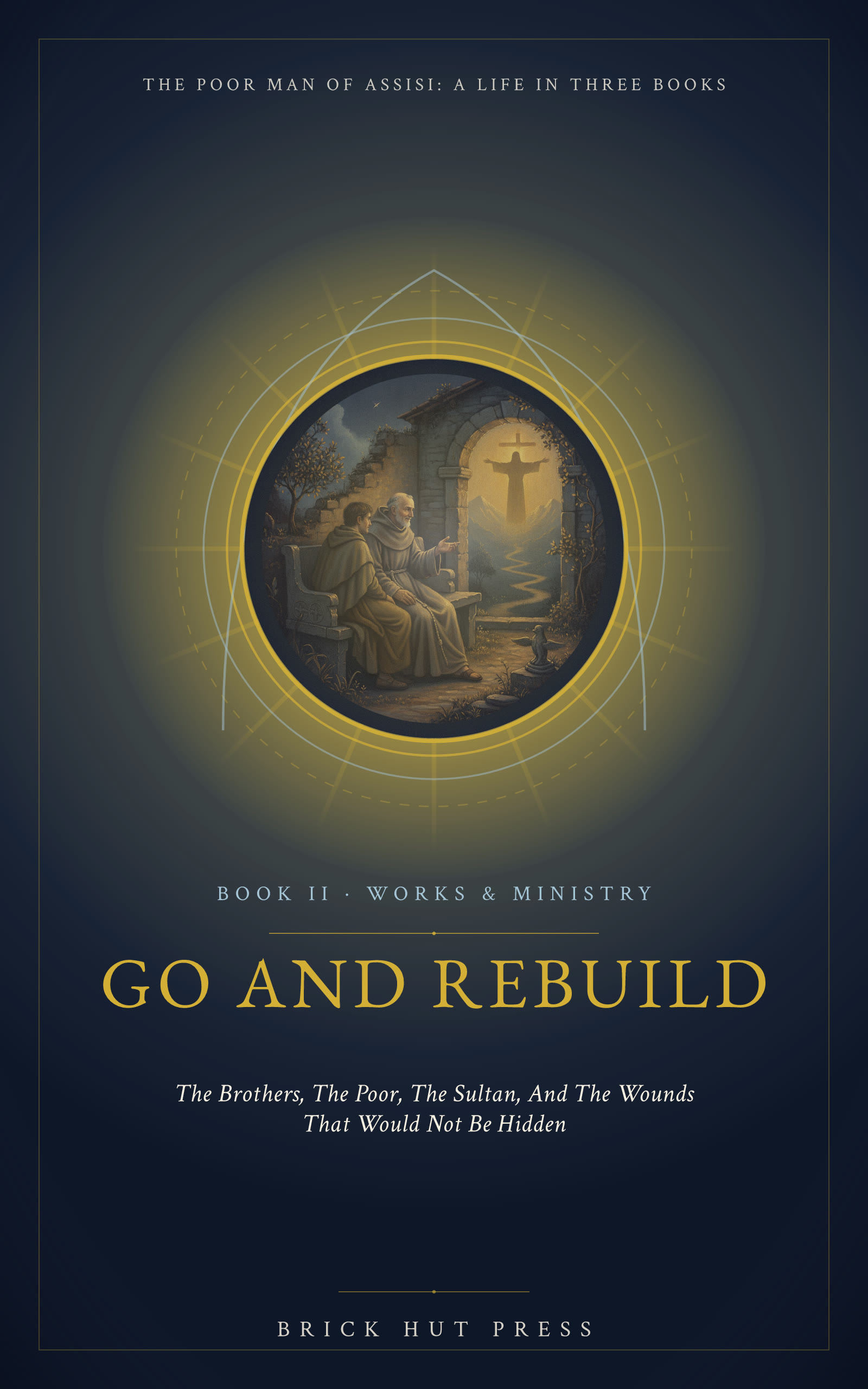
Go and Rebuild
Go and Rebuild tears away the plaster and finds the breathing man beneath.
He Kissed the Leper. He Argued with the Pope. He Sailed to the Sultan. And the Wounds Would Not Stay Hidden. You have seen the birdbaths. You have heard the legend. But the real Francis of Assisi, the merchant's son who stripped naked in a public square, who wept over sin until his eyes went blind, who walked into a sultan's war camp armed with nothing but the Gospel, is far stranger, far braver, and far more alive than any garden statue has ever let on.
Read the full description
Go and Rebuild tears away the plaster and finds the breathing man beneath. This is not a comfortable biography of a comfortable saint. This is the story of a conversion that cost everything, a poverty that was chosen with open eyes, a joy that was forged in grief, and a love for Christ so literal and so total that it marked his body before it marked history. What Awaits You Inside The conversion in full: From the silk-clad son of a prosperous cloth merchant to the beggar kneeling before a crumbling chapel, trace every step of the transformation that shocked a town and launched a movement. The brothers: Who were the first men who followed him into radical poverty, and what did it actually cost them? Meet the movement before it became an institution. Lady Poverty: Understand why Francis called poverty a bride, not a burden, and why that distinction changes everything about how we read his life and our own. The lepers: The single encounter Francis himself called the turning point of his life, explored with the depth it demands. The sultan: The astonishing journey across the front lines of the Fifth Crusade, and what the meeting between Francis and Sultan al-Kamil reveals about faith, courage, and the limits of holy war.
Not sure yet? Begin free.
The Fire in the Rags, a complete book about this life, free, kept in your own library here, read and heard.
Receive the free bookAbout this volume
This second volume of The Poor Man of Assisi opens where the first left off, with the young penitent's private conversion already behind him, and carries the story into the years when Francis of Assisi became a public man against every instinct of his own heart. It begins, deliberately, out of order: not at San Damiano or the stripping in the piazza, but on the bare rock of La Verna in September of 1224, in the hour before the wounds. That opening chapter, "The Five Wounds He Did Not Yet Carry," sets the frame for everything that follows. Readers are told plainly where this life is heading before they are shown how it got there, and the volume then turns back to trace the long middle road: the friars gathering around him, the poor teaching him what poverty actually costs, and a Pope's uneasy dream making room in Rome for a man the Curia did not quite know what to do with.
The chapters move through the founding years with unusual attention to the people who made Francis's vision livable. There is Innocent III, dreaming of a little man holding up a collapsing Lateran, weighing whether to bless a movement that looked, on paper, like trouble. There is the lady across town in her garden at San Damiano, Clare, whose own vocation the volume treats as inseparable from his rather than as a footnote to it. There are the lepers, whom Francis had once fled and now sought out, in a chapter that calls their company "the school that had no classroom," the place where his theology of the poor was learned in the body before it was ever written down. And there is the Rule itself, drafted and redrafted, argued over, carried to Rome, "written on the back of the wind," an image the volume uses to describe a document that kept slipping out of Francis's hands even as he tried to keep it simple.
The middle chapters follow the brotherhood past its first, improvised years into something larger than one man could steer. "The Order He Could No Longer Hold" names directly the sorrow of Francis's later leadership, watching a movement he began in poverty grow institutions, buildings, and disputes he had never wanted. Alongside this runs the crossing to Damietta and the meeting with the Sultan al-Kamil, told here not as a legend of easy triumph but as an act of real risk undertaken in the middle of a war, a friar walking into an enemy camp to speak of Christ and coming back alive, having listened as much as he preached. The volume treats this episode with the same plain seriousness it gives the Rule and the lepers: as another place where Francis tested whether love could survive contact with the world as it actually is.
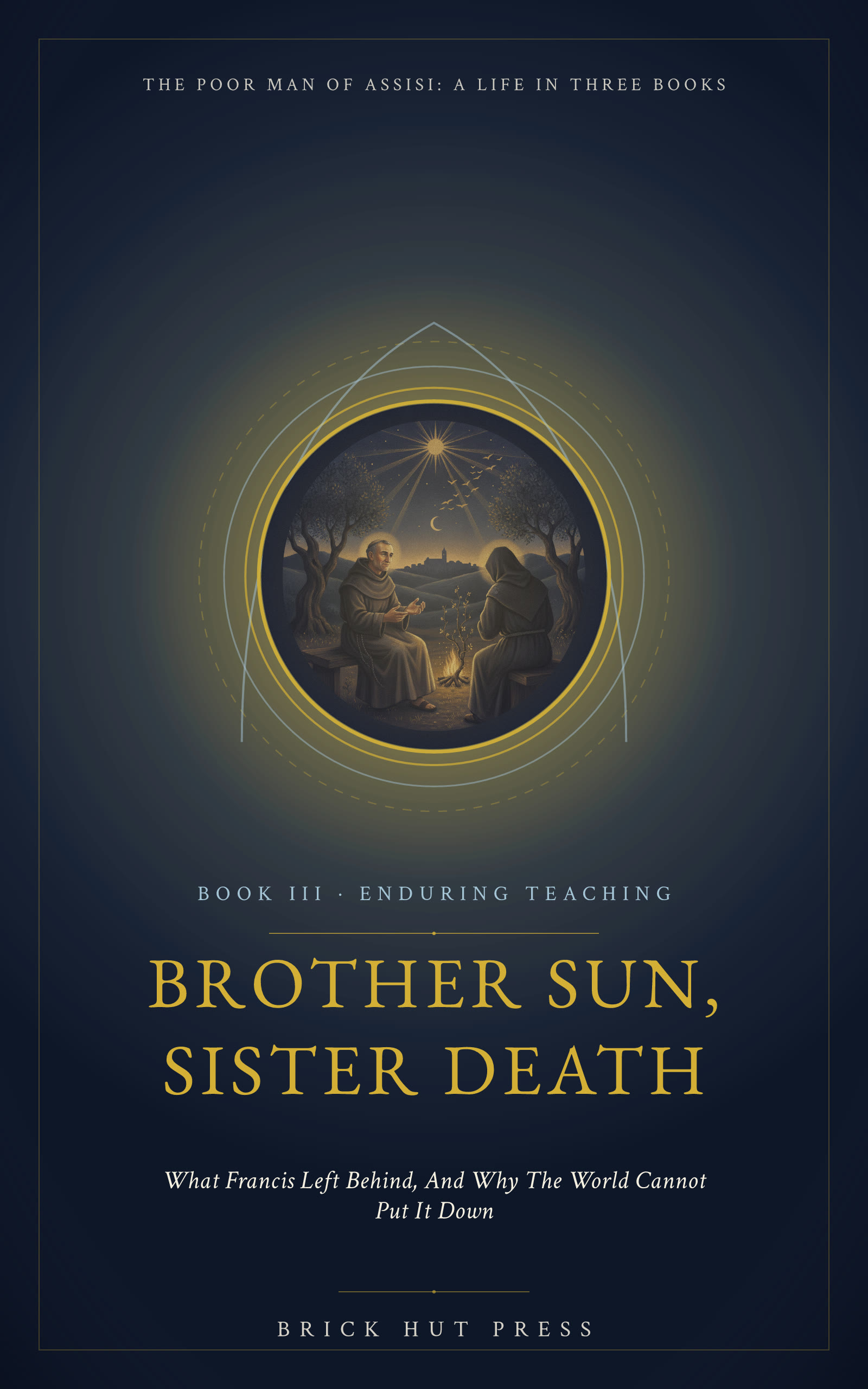
The later chapters turn inward and toward beauty. The Christmas he made in a cave at Greccio, with its ox and ass and manger of straw, is given as the origin of a devotion still practiced eight centuries later. The Canticle of Brother Sun is shown being born not in comfort but in near blindness and bodily suffering, a hymn of praise composed in darkness. And the volume closes by circling back to La Verna, to the forty days on the mountain and the wounds Francis tried, and largely failed, to hide from the brothers who loved him. By ending where it began, the book asks its reader to hold the founding of the Order and the marking of the stigmata as one continuous act of self-emptying, rather than as two separate stories.
This is a volume for readers who want the founding years of the Franciscan movement given their full weight, neither smoothed into pious legend nor stripped of their strangeness. It takes seriously that Francis was a man building something he could not fully control, loving people who frightened him, and carrying, before anyone saw them, wounds that had already begun to take shape in his flesh. It asks to be read as the hinge of the larger life: the years in which the poor man of Assisi became, however reluctantly, a father to thousands, and paid for it in his own body.
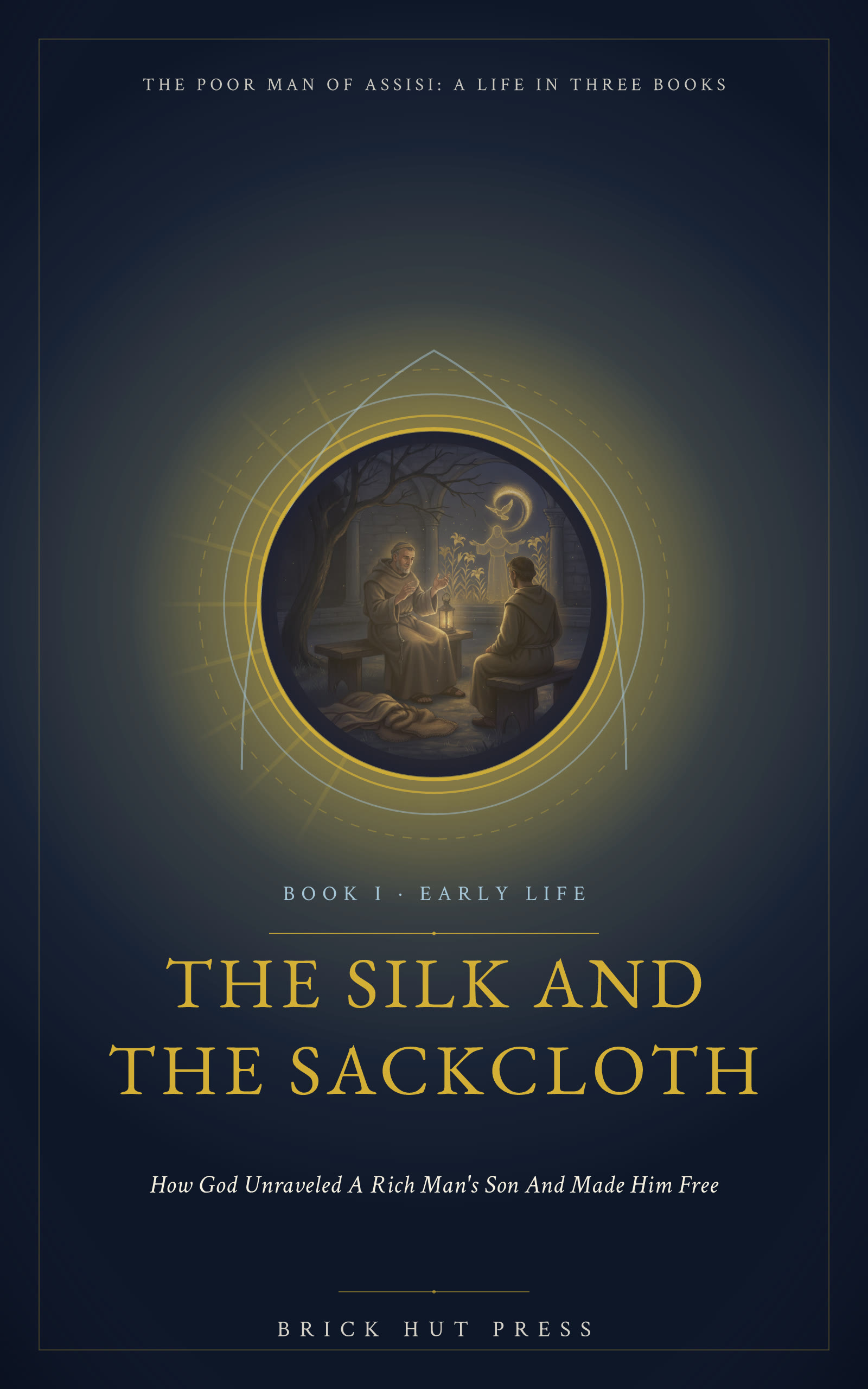
Lives that walk beside Francis of Assisi, chosen for their likeness, not their fame.