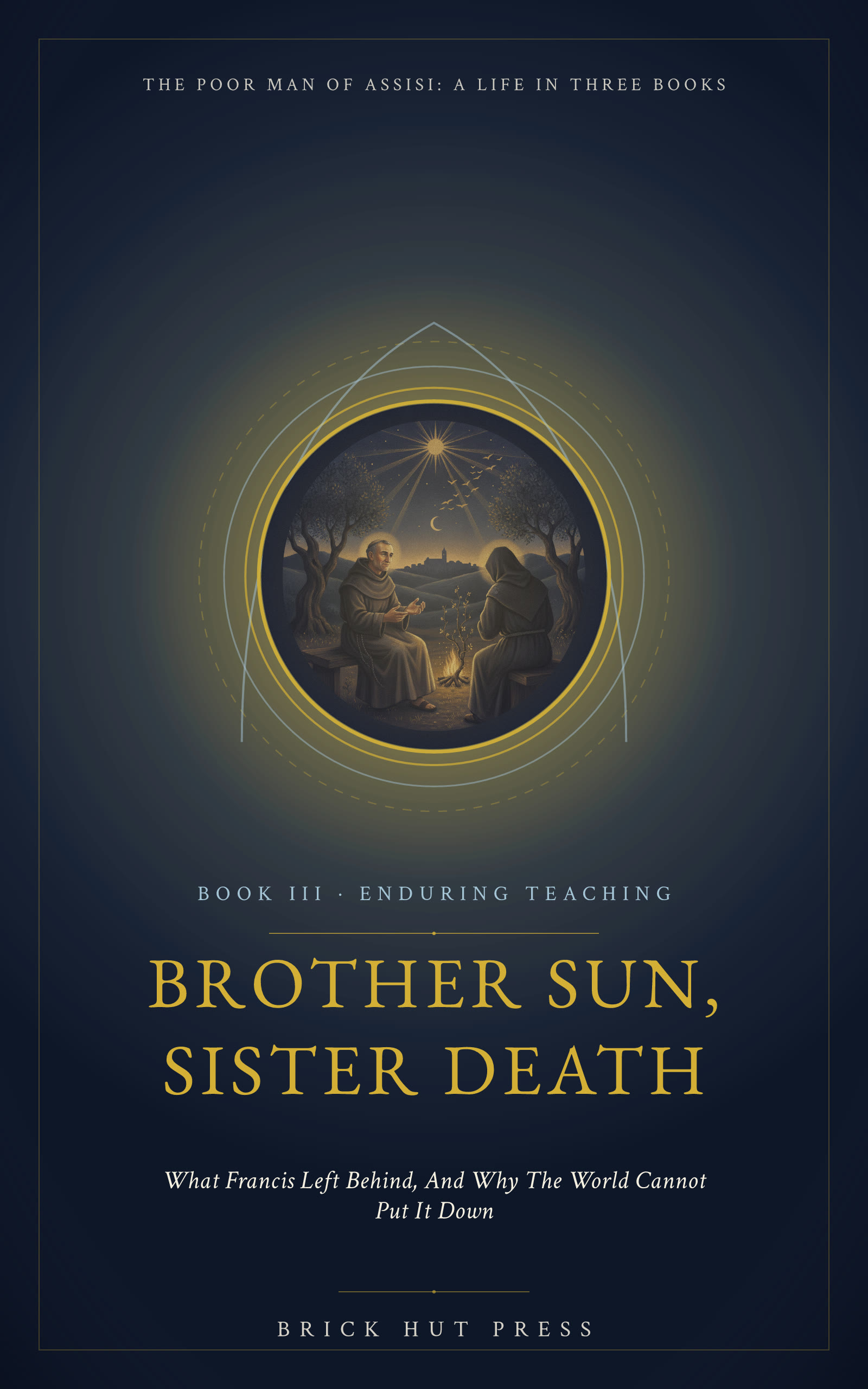
Brother Sun, Sister Death
He asked to die on bare ground, stripped of every possession, his cheek pressed against the earth he had spent a lifetime loving.
He Owned Nothing. He Changed Everything. What Does Francis Still Want From You? He asked to die on bare ground, stripped of every possession, his cheek pressed against the earth he had spent a lifetime loving. He called the blazing sun his brother and the darkness of death his sister. He did not rebuild a crumbling Church with power or politics, he rebuilt it by first picking up a broom and sweeping its floor.
Read the full description
Eight centuries later, the world still cannot look away from Francis of Assisi. The question this book dares to ask is simple and unsettling: Why? And more importantly, what does he still want from us? Brother Sun, Sister Death refuses to leave Francis on his pedestal. This is not a biography of a plaster saint. Across eleven searching chapters, this book brings readers face to face with the Francis who was real, restless, radiant, sometimes frightening in his joy, always costly in his demands. His poverty was not a philosophy. His love for creation was not sentiment. His encounter with the crucified Lord was not a metaphor. And his invitation to follow him down the same bare road is still open, still urgent, still waiting for an answer from anyone with the courage to hear it.
Not sure yet? Begin free.
The Fire in the Rags, a complete book about this life, free, kept in your own library here, read and heard.
Receive the free bookAbout this volume
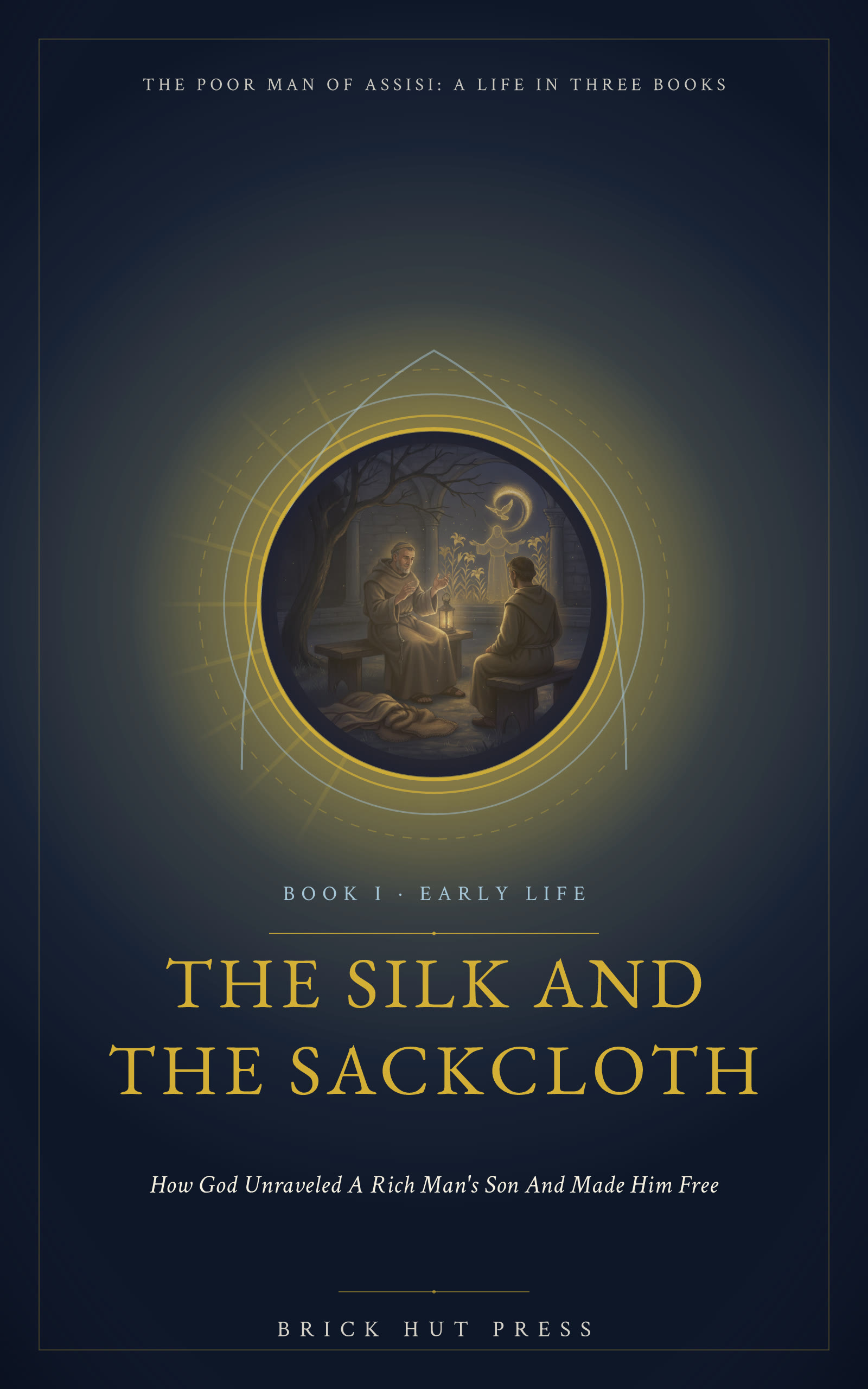
This is the third and final volume of a life told in three books, and it is the one that answers the question the first two have been building toward: not who Francis of Assisi was, but why, eight centuries later, the world still cannot put him down. Book One followed the merchant's son of Assisi to the square before Bishop Guido. Book Two carried him through the founding years, the brothers, the journeys, the wounds. This volume begins where the man himself insisted the truth would finally show itself uncovered: on the bare ground of the Porziuncola, in the last days of September 1226, where he asked to be stripped and laid down to meet Sister Death exactly as he had met every other creature in his life, with nothing between his skin and hers.
From that deathbed the book moves outward in two directions at once, backward into what his dying illuminated and forward into what his death set loose upon the world. The larks that are said to have circled the roof at evening, the Testament he dictated from his sickbed insisting one more time on the poverty he would not let the Order soften, the astonishing two years between his death and his canonization, faster than any saint before or since: these chapters read like a man's convictions catching up with the world's attention rather than the other way around. Readers who want the plain historical shape of how a poor man of Assisi became a canonized saint of the Church within two years will find that story told here without embellishment, and without needing embellishment, because the pace itself is the wonder.
But the volume is not only reckoning with a death and a canonization. It spends real time inside the theology that made Francis's life cohere, and it does so without flattening it into sentiment. Lady Poverty is treated here as he treated her himself, as a bride, not a metaphor for austerity but a lived and jealous love that shaped every choice from the bishop's square to the sickbed. The chapter on the Canticle, on the fraternity of sun and moon and wind and water and even death itself as kin, takes seriously that this was not nature poetry but doctrine, a theology written in the sky by a man who never stopped looking at the crucified Christ long enough to see anything as merely ordinary. The chapter on his joy sits deliberately beside the chapter on La Verna and the wounds, because the book insists, as Francis himself seems to have insisted, that the joy and the cross were never two different things.
One of the most important chapters in this volume steps outside Francis's own life to give Clare of Assisi and the poor women of San Damiano their due, not as a footnote to his story but as a gift given back to the tradition, a reminder that the Franciscan charism was never his alone to carry. And the book does not stop at the thirteenth century. It follows the name Francis through eight hundred years of use and misuse, argument and imitation, all the way to a conclave in Rome where a cardinal from Argentina chose to be called by that name, and the volume treats this not as trivia but as evidence that the question the man asked from the ground at the Porziuncola is still being asked.
The final chapter turns from history to address, gently but without evasion: what does this man, if he is more than a museum piece, want from a reader now. Brick Hut Press offers this volume to readers who have followed the first two books and to those meeting Francis here for the first time, in the conviction that a life this thoroughly given away is worth understanding whole, from the bishop's square to the bare earth, and worth asking what it might still be asking of us.
Lives that walk beside Francis of Assisi, chosen for their likeness, not their fame.