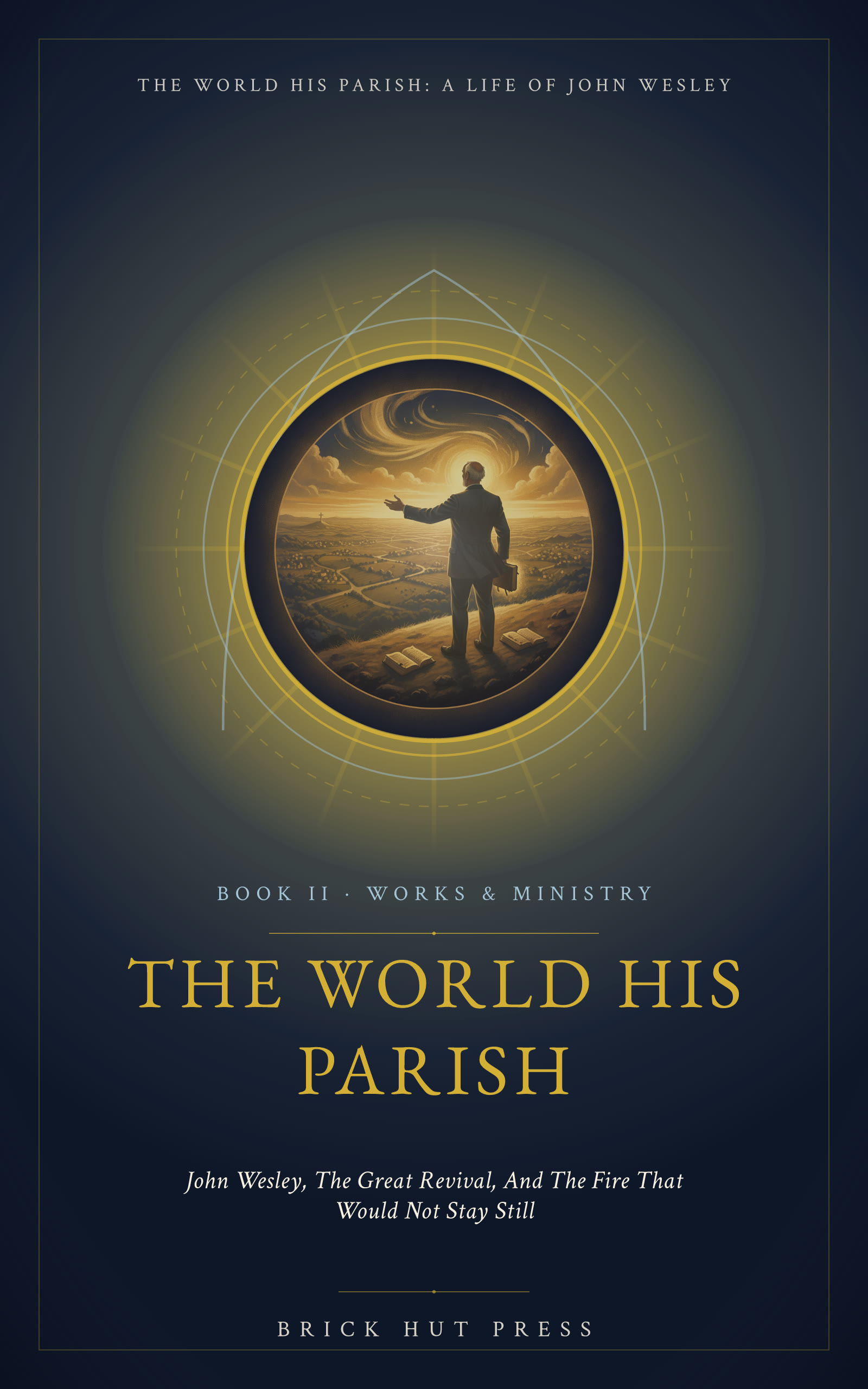
The World His Parish
A heart strangely warmed on Aldersgate Street.
He Rode 250,000 Miles, Preached 40,000 Sermons, and Set a Continent on Fire, This Is the Story That Started It All. A heart strangely warmed on Aldersgate Street. Open fields filled with weeping coal miners. Societies of ordinary believers holding one another accountable in ways that changed lives and nations. John Wesley was not supposed to be a revolutionary, he was an Oxford don, a precise Anglican priest, a man of rules and routines.
Read the full description
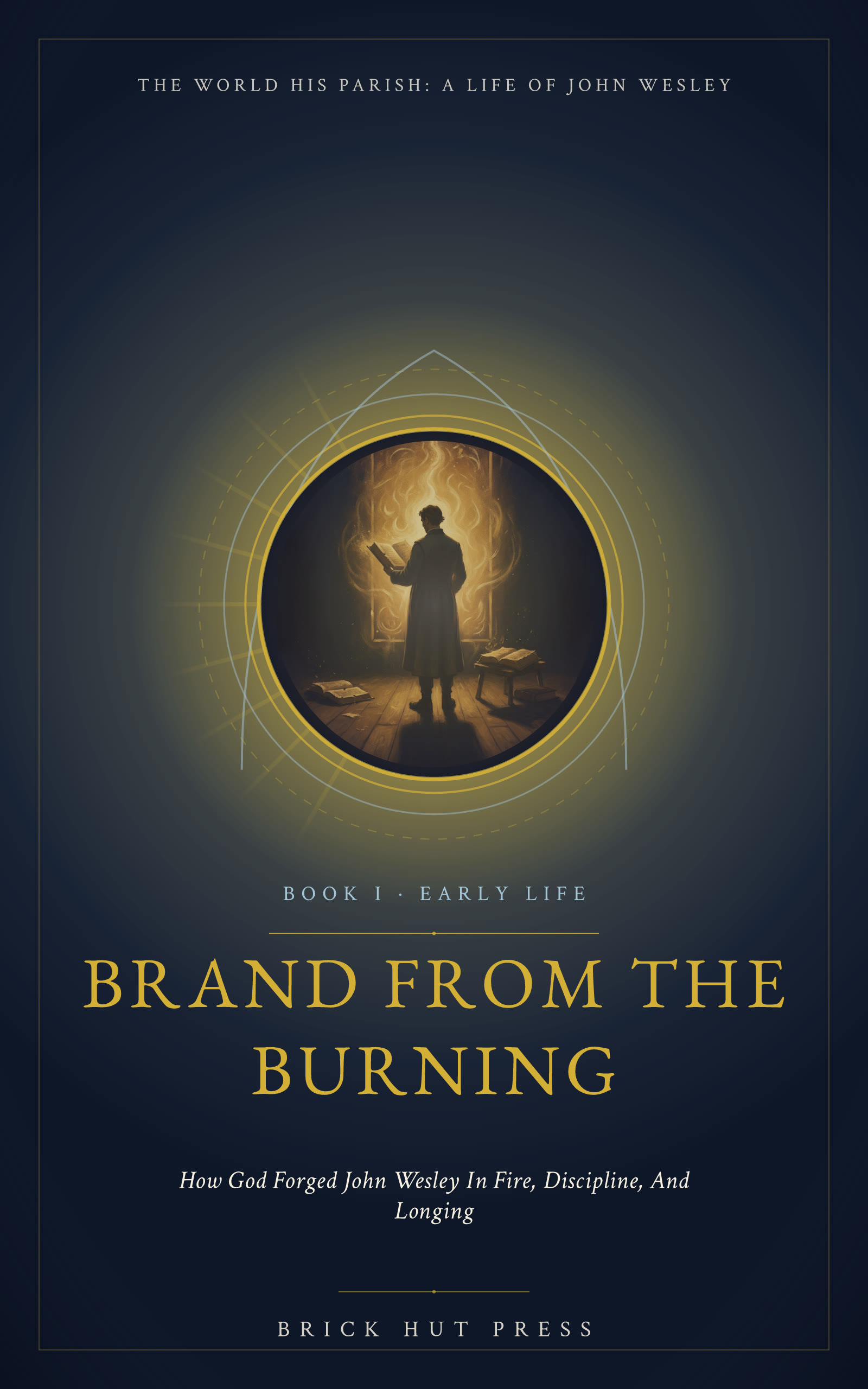
And yet the fire that fell on him would not stay still, and neither would he. The World His Parish brings Wesley's extraordinary life into vivid, immediate focus, from his near-death rescue as a child from a burning rectory, to his complex relationships, his fierce theological battles, and the sprawling Methodist movement he built almost entirely from horseback. This is biography written for the heart as much as the mind, for readers who already carry a piece of Wesley's legacy and want to understand the man who handed it to them.
Not sure yet? Begin free.
The Heart Strangely Warmed, a complete book about this life, free, kept in your own library here, read and heard.
Receive the free bookAbout this volume
This second volume opens where the first left off and where, in a sense, the whole Methodist story truly begins: a small room on Aldersgate Street, a reluctant man, and nine words that would outlast every sermon he ever wrote. Readers who come to this book already know the shape of Wesley's early years, the Oxford discipline, the Georgia mission, the long striving of a priest who could not find the assurance his soul was straining after. This volume asks what happened next, and it does not rush past the strangeness of the answer. It sits with May 24, 1738, long enough to let the reader feel the difference between a man performing holiness and a man overtaken by it.
From there the volume follows Mr. Wesley out of the pulpit and into the fields, tracing how a Church of England priest who once thought open-air preaching beneath his office came to stand on a hillside in Bristol addressing colliers who had never darkened a church door. Chapters on the road before dawn and the itinerant life that followed give the reader the physical cost of revival: the horseback miles, the weather, the relentless calendar of a man who treated the whole of England, and eventually the whole of the Atlantic world, as his parish. This is not a book that treats the Revival as an abstraction. It stays close to the roads, the market crosses, the barns and moors where the preaching actually happened, and it takes seriously the discipline of the class meeting, the "twelve people in a parlor" arrangement that let a single night of warmed hearts become a movement that could survive its founder's absence.
The volume does not soften the controversies that gave the Revival its edges. The chapter on Free Grace confronts the sermon that split Wesley from Whitefield and set Arminian and Calvinist convictions against each other within the same awakening, and it lets the reader feel the weight of that rupture among men who loved one another and disagreed in earnest. Alongside this sits the volume's patient treatment of Christian Perfection, the doctrine of perfecting love that Wesley preached with a consistency that puzzled his critics and still repays careful attention: what he meant by it, what he did not mean, and why he refused to abandon it despite the mockery it drew.
Institutional and personal chapters follow in close sequence. The Foundery in London becomes the workshop where "the people called Methodists" took organizational form, while the lay preachers, unlettered by Oxford standards but formed by discipline and calling, emerge as the true engine of the movement's spread. The volume is honest about the domestic cost of this life as well: the chapter on Wesley's marriage does not flatter him, and readers seeking a portrait scrubbed of difficulty will find instead a man whose gifts for organizing thousands sat uneasily beside his gifts for organizing a household.
Two chapters carry the volume beyond England's hedgerows. Thoughts upon Slavery shows Wesley in his final years turning the full force of his conscience, and his pen, against the slave trade, a gospel conviction he would not let rest as merely private opinion. Across the Water follows the Revival to America and the delicate, contested Sunday Service of 1784, by which Wesley tried to give the movement across the Atlantic a liturgy and an order even as it began to outgrow his hand. The volume closes with the old man on horseback, still preaching into his final decade, still restless, still convinced that the fire lit in that small room on Aldersgate Street was never meant to stay still. Readers looking for the Revival's engine room, its arguments, its roads, and its unresolved tensions will find them here, told with the same plainness Wesley himself preferred.
Lives that walk beside John Wesley, chosen for their likeness, not their fame.