Teach Us to Pray
John Cassian has been forming contemplatives since the fifth century, and he is not finished with us yet.
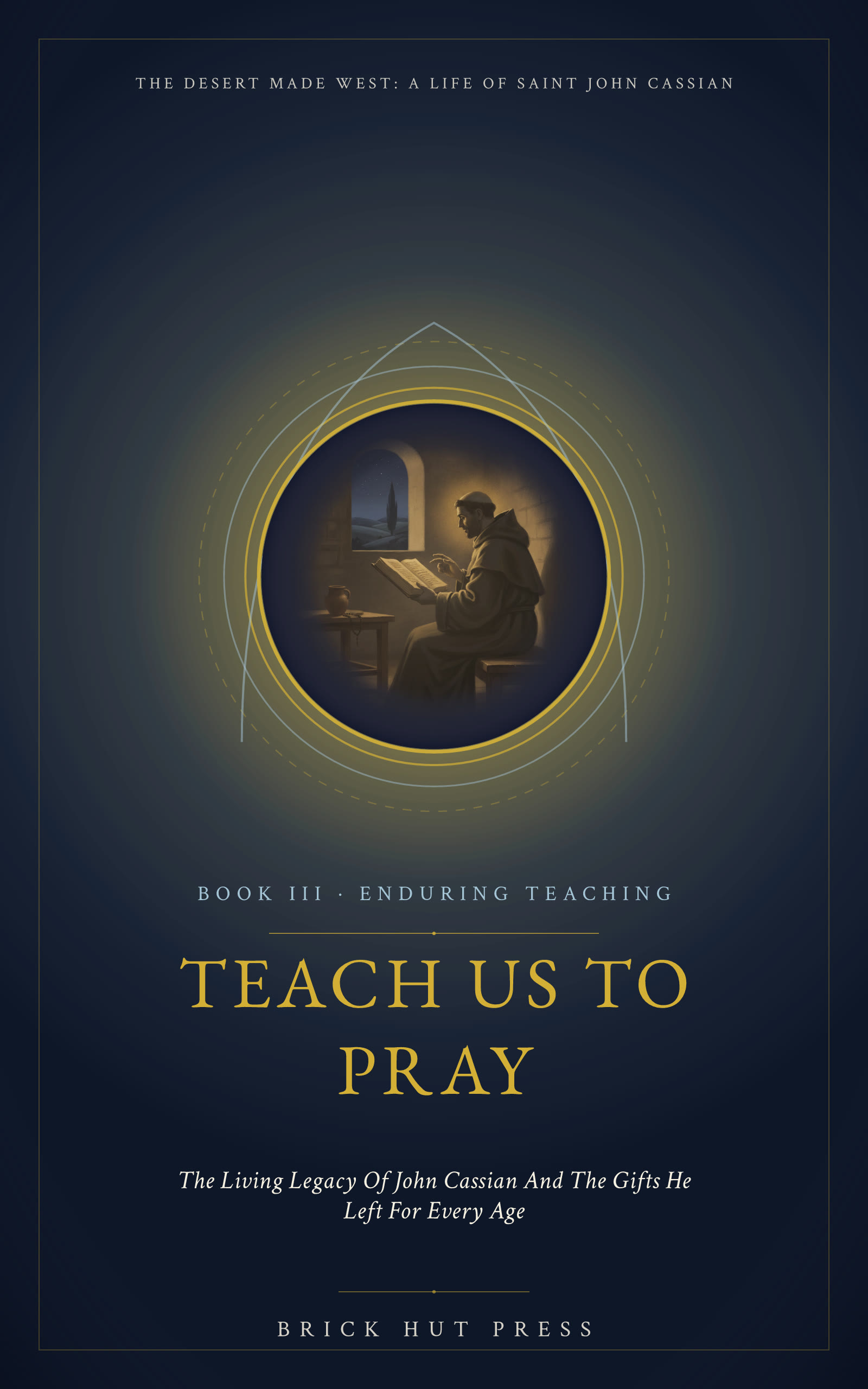
What If the Greatest Teacher of Prayer Has Been Waiting for You for Fifteen Centuries? John Cassian has been forming contemplatives since the fifth century, and he is not finished with us yet. Drawn from the sun-scorched wisdom of the Egyptian desert and carried across the Christian centuries into every monastery, hermitage, and prayer corner that dared to seek God in silence, his Conferences remain one of the most luminous guides to interior prayer ever written.
Read the full description
Yet for most modern readers, that treasury sits locked behind unfamiliar language and the assumption that it belongs only to monks. Teach Us to Pray opens that door, wide, and with a warm hand. This is not a textbook about Cassian. It is an unhurried walk through the Conferences themselves, chapter by chapter, written from within the living tradition for people who actually pray. Whether you are a Benedictine oblate deepening a decades-long commitment, a contemplative layperson hungry for roots, or simply someone who has felt the quiet tug of the desert and cannot explain why, this book was written for you. Here, the ancient masters speak again, and their words land with the directness of a letter addressed to this morning.
Not sure yet? Begin free.
The Man Who Carried Egypt West, a complete book about this life, free, kept in your own library here, read now; its narration joins free when it is finished.
Begin reading, freeAbout this volume
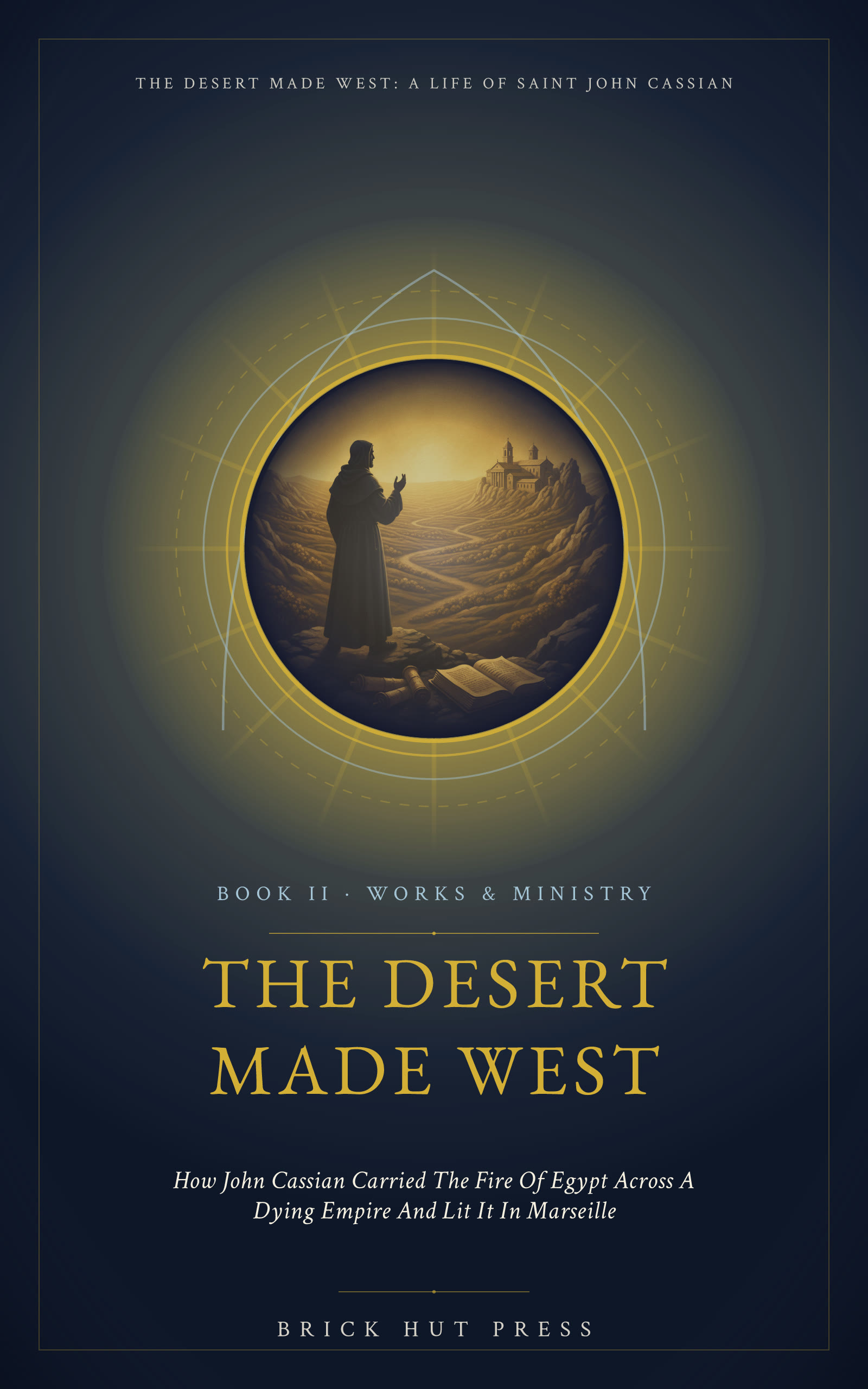
The third volume of The Desert Made West does not ask readers to travel back to Egypt or Marseille. It asks them to notice how often Egypt and Marseille have already traveled to them, folded into a morning office, a monastery chapter room, a half-remembered phrase about staying put when everything in you wants to leave. Where the first two volumes of this series followed Saint John Cassian through his formation among the desert fathers and his founding work at Saint-Victor, this volume turns to the afterlife of that work: the long, unbroken, often unacknowledged way his writing has gone on forming souls for sixteen centuries. It opens with the bell for Lauds and a woman at her kitchen table, and it does not let that image go. Everything that follows is an explanation of how her prayer, and a monk's evening reading, and a pilgrim's visit to a crypt in Marseille, are all the same gift, handed down a single long chain with Cassian's hand at one end of it.
The middle chapters stay close to the two books that make up his legacy, the Institutes and the Conferences, and they do the patient work of showing why those books still matter rather than simply asserting that they do. Readers will sit with the eight thoughts Cassian named as the common enemies of the interior life, and will spend real time with acedia, the restless, itchy temptation to leave the cell, the task, the vocation, exactly when staying is what the soul most needs. The volume gives a full chapter to the tenth Conference, where Cassian's teaching on prayer moves past words into something wordless, and another to the single verse, O God, come to my assistance, that became the hinge on which the whole of the church's daily prayer still turns. There is no interest here in treating these as museum pieces. The chapters ask the plainer question: what does it mean to try to pray without ceasing, as an ordinary person, today, and how did a fifth-century monk manage to give later ages a workable answer to an apparently impossible command.
Two chapters widen the lens considerably. One traces the debt that Saint Benedict openly owed to Cassian, showing how the Rule that shaped Western monasticism for fifteen hundred years points its own readers back to the Conferences as required reading, not supplementary reading. Another turns east, to the Orthodox Church's quieter but equally durable reverence for Cassian as a holy father and theologian of grace, a reminder that his legacy was never a purely Western inheritance, however the later disputes over grace and free will might have clouded that fact in certain Latin memories.
The volume closes, fittingly, at ground level: a chapter on the relics resting in the crypt at Saint-Victor in Marseille, where pilgrims still come, and a final chapter offering those readers who have come this far in the series, and want to go further, a way into Cassian's own words. This is not a volume that argues for Cassian's importance from the outside. It simply follows the threads that already run from his cell to the present day, through a woman's kitchen, a monastery chapter room, a verse recited at every hour of the Divine Office, and lets the reader see, plainly, how much of the furniture of Christian prayer still bears his hand. Anyone who has ever wondered where the words they pray each morning came from will find, in these twelve chapters, a patient and specific answer.
Lives that walk beside Saint John Cassian, chosen for their likeness, not their fame.