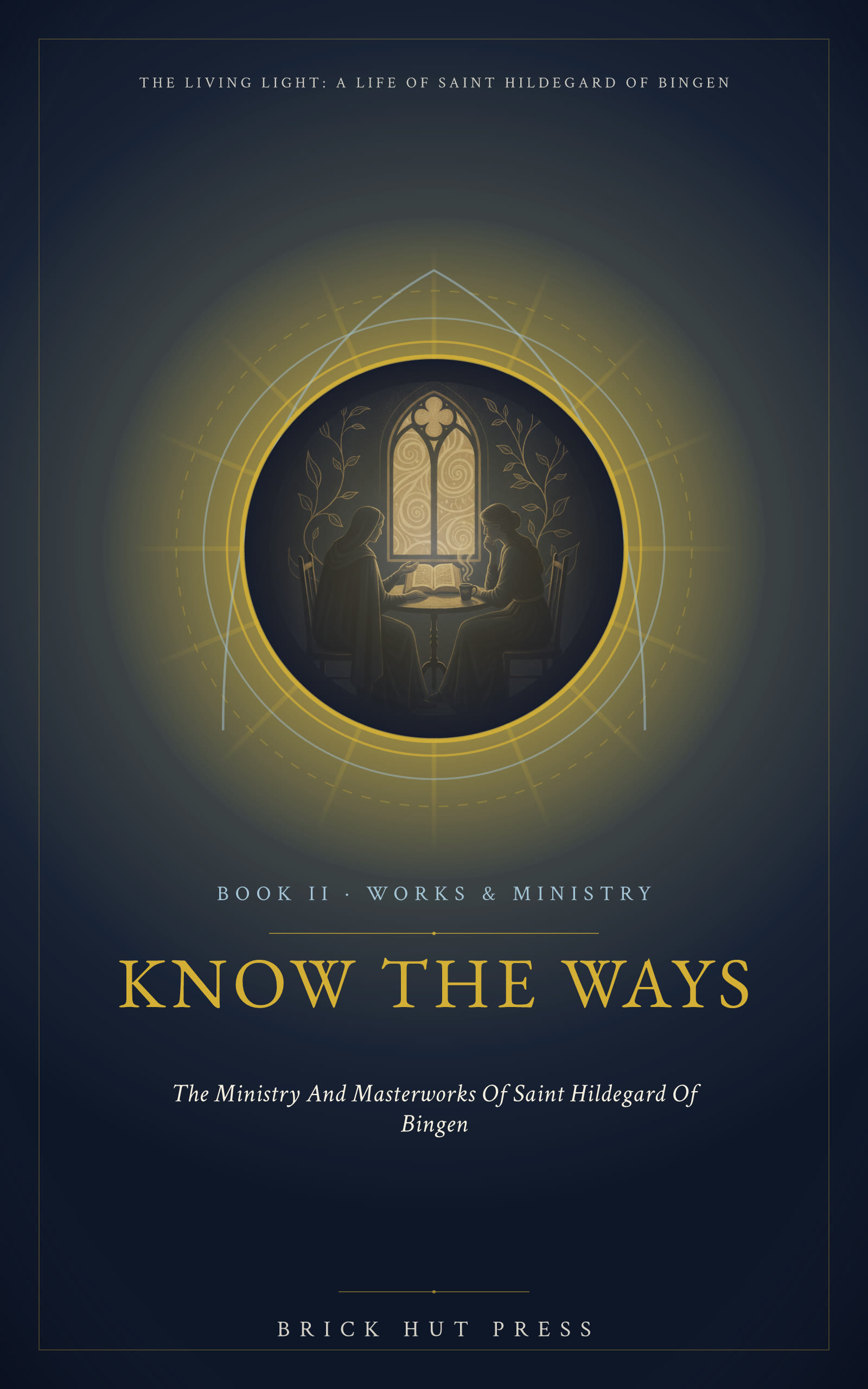
Know the Ways
She was abbess, prophetess, composer, healer, and mystic, all at once, all on fire.
She Heard the Voice of the Living Light, and Changed the World Forever In an age when women were expected to remain silent, Hildegard of Bingen sang. She composed symphonies, wrote theological masterworks, corresponded with popes and emperors, prescribed herbal remedies that anticipate modern medicine, and received visions so luminous that the Church named her a Doctor, one of only four women in history to hold that title.
Read the full description
She was abbess, prophetess, composer, healer, and mystic, all at once, all on fire. Know the Ways is the devotional biography Hildegard deserves. Drawing on her own writings, Scivias , Physica , Causae et Curae , the breathtaking Symphonia, this book traces the full sweep of her extraordinary life from her earliest childhood visions of the Living Light to her final years at Eibingen, where she continued to preach, heal, and create well into her eighties. Page after page, you will discover how every sermon, every sacred melody, and every healing remedy flowed from one unbroken act of obedience to God.
Not sure yet? Begin free.
The Feather and the Fire, a complete book about this life, free, kept in your own library here, read and heard.
Receive the free bookAbout this volume
This second volume opens where the first left off and where most readers of Saint Hildegard actually want to begin: the autumn of 1141, when the fire that had lived folded inside her for three or four silent decades stopped folding. Forty-three years old, a Benedictine of long standing, an anchoress's charge grown into an abbess's understudy, she received the command to cry out and write, and the volume takes that command seriously as the hinge of an entire life. It does not rush past the sickbed. Chapter one sits with the strange, recurring pattern that will govern everything that follows: obedience did not spare her body, it restored it. Readers who want to understand why Hildegard's biographers so often speak of illness and vision in the same breath will find that question addressed here directly, grounded in the Protestificatio and in the testimony Gottfried and Theodoric gathered at Rupertsberg a generation later.
From there the book follows the shape of a ministry rather than a single event. Scivias is treated not as a text to be summarized but as a map, "the map of all things," and the chapter devoted to it walks through how a woman who had spent a lifetime avoiding notice built, book by vision, an architecture of salvation history sturdy enough for popes and monks to stand on. The volume then turns to the cost and daring of her public life: the courage it took to leave Disibodenberg, the founding and governing of Rupertsberg as mother of a new house, the burdens of authority that fell on a woman who had trained herself for invisibility. This is a book about institution-building as much as revelation, and it does not shy from the friction, the negotiations, the sheer administrative weight of founding a monastery in the twelfth century.
The middle chapters open onto the breadth of her genius. "Songs the Angels Taught Her" and "The Play of the Soul" take up her music and her Ordo Virtutum, the sung drama of virtues and the wayward soul, as expressions of the same Living Light that dictated her theology. "The Greening of All Things" turns to her natural philosophy and medicine, the viriditas that runs through her writing on plants, bodies, and the created world, showing a mind that saw no wall between contemplation and physic. These chapters treat her artistic and scientific work not as curiosities appended to a saint's life but as further chapters of the same prophetic vocation, continuous with the visions rather than separate from them.
The volume's second half follows Hildegard outward into the world she was commanded to address. "The Prophet Speaks to Emperors" and "Four Roads Through Germany" trace her correspondence and preaching journeys, the letters to popes and emperors, the public voice she raised at an age when most women of her century had long since gone quiet. "The Second and Third Fires" returns to the visionary experiences that produced her later great works, while "Eibingen: The Second House" recounts the founding of a daughter monastery across the Rhine, a late labor of the same governing hand that had built Rupertsberg decades before.
The book closes with "Still Singing at the End of the World," a chapter that meets Hildegard in her final years without softening the difficulties of that time, including the conflict over burial rites that tested her authority even at the close of her life, and holds firm to the conviction that animated her from the beginning: that the Light which had kindled her at forty-three continued to speak through her to the last note she sang. Readers who come to this volume already knowing the outline of her childhood will find here the fuller record of what she built once the command came, and readers new to her will find a coherent, well-lit path through one of the most complete vocations the medieval Church produced.
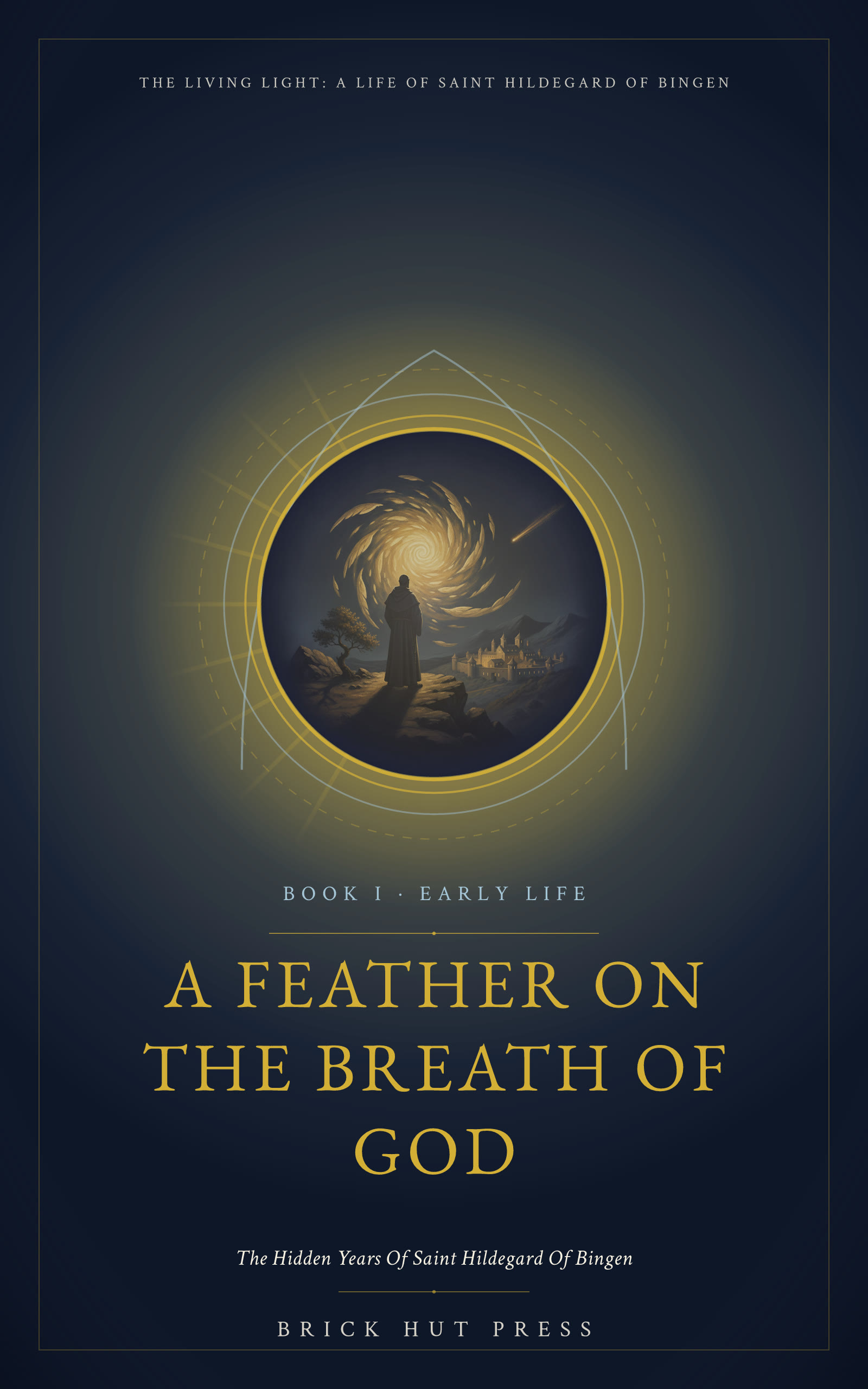

Lives that walk beside Hildegard of Bingen, chosen for their likeness, not their fame.