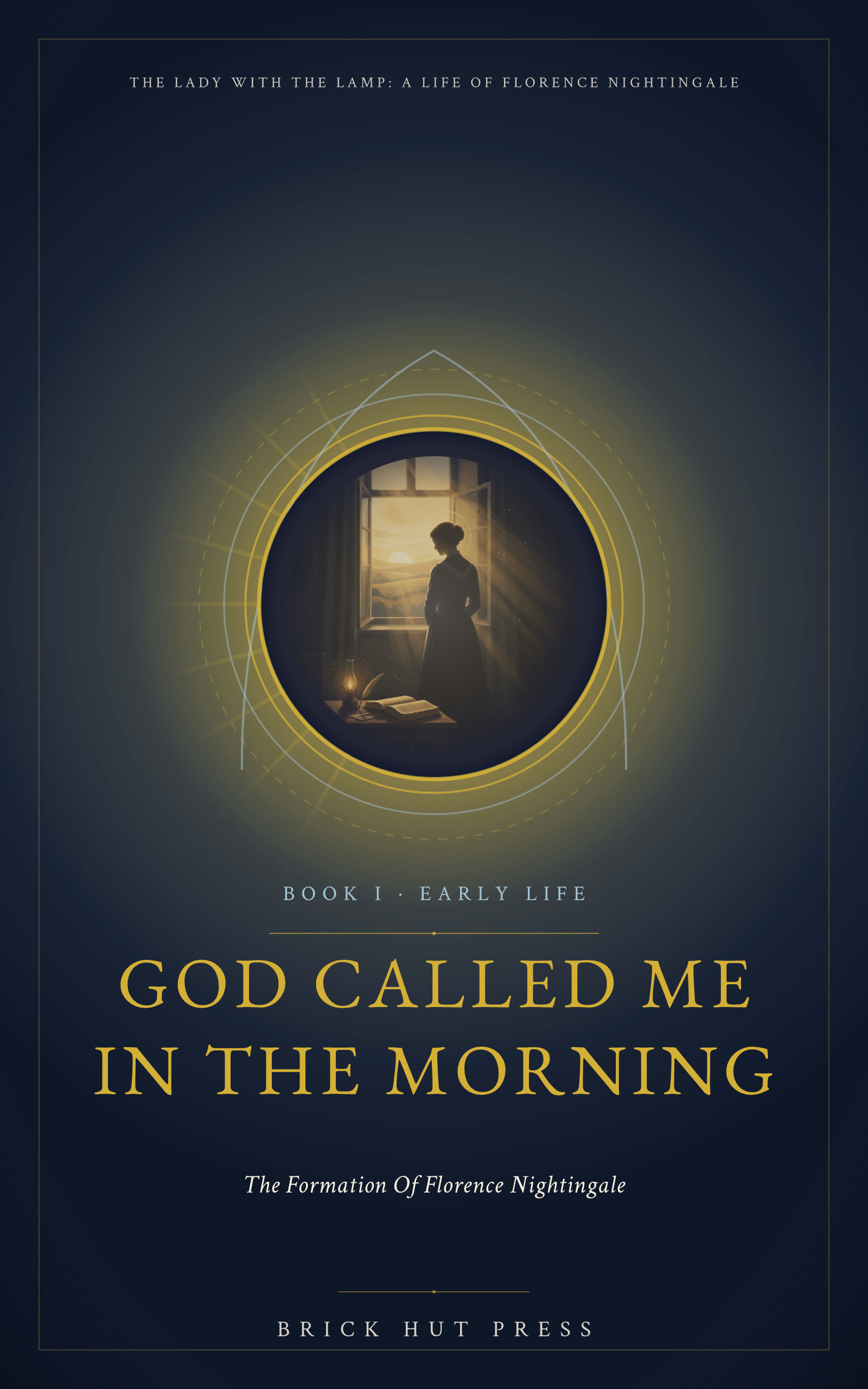
God Called Me in the Morning
The World Would Not Feel It for Decades.
She Heard God's Voice at Seventeen. The World Would Not Feel It for Decades. Florence Nightingale did not arrive fully formed on the wards of Scutari. She was shaped, slowly and sometimes painfully, through years of formation that most biographies skip past: the grand houses and Greek texts, the drawing-room battles and desert pilgrimages, the deaconess training in Kaiserswerth, the long seasons of desperate waiting.
Read the full description
God Called Me in the Morning tells that earlier, deeper story, the story of what faithfulness looks like before the world notices. This is a book for everyone who has sensed a calling and wondered whether they heard correctly. For every nurse, caregiver, lay Christian, and believer who has felt the gap between the life God seems to be pointing toward and the life everyone else expects. Florence Nightingale lived in that gap for thirty years. Her formation is your formation. Her struggle is a mirror held up to your own.
Not sure yet? Begin free.
Before the Lamp Was Lit, a complete book about this life, free, kept in your own library here, read and heard.
Begin reading, freeAbout this volume
This first volume of The Lady with the Lamp follows Florence Nightingale from her birth in Tuscany in 1820 to the autumn of 1854, the eve of her departure for the Crimea, and it asks a question that the later, more famous chapters of her life tend to obscure: how does a woman come to be ready for a calling she did not choose and could not, for years, be permitted to answer? The book opens not with bandages and battlefields but with bells over the Arno and a household arranging itself around a newborn girl, and it stays close to that domestic register for a long while, because it insists that the woman who would one day walk the wards of Scutari was shaped first at Lea Hurst and Embley, in the particular, divided world of an English gentry family with one foot in Derbyshire and one in Hampshire.
The volume takes seriously the intellectual formation her father gave her: Greek, mathematics, the long habit of precise observation and honest reckoning that would later make her statistical reports to Parliament as rigorous as any physician's. This is not incidental detail. The chapters argue, gently but firmly, that the discipline of truth-telling she learned at her father's side became, by a route neither of them could have foreseen, the very instrument God would use. And then comes February 7, 1837, at Embley: the voice she heard, the call she received, rendered here with the restraint the subject deserves, neither explained away nor sensationalized, but set down as she herself understood it, a summons to God's service whose shape would not become clear for years.
What follows that call is not triumph but trial, and the book does not flinch from the long, often bitter years that came after. "What Fanny Wanted" and "Cassandra's Cry" take up the domestic war that consumed much of her twenties and thirties: a mother and sister who wanted a daughter suitably married and socially occupied, and a young woman who believed herself claimed for something else entirely, with no socially sanctioned way to pursue it. This is where the volume does some of its most important work, sitting honestly with the cost of being a woman with a mind and a vocation in a world that had no place prepared for either, and refusing to resolve that cost too quickly or too comfortably.
The chapters on Egypt and the Nile, and on her months among the Kaiserswerth deaconesses, show the slow accumulation of the preparation she could not have named as preparation at the time: learning to read landscapes and peoples unlike her own, and then learning, at last, in a German institution training women for nursing, what disciplined Christian service to the sick might actually look like in practice. The volume calls the years surrounding these experiences "the dark years," and treats waiting itself as a subject worthy of theological attention, the long stretch in which a called woman had nothing yet to show for her calling. Only in the final chapters does a door open, at Upper Harley Street, where she finally takes charge of an institution of her own, and the volume closes not with the Crimea but on its threshold, in the autumn of 1854, with everything that has been built in her now about to be tested.
Readers who come to Florence Nightingale only through the lamp and the Crimean legend will find here the longer, slower story beneath it: a girl born to privilege and restlessness, a daughter who loved her family and could not become what they wanted, a woman whose faith was formed less in dramatic moments than in years of patient, often painful waiting on a call she trusted but could not yet see fulfilled. This volume ends where her public life begins, and it means for readers to understand, by the time they reach that threshold, exactly what it cost her to arrive there.
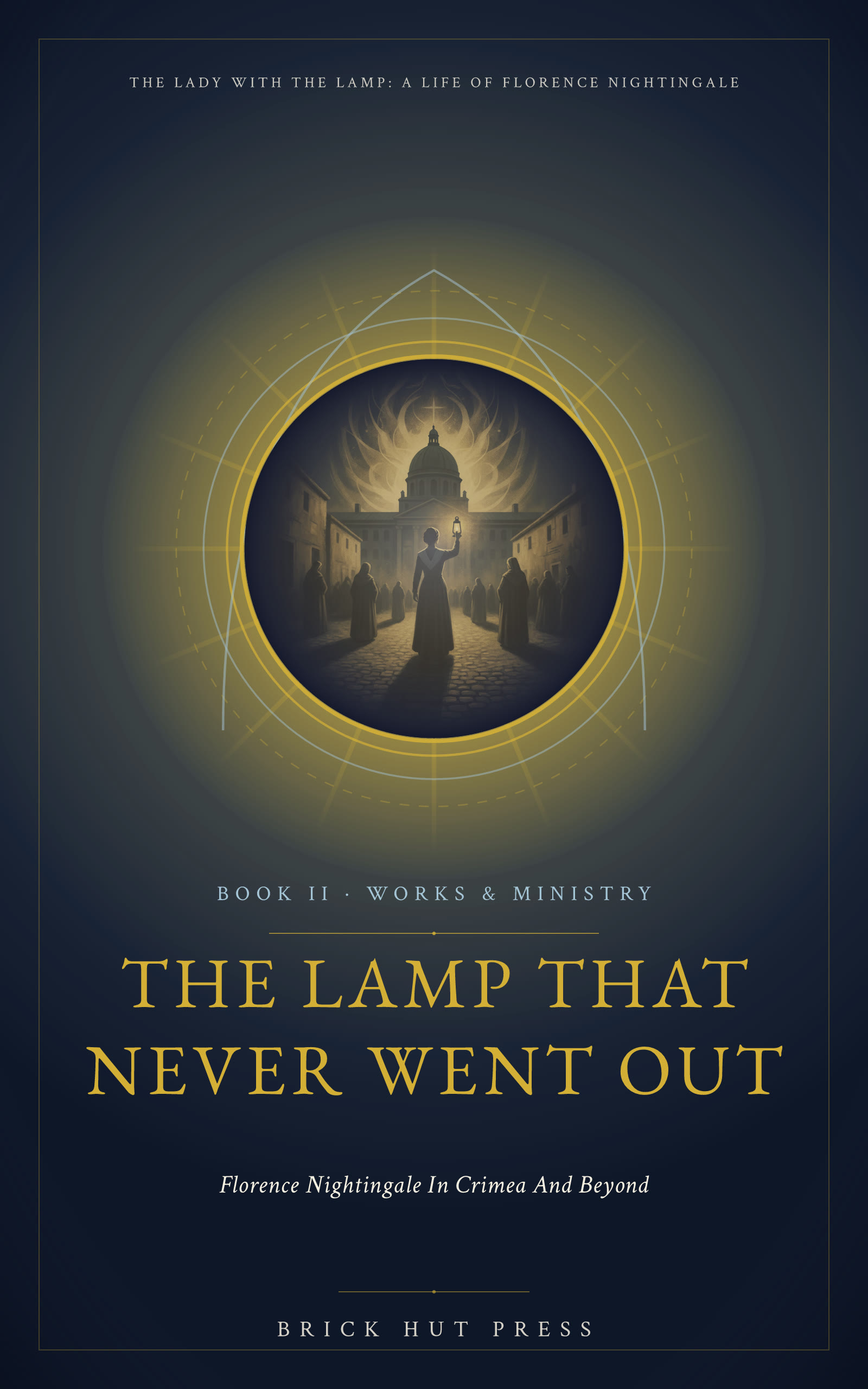
Lives that walk beside Florence Nightingale, chosen for their likeness, not their fame.