Xuanzang (玄奘): The Monk Behind Tang Sanzang, and His Memorial Day
In the spring of 664, at a small monastery called Jade Flower Palace outside Chang'an, a monk in his sixty-third year set down his brush. He had been translating the Great Prajnaparamita Sutra, six hundred fascicles of it, and he would not live to finish the last of his commentary. He asked to be buried plainly, on a bamboo mat, far from any palace. When the news reached the Tang court, the emperor Gaozong canceled audiences for three days. More than a million people are said to have come out for the funeral procession. The monk's name was Xuanzang, Sanzang Fashi, the Tripitaka Master, born Chen Hui or Chen Yi, given the Sanskrit name Moksadeva at the great university of Nalanda. He is one of the best-documented lives in the history of Buddhism, and one of the most misunderstood, because thirteen centuries after his death, people still mistake him for a character in a novel.
Who Xuanzang Was, and Why His Name Still Carries Weight
Xuanzang was the Chinese Buddhist monk who defied an imperial travel ban in 629 CE, crossed the Gobi Desert and the Pamirs alone, studied for years at Nalanda under the aged master Silabhadra, and walked home in 645 with six hundred and fifty-seven Sanskrit texts on twenty packhorses. He spent the last nineteen years of his life translating seventy-five of those works into Chinese, seventy-six by some counts, filling over thirteen hundred fascicles. Out of that labor came the Faxiang school, Consciousness-only Buddhism, which carried Yogacara philosophy from Nalanda into East Asia in a form precise enough to survive the journey. His Great Tang Records on the Western Regions remains, to this day, the fullest eyewitness account anyone wrote of Central and South Asia in the seventh century. He is famous, in short, for doing what almost no one else in his tradition had managed: going to the source, and bringing the source home intact.
A Real Monk, Not the Tang Sanzang of the Novel
Xuanzang was a real historical person, thoroughly documented in Tang court records, his own writings, and a biography compiled by his students within years of his death. The Tang Sanzang of Journey to the West, the gentle, easily-kidnapped monk who needs Sun Wukong the Monkey King to save him at every turn, is a Ming-dynasty literary invention, written some nine hundred years after Xuanzang lived, drawing his name and his premise from the pilgrimage but almost nothing of his actual character. The historical Xuanzang faced down bandits, sandstorms, and a Turkic khan's court without a single supernatural companion. At Kanauj he stood for eighteen days in open philosophical debate before assembled kings and was not defeated. The novel's demons and the real man's hazards are both worth knowing. They are not the same story, and the second is, if anything, the braver one.
How the Day Is Kept
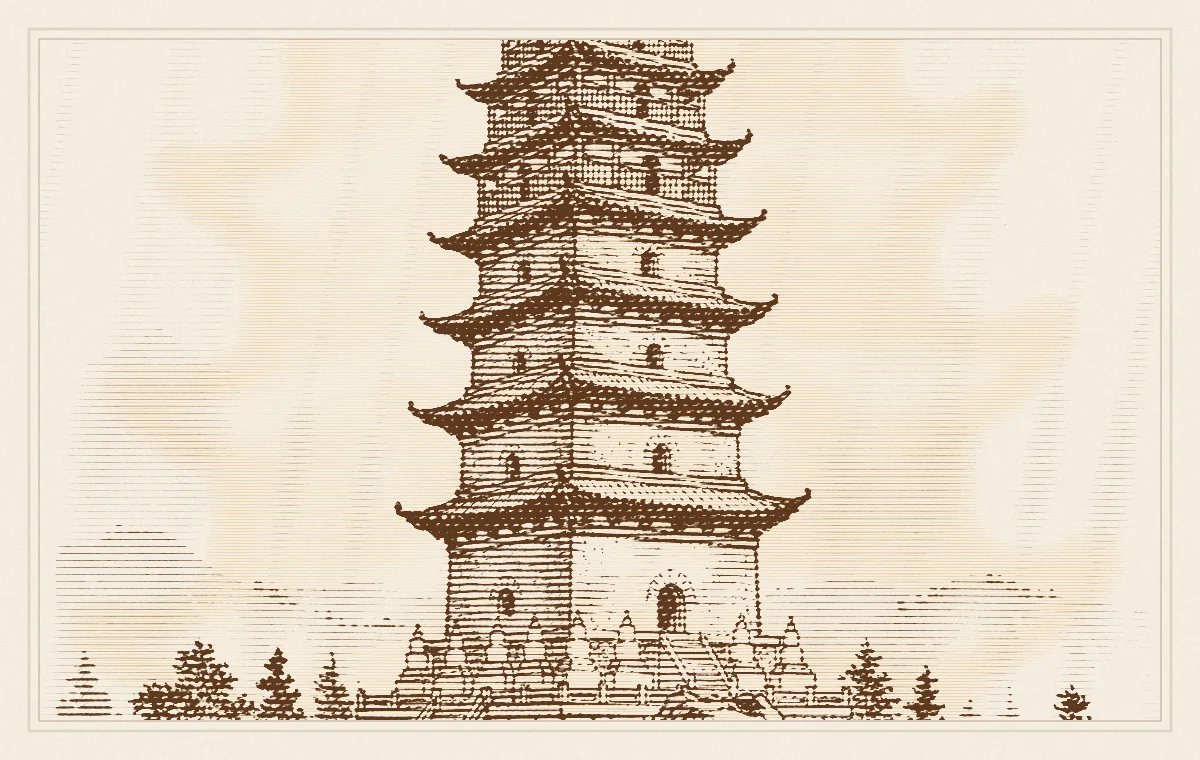
There is no single fixed feast day for Xuanzang recognized across all of Buddhism, but two recurring observances keep his memory each year. Nava Nalanda Mahavihara, built near the ruins of the university where he studied, keeps Xuanzang Memorial Day each year on the twelfth of February, drawing scholars and monastics from China and India together in the place where he once sat with Silabhadra. Chinese Buddhist temples mark his death anniversary by the lunar calendar instead, on the fifth day of the second lunar month, a date that shifts year to year against the Gregorian calendar but falls reliably in late winter or early spring. At the Big Wild Goose Pagoda in Xi'an, the tower Xuanzang asked to have built to house the scriptures he carried home, and at temples in Nanjing and on Taiwan's Sun Moon Lake that hold portions of his relics, these anniversaries bring sutra chanting, relic viewings, and public lectures on his translations rather than a fixed liturgical rite. However the day lands on the calendar in front of you, the shape of the observance is the same everywhere it is kept: gratitude for a man who went and came back, and brought the texts with him.
What to Read Toward His Memorial
The honest way to keep Xuanzang's day is the way his own students kept it after he died: by returning to what he carried and what he translated. The Pilgrim of the Dharma: A Life of Xuanzang, Sanzang Fashi follows him across all three volumes of that life, from the thirteen-year-old boy an abbot bent the rules to admit, through the desert crossing and the years at Nalanda, to the translation hall where he spent himself translating what he had brought home. Readers meeting him for the first time can begin with the free Invitation volume at the series page, which costs nothing and asks nothing but attention.
From there, The Boy Who Would Not Stay tells how an ordinary, gifted child became the monk who slipped past the border guards at twenty-seven. Westward Into the Light carries him across the desert, over the Pamirs, and into the lecture halls of Nalanda. The Texts He Carried takes up the seventy-odd works he translated and the Faxiang school they built, and asks why a Chinese sutra you might chant this week still carries his hand in it. Anyone wanting Xuanzang alongside the whole shelf of lives the house keeps can find the rest through membership.
Questions readers ask
How is Xuanzang's name pronounced?
Roughly shwen-dzahng, with the X sounding like the sh in shoe; it is written 玄奘 in Chinese characters.
When is Xuanzang's death anniversary observed?
Chinese Buddhist temples keep it on the fifth day of the second lunar month, a date that shifts against the Gregorian calendar but falls in late winter or early spring each year.
Where are Xuanzang's relics kept today?
Portions of a skull relic uncovered in Nanjing in the twentieth century have been enshrined at several sites, including temples in Nanjing, Taiwan's Sun Moon Lake, and Yakushiji temple in Japan.
Was the journey in Journey to the West literally true?
No. The novel is a sixteenth-century Ming work of fiction that borrows Xuanzang's name and premise; the demons, Monkey King, and magical rescues are literary invention, not biography.
Why did Xuanzang travel to India?
Xuanzang found the Chinese translations of Buddhist texts then available incomplete and contradictory, especially on points of Yogacara doctrine, and concluded the only way to settle the confusion was to study the Sanskrit originals at their source. That conviction is what drove him to petition the Tang court for leave to travel to Nalanda, and then to go anyway when leave was refused.
How long did Xuanzang's journey to India take?
He left Chang'an in 629 and did not return until 645, a round trip of roughly sixteen years, several of which were spent studying at Nalanda itself rather than traveling.
How did Xuanzang die?
Xuanzang died in the spring of 664 at Jade Flower Palace monastery, worn down by decades of austerities and by the relentless pace of his translation work in his final years, rather than by any accident or violence. He was in his sixty-third year and still at work on his commentary when he set down his brush for the last time.
What did Xuanzang study at Nalanda?
Under the aged master Silabhadra, Xuanzang studied Yogacara philosophy and Abhidharma in depth, along with Sanskrit grammar and the formal logic known as hetuvidya used in scholastic debate. This training in debate is what let him stand unbeaten through eighteen days of open philosophical challenge at Kanauj.
Why did Xuanzang leave China without the emperor's permission?
The Tang court had closed the western frontier to ordinary travel because of ongoing conflict with Turkic powers, and Xuanzang's request to cross legally for study was refused. He left in secret in 629 regardless, fully aware that he was breaking an imperial ban and risking punishment if caught.
What texts did Xuanzang translate into Chinese?
Beyond the six-hundred-fascicle Great Prajnaparamita Sutra he was still finishing at his death, his translations include the Yogacarabhumi Sastra and the Cheng Weishi Lun, the foundational texts of the Faxiang, Consciousness-only school he carried from Nalanda into China. In all he rendered somewhere around seventy-five or seventy-six Sanskrit works into Chinese over his last nineteen years.
What is the connection between Xuanzang and the Heart Sutra?
The short Chinese version of the Heart Sutra chanted daily in East Asian Buddhist temples today is traditionally credited to Xuanzang's translation. It is by far his most widely recited work, even set beside the six hundred fascicles of the Great Prajnaparamita Sutra he spent his last years on.
What did Xuanzang bring back from India besides texts?
Alongside the six hundred and fifty-seven Sanskrit manuscripts, Xuanzang returned with Buddha relics and a number of Buddha images and statues gathered from the holy sites he visited, which he presented to the Tang court on his arrival in 645.
Keep reading
- Tulsidas Jayanti: Remembering Goswami Tulsidas, Born Rambola Dubey
- Ajahn Chah Memorial Day: January 16 at Wat Nong Pah Pong
- Guru Nanak Jayanti: Gurpurab, the Feast of Guru Nanak Dev Ji
- Li Hongzhi: World Falun Dafa Day and the Life Behind May 13
- Milarepa's Feast Day: When and How Kagyu Practitioners Keep It
Read the life entire
Xuanzang (玄奘), also known as Sanzang Fashi (Tripitaka Master); born Chen Hui or Chen Yi; Sanskrit name Moksadeva is one of the lives on the house shelf, a three-volume life told from within the tradition, in ebook, audiobook, and print.
Begin reading, freeAbout this life
The Flame Beyond Yumen Pass: a complete book, free. It opens now, with no email and no card.