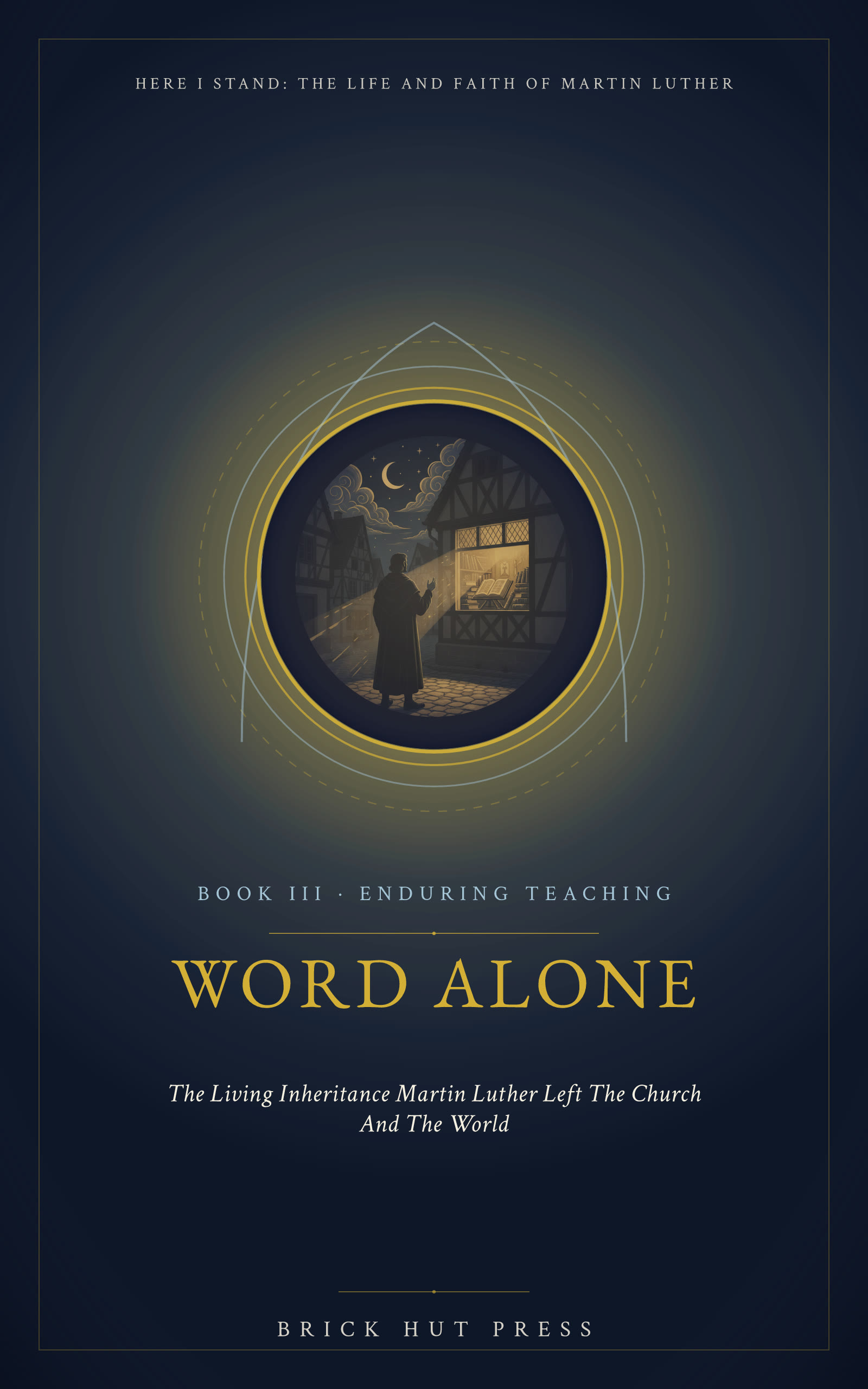
Word Alone
He Left Behind a World Transformed.
He Died With a Beggar's Prayer. He Left Behind a World Transformed. Martin Luther never claimed to be a hero. He claimed to be a sinner who had found grace. And that distinction, so small, so everything, became the hinge on which Western Christianity turned. Word Alone: The Living Inheritance Martin Luther Left the Church and the World is not another dry biography or academic survey.
Read the full description
It is a warm, learned, and unashamed devotional journey into the theology, the courage, the hymns, the catechisms, and the God-haunted genius of the Reformer who gave the church back its voice. Whether you are Lutheran, Reformed, or broadly Protestant, whether you have honored Luther your whole life or you are only now beginning to discover what the Reformation truly means, this book will draw you deeper into the man behind the legend, and deeper still into the living Word that drove him to his knees and then to his feet.
Not sure yet? Begin free.
The Terror and the Mercy, a complete book about this life, free, kept in your own library here, read now; its narration joins free when it is finished.
Receive the free bookAbout this volume
Third in the series, this volume does not retell Martin Luther's life so much as stand still long enough to ask what that life actually gave the Church. The first two books followed him from Eisleben to Wittenberg, through the storms of the Diet and the Peasants' War, through marriage and controversy and the long labor of translation. This one begins instead at the end, with a scrap of paper found in his coat after he died at Eisleben in February 1546, six words in German and two in Latin that he likely never meant anyone to read: we are all beggars, this is true. From that small, almost accidental sentence, the book works backward into the substance of what Luther actually believed, and forward into what became of it.
The heart of the volume is the architecture of the solas, taken one at a time and given room to breathe. Scripture Alone is treated not as a slogan but as a living argument, a book that talks back to its readers rather than sitting quietly on a shelf to be interpreted by the few. Grace Alone and Faith Alone are set side by side as the gift and the open hand that receives it, with real attention paid to how strange and how freeing this looked against the religious economy Luther inherited. Christ Alone follows as the center that holds the other three together, and Glory to God Alone closes the sequence not as a coda but as the native air the whole system breathes, a life understood as praise rather than achievement. Readers who have wondered how these four phrases, so often reduced to a tidy acronym in textbooks, actually cohere as a single way of seeing God and the self will find the case made patiently here, chapter by chapter, with the sources cited plainly along the way.
From there the book turns to the parts of Luther's legacy that reward the reader. A chapter on the theology of the cross asks where Luther believed God actually chooses to be found, not in glory and strength but hidden in suffering and weakness, and why he thought this mattered more than any other single insight he had. A chapter on the priesthood of all believers takes up the dignity Luther handed back to ordinary life: the farmer, the mother, the magistrate, each understood to stand before God without need of an intermediary class. The volume does not treat these ideas as abstractions. It follows them into the Small Catechism, into the daily discipline of prayer Luther tried to teach his own household, and into the hymn Ein feste Burg, read here as theology set to music, meant to be sung until it becomes memory rather than argument.
The closing chapters widen the lens. One surveys the Lutheran family as it exists now, some seventy million believers scattered across continents Luther never imagined, still gathering around the word he insisted be given back to ordinary hands. The last chapter asks plainly what he still has to say to a church and a world very different from sixteenth century Saxony, without pretending the answer is simple or that every quarrel of his age has since been settled.
Readers who have completed the first two volumes will recognize this one as their natural destination, the place where the narrative becomes doctrine lived out, and where a man's death becomes, almost despite himself, his clearest teaching. Readers coming to Luther for the first time will find enough context woven through to stand on their own feet, though the fuller story of how this beggar came to speak with such confidence waits in the volumes that came before. Either way, the invitation here is the same one Luther left on that scrap of paper: not a conclusion to admire from a distance, but a confession meant to be entered.
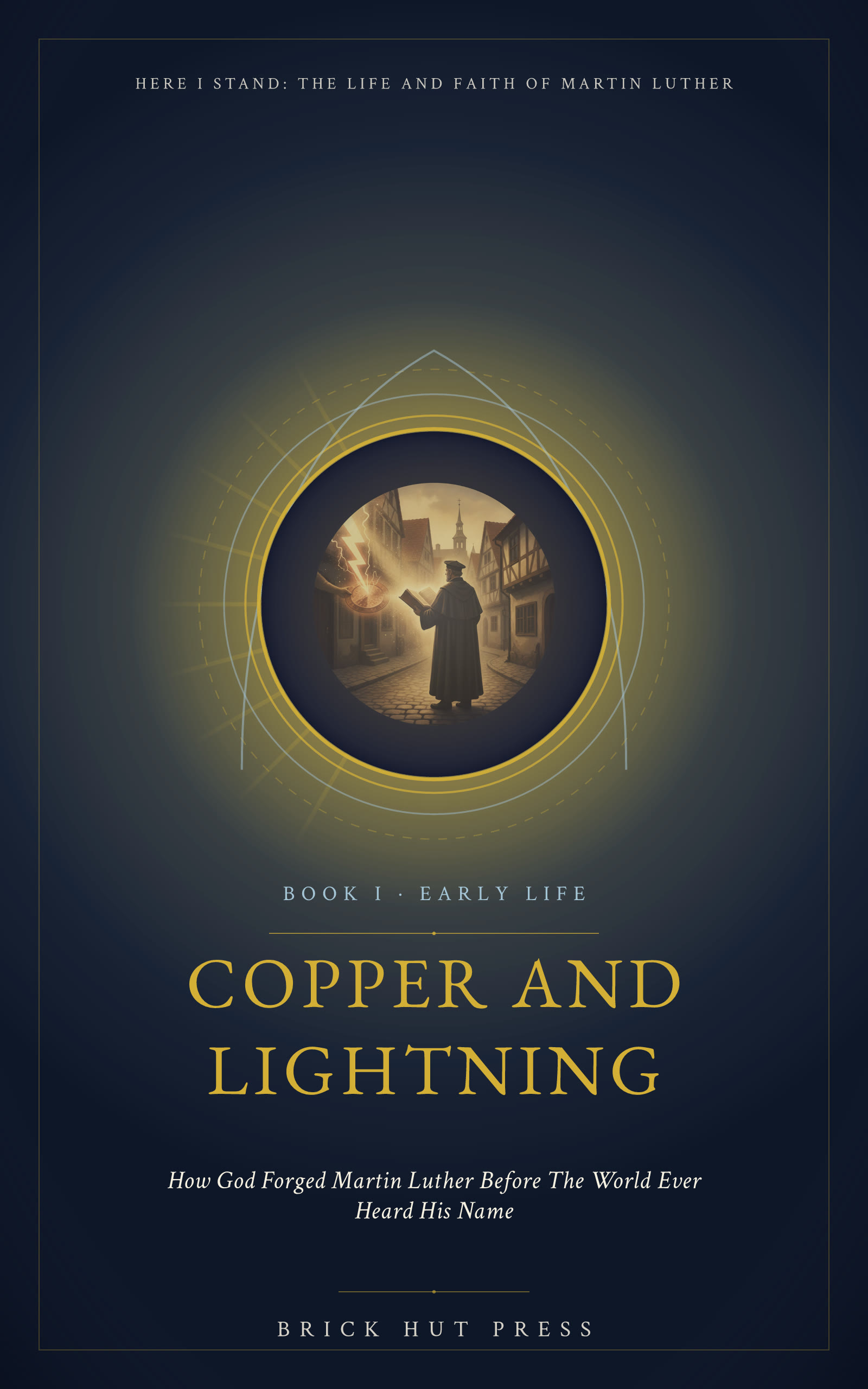
Lives that walk beside Martin Luther, chosen for their likeness, not their fame.