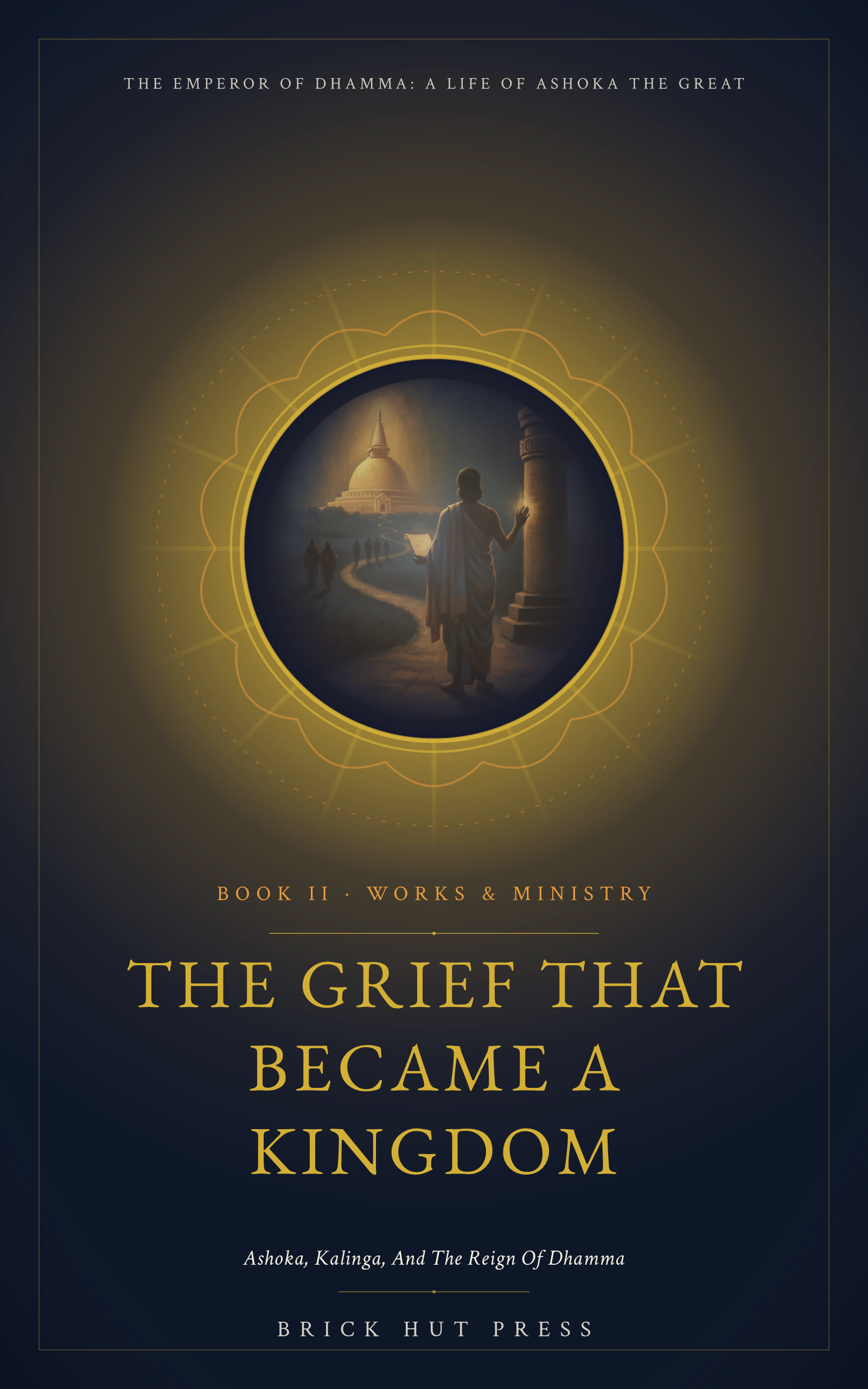
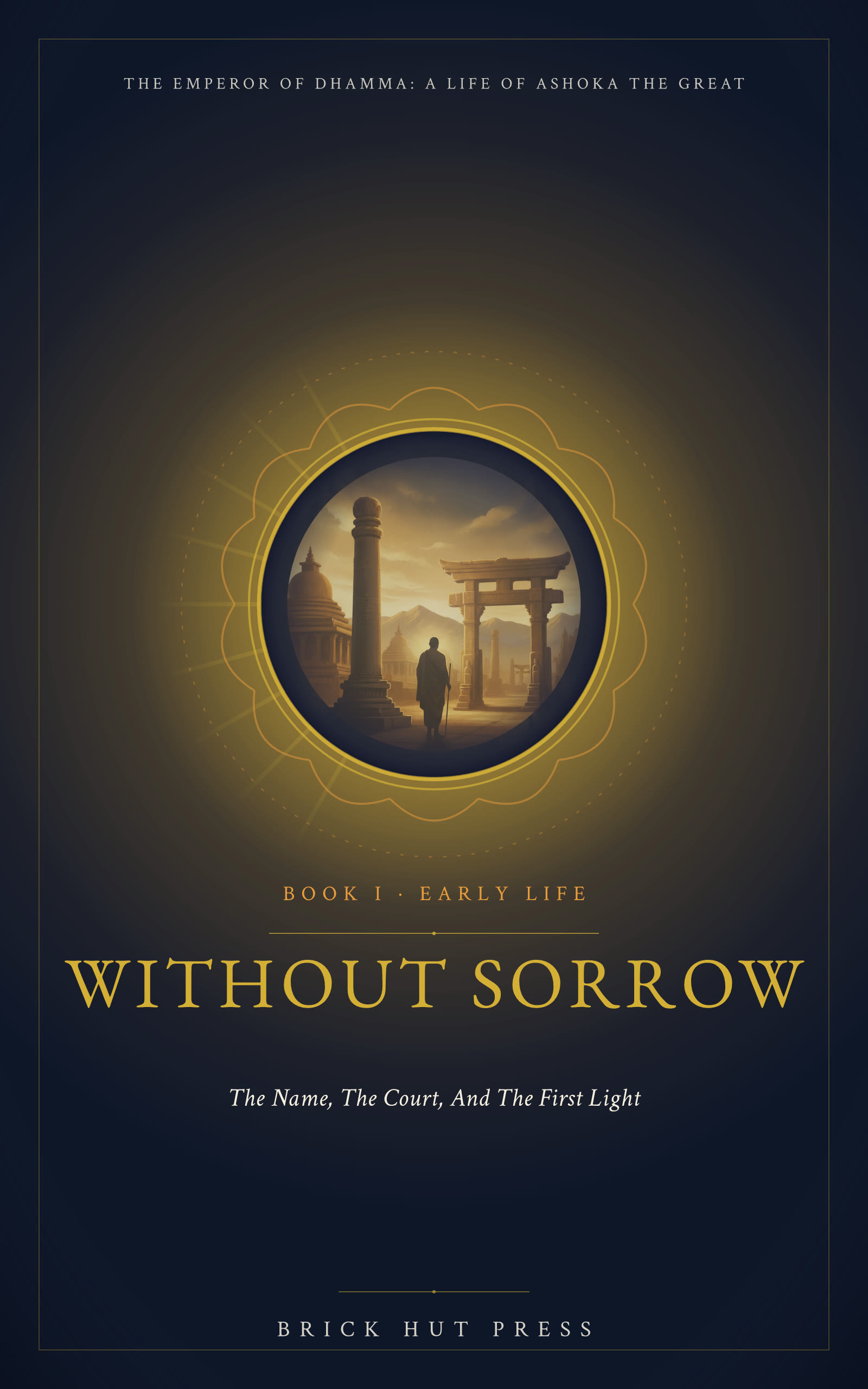
The Grief That Became a Kingdom
A conqueror stands at the edge of Kalinga.
One Battlefield. One Emperor. One Decision That Changed the Spiritual Map of Asia Forever. A conqueror stands at the edge of Kalinga. The rivers run red. One hundred thousand souls are gone. And in that silence, something inside Ashoka breaks open. Not into madness. Not into denial. Into grief so total, so unflinching, that it becomes the seed of an entirely new world. This is not simply a history.
Read the full description
This is a devotional account of the most astonishing act of imperial self-correction ever recorded. It is the story of a man who looked at the ruin his ambition had made, refused to look away, and chose a different path. A path paved not with conquest, but with Dhamma. The Grief That Became a Kingdom walks alongside Emperor Ashoka from the blood-soaked plains of Kalinga to the shelter of the Dharma, drawing on the Pali chronicles, the Sanskrit Ashokavadana, and the emperor's own inscribed edicts. Here is a life examined through sacred literature, through stone and pillar, through the living traditions that Ashoka helped plant across the Indian subcontinent, Sri Lanka, Thailand, Myanmar, Japan, and beyond.
Not sure yet? Begin free.
Piyadasi, a complete book about this life, free, kept in your own library here, read now; its narration joins free when it is finished.
Begin reading, freeAbout this volume
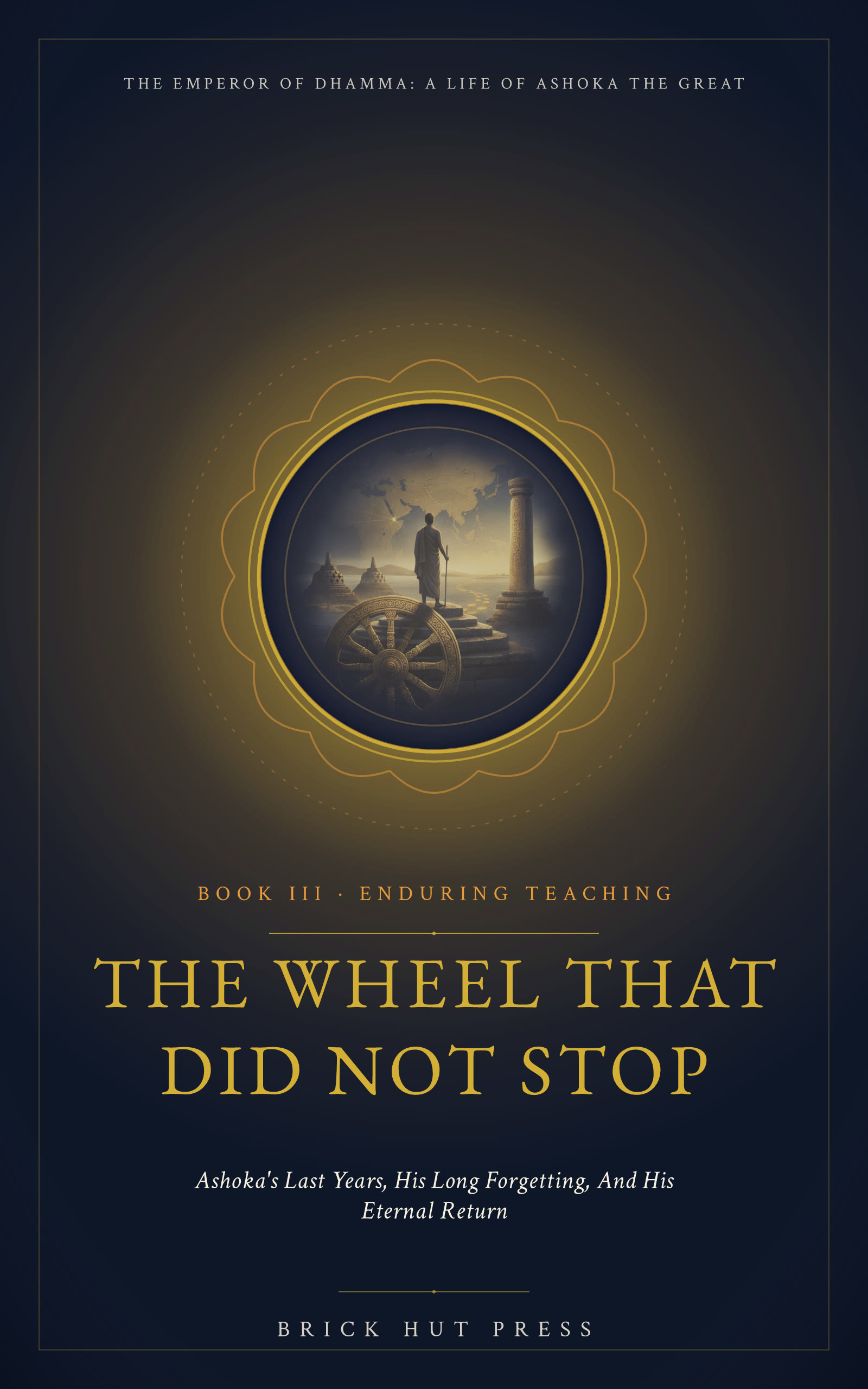
This is the volume where the conqueror becomes something the ancient world had not yet seen: a king who let his own atrocity remain legible. The first volume carried Ashoka Maurya through the long Mauryan succession and the campaigns that built an empire stretching from the Hindu Kush to the Bay of Bengal. This second volume begins at the hinge, the moment everything after depends on: the hill at Dhauli above the Daya River, where Ashoka's armies broke the kingdom of Kalinga and where, afterward, he did something no pharaoh, no Caesar, no Han emperor ever did. He had his own grief carved into rock, in public, for his subjects and for us.
What follows is not a chronicle of conquests but a chronicle of conversion, traced with the patience the subject demands. We watch Ashoka encounter a wandering monk he could not simply walk past, and then watch him draw nearer still, becoming formally a lay disciple of the Buddha's teaching rather than merely its patron. The book follows him on the dhamma-yatra, the pilgrimage of a reigning emperor retracing on foot the ground the Buddha himself walked, Lumbini, Bodh Gaya, Sarnath, Kushinagar, a king visiting these places not as a tourist of his own power but as a penitent seeking the path. It follows what he stopped eating, the quiet austerities of a table that once fed armies. It follows the Third Buddhist Council, convened under his patronage to purify a sangha that prosperity itself had begun to corrupt, and it follows the edicts, those extraordinary inscriptions on pillars and rock faces across the subcontinent, in which an emperor speaks not of his victories but of his obligations: to animals, to the aged, to travelers, to the dhamma itself, mercy quite literally carved in stone for anyone who could read it or hear it read.
The chapters on his children carry particular weight here, since it is through them, sent as missionaries to Sri Lanka and beyond, that the volume shows dhamma becoming something larger than one king's private remorse: a movement that would outlive the Mauryan throne by two thousand years. The reach of that movement is traced further still in the chapter on his embassies to the Greek kings at the edges of the known world, Antiochus, Ptolemy, Antigonus, named in his own inscriptions as recipients of the dhamma's invitation, evidence that this was never meant to stay within one empire's borders. And the volume closes where devotion itself begins to take physical form: the tradition of the eighty-four thousand stupas raised to make the Buddha's presence felt in every corner of the realm, and the pillars, still standing after more than two thousand years, still saying in their worn Brahmi script what an emperor once needed the world to know about blood, about mercy, and about what a throne is for.
Readers coming to this volume should expect neither hagiography that smooths over the war nor skepticism that explains away the conversion. The book asks to be read the way Rock Edict 13 asks to be read, slowly, aloud, without the distancing comforts of analysis standing between the reader and the man who ordered the words cut into stone. It takes seriously the plain historical record, the surviving edicts, the Sri Lankan chronicles, the archaeological witness of Dhauli and Sarnath and Sanchi, while never losing sight of why this story has mattered for twenty-two centuries to Theravada monks in Ceylon, to Mahayana communities across East Asia, and to the Ambedkarite Buddhists of modern India who look back to Ashoka as proof that state power and the dhamma need not be strangers to one another. This is a volume about what a kingdom looks like when it is built, deliberately and at great cost, out of grief transformed.
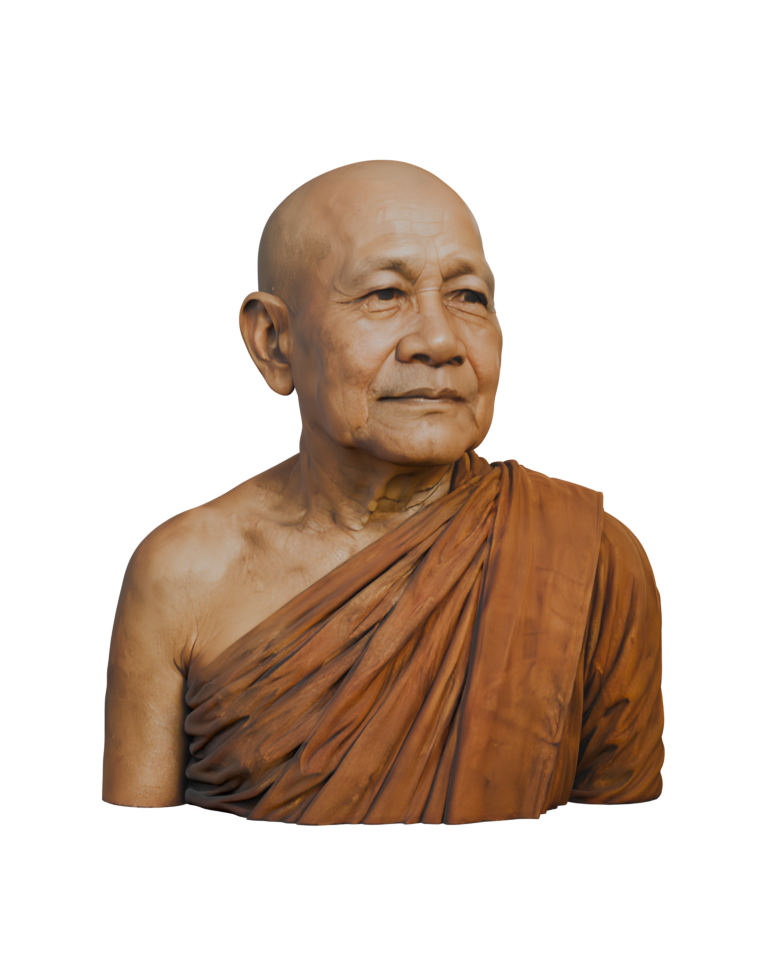
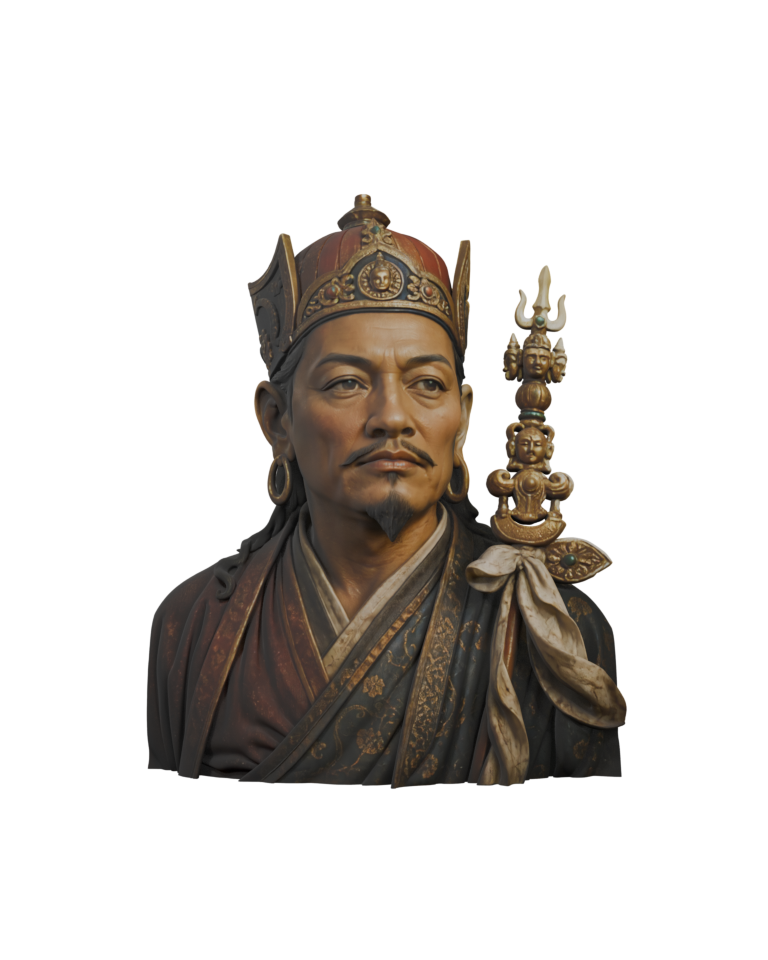
Lives that walk beside Ashoka the Great, chosen for their likeness, not their fame.