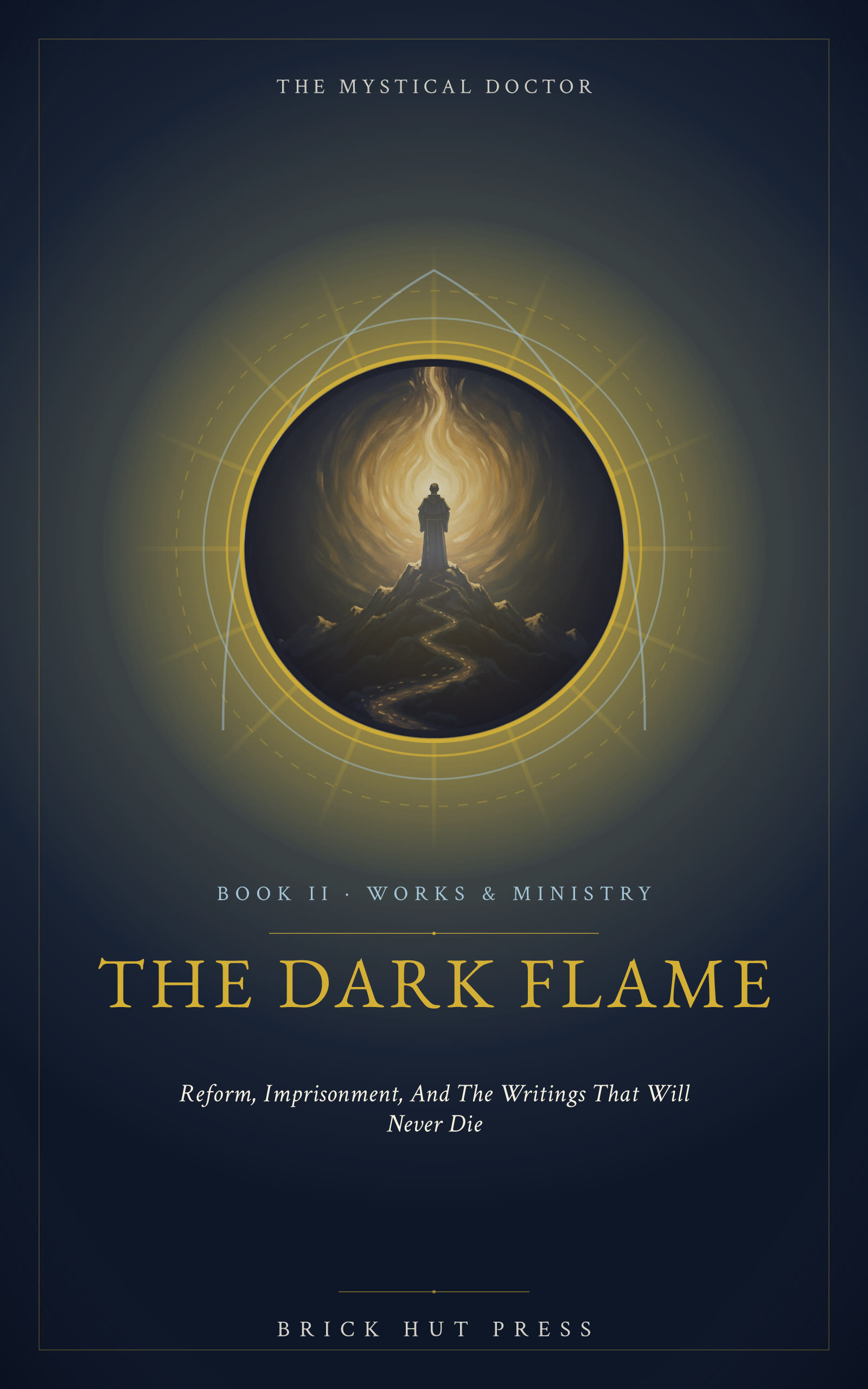
The Dark Flame
Locked in a cell barely wide enough to turn around.
Nine Months in a Toledo Prison, and the Words That Would Outlast Every Wall Betrayed by his own brothers. Locked in a cell barely wide enough to turn around. Fed scraps. Beaten. Left in silence so total it could have swallowed a lesser soul whole. And yet, from that slit of light carved high in a stone wall, from that concrete floor and that unrelenting dark, Saint John of the Cross wrote poetry that the Church has never stopped reading. Poetry that burns. Poetry that heals.
Read the full description
Poetry that maps the interior life with a precision no suffering could blunt. The Dark Flame is the book for every soul who has ever sat in their own kind of darkness and wondered whether God had simply forgotten the address. It is a narrative pilgrimage through the life, the imprisonment, the reform, and the radiant writings of one of the most extraordinary mystics the Christian tradition has ever produced, walking with him from the frozen dawn of Duruelo's first reformed Carmelite house all the way to the last rattling breath at Úbeda. This is not a dry biography. It is a companion for the inner journey.
Not sure yet? Begin free.
The Night That Sings, a complete book about this life, free, kept in your own library here, read now; its narration joins free when it is finished.
Begin reading, freeAbout this volume
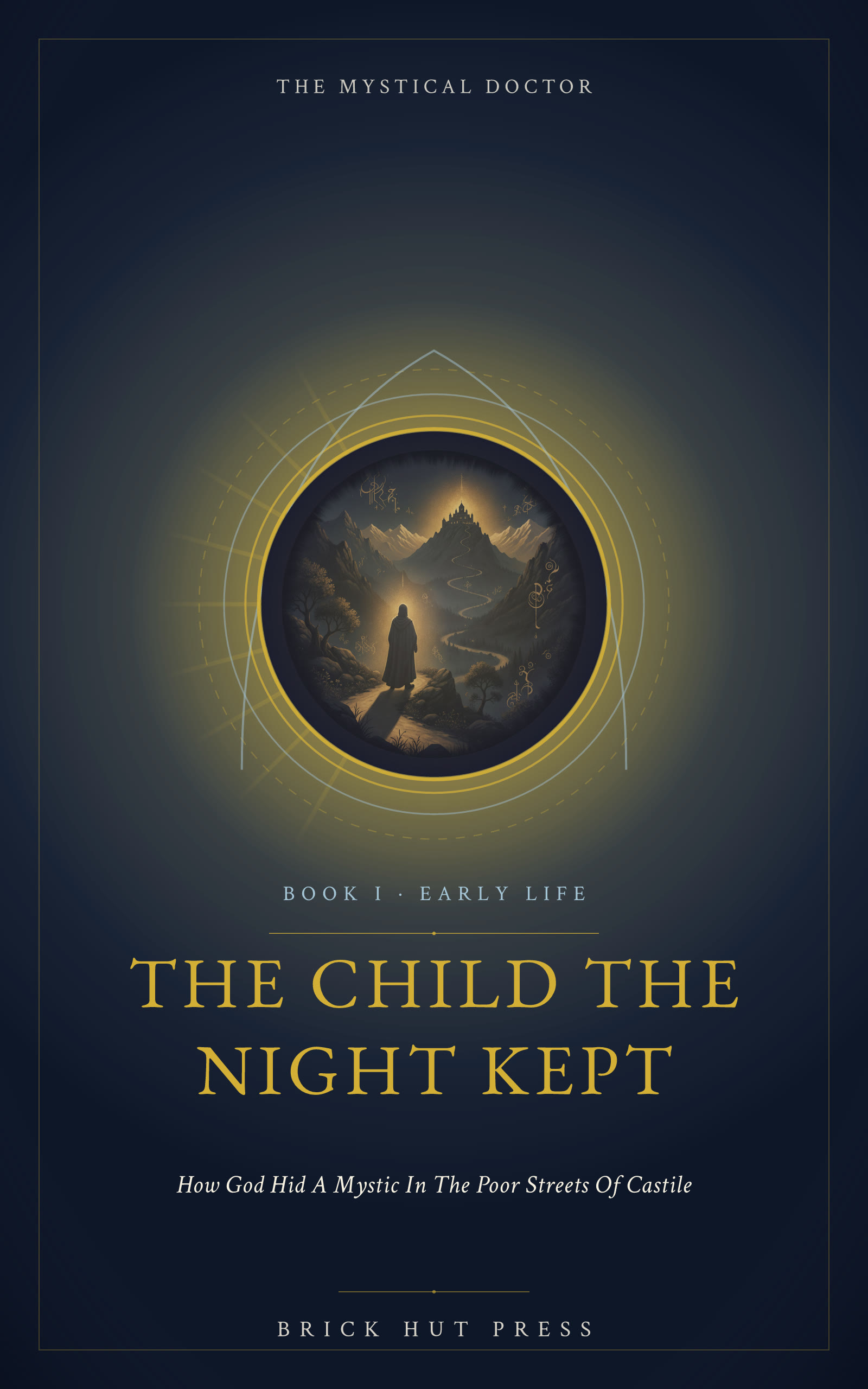
This second volume opens on a dirt floor in Duruelo and closes on a deathbed in Ubeda, and between those two poverty-stricken rooms lies the span of a life most readers only know by its fruit: the poems. Here the fruit is still on the vine, and the volume's task is to show the soil it grew from. Readers who met the young Fray Juan de Santo Matía in Book One, formed at Salamanca and claimed by Madre Teresa de Jesus for her nascent reform, will find him here as a grown friar and reformer, small in stature and immovable in purpose, laying the first stones of the Discalced Carmelite life for men. The early chapters trace the quiet, unglamorous work of that founding: the cold nights, the confessional at Avila where he directed souls with a severity and tenderness that drew Teresa's own trust, and the slow gathering of resentment among Carmelite friars who saw reform not as renewal but as rebuke.
That resentment is the hinge of this volume. Chapters three through six carry the reader into the part of Fray Juan's story that shaped everything after: his seizure in December of 1577, the nine months of imprisonment in a cell in Toledo too small to stand upright in, and the escape over a wall that reads, even in sober retelling, like a passage out of scripture. This book does not dwell on the cell for its cruelty alone. It asks the question the Carmelite tradition itself has always asked of that imprisonment: how does a soul emptied of every comfort, every book, every companion, come to write some of the most luminous poetry in the Spanish language, verses composed in the dark and carried out in memory because there was no paper to hold them. The volume treats the Toledo cell as what the tradition has long understood it to be, the forge of the Dark Night, without claiming to resolve the mystery of how suffering and song occupied the same narrow space at the same time.
What follows the wall is recovery, and the book gives real weight to it: El Calvario and Beas, where wounds both bodily and spiritual were tended by friends who would remain friends for the rest of his life, and the college at Baeza, where the treatises began to take the shape readers know, the slow prose commentaries that unfold what the poems only gesture toward. The chapter on the Living Flame of Love, fifteen days of composition that the tradition has always regarded as a kind of culmination, sits near the center of the volume's second half, and the book lets that brevity stand as its own kind of statement: that the deepest things, for this saint, were often said quickly, once the ground had been prepared by years of silence.
The last third of the volume turns from the poet to the administrator, and this is where the book earns its subtitle. As Vicar of Andalusia, Fray Juan de la Cruz governed houses, heard confessions through a grating with tears the chapters do not shy from naming, and absorbed a last political storm within the order he himself had helped reform, a storm that would cost him his offices and nearly his peace. The volume closes where the tradition has always insisted it must close, at La Penuela, the solitude he had wanted since Duruelo, and then at Ubeda, where an infected leg and a Carmelite community unprepared for his arrival gave him a final, humbling lesson in receiving charity rather than giving it. The last chapter, "Ubeda: The Last Night, and the First Morning," does not rush. It sits with a dying friar who asked, famously and without irony, to hear the psalms, and it lets the reader arrive at that bedside having walked the whole road from the straw at Duruelo.
This is a volume for readers who already trust that sanctity and suffering are not opposites in this tradition, but companions on the same narrow stair. It asks nothing of the reader but patience, the same patience the chapters show toward their subject: a willingness to sit in a dark cell, a confessional, a sickroom, and wait for the light the Mystical Doctor always insisted was there.
Lives that walk beside Saint John of the Cross, chosen for their likeness, not their fame.